

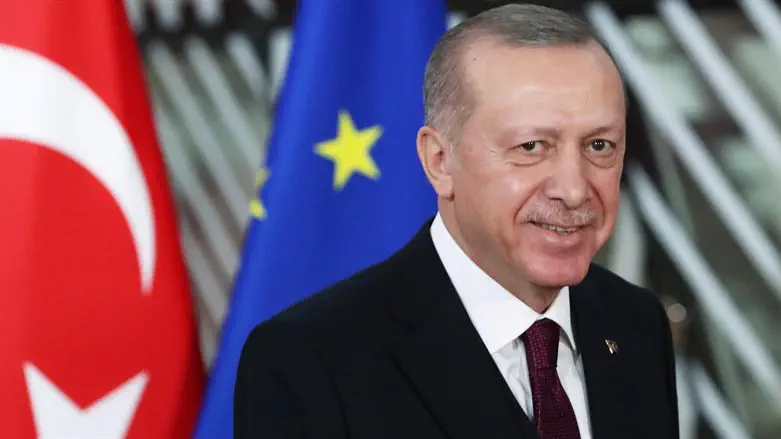
As of January 2026, the geopolitical map of the Middle East is being violently redrawn. While the world’s attention is fixed on the terminal collapse of the Khomeinist regime in Iran-where a nationwide "Subsistence Revolution" has ignited in all 31 provinces and the Tehran Grand Bazaar has shuttered in a strike reminiscent of the 1979 revolution-a more sophisticated and potentially more dangerous successor is emerging to take its place as the region’s primary ideological engine. Under the long-term stewardship of President Recep Tayyip Erdoğan, Turkey has completed its transition from a secular NATO ally into a "Muslim Tribalist" state.
For forty-six years, the Islamic Republic of Iran served as the "head of the hydra" for regional instability. However, as nationwide protests spurred by an 87% GDP decline bring the mullahs to the precipice of ruin, a power vacuum has opened that Turkey is moving aggressively to fill.Unlike the isolated and sanctioned Iran, Turkey remains embedded in Western institutions while simultaneously building an ideological engine that exports its brand of extremism with an aggressiveness reminiscent of 1980s-era Tehran.
The "Turkish Octopus" model is uniquely dangerous because it utilizes the legitimacy of a NATO-standard military and international diplomacy to mask a multi-generational plan for ideological conquest.
A primary theater for this new role is post-Assad Syria, where the administration of Ahmed al-Sharaa is increasingly viewed as a Turkish proxy experiment in Sunni Muslim supremacy.The interim constitution adopted in 2025, which mandates a Muslim president and establishes Islamic jurisprudence as the primary source of law, reflects Ankara's vision for a Levant purged of pluralistic secularism.
Turkey is currently attempting to integrate its defense interests with this new Syrian regime, seeking to replace Kurdish-led forces with Sunni Arab militias backed by Turkish anti-aircraft systems and missiles. This strategy aims to create a permanent administrative presence that effectively annexes northern Syria into a neo-Ottoman sphere of influence.
Central to Turkey’s rise is its pursuit of "Strategic Autonomy," a policy of building a massive domestic military-tech complex to project power without Western oversight. In 2025, Turkey’s defense and aviation exports hit a record-shattering $10.05 billion.The 2026 Presidential Annual Program has further elevated artificial intelligence to a central position in state strategy, explicitly classifying AI as a breakthrough technology for defense modernization that functions as a sensor, autonomy layer, and decision-support engine for next-generation military systems.
The primary drivers of this growth are Akıncı combat drones and HURJET aircraft, which are being sold to nations like Saudi Arabia and Indonesia without human rights or end-use stipulations, allowing Ankara to arm regional actors while bypassing the traditional moral frameworks of the NATO alliance.
Ankara’s foreign policy relies on a "double game" that exploits its membership in NATO while subverting the security of its allies. Turkey has mastered the weaponization of refugee flows, using the threat of mass migration to extort concessions from the European Union, while simultaneously serving as a hub for the export of mercenary jihadist fighters to conflict zones like Libya and the Horn of Africa.
In response to Turkey constructing its largest overseas military installation and a missile-testing spaceport in Somalia, Israel has recognized the independence of Somaliland. This is a strategic counter-move aimed at checking Turkish naval influence in the Red Sea and aligns with a growing "Mediterranean NATO" composed of Israel, Greece, and Cyprus.
Ideologically, Turkey has replaced Qatar and Iran as the primary patron of the Muslim Brotherhood. Istanbul now serves as a logistical headquarters for coordinating the Brotherhood’s strategy of Tamkeen, or institutional entrenchment, across Europe. Ankara supports international satellite TV stations that broadcast jihadi ideology and systemic antisemitism while utilizing government-linked think tanks to weaponize the concept of "Islamophobia" to silence critics of its agenda.
This ideological push is occurring in a security vacuum created by the 2025 U.S. National Security Strategy and the "Donroe Doctrine"-a Trump Corollary to the Monroe Doctrine that prioritizes the Western Hemisphere following the U.S. military raid that captured Venezuelan President Nicolás Maduro in January 2026.
In light of this shift, Israel must adopt a regional strategy of absolute deterrence. This requires Israel to institutionalize its role as the "Guardian of Minorities," providing direct security assistance to the Druze, Kurds, and Christians currently marginalized by Turkish-preferred Sunni supremacist orders. By formalizing military cooperation with Greece and Cyprus into a mutual defense pact, Israel can contain Turkish maritime encroachment and energy theft in the Eastern Mediterranean.
Furthermore, she must maintain a strict preemption doctrine, continuing the "war between the wars" to degrade any advanced Turkish military assets or terror armies that attempt to build up under the cover of diplomatic mechanisms. As the United States pivots to its own hemisphere, Israel must become the primary force multiplier for Western values, ensuring that the collapse of Iran does not simply result in the rise of a Turkish-led Islamist hegemony.
Amine Ayoub, a fellow at the Middle East Forum, is a policy analyst and writer based in Morocco. Follow him on X: @amineayoubx