

The pre-dawn U.S. military operation, which resulted in the apprehension of Nicolás Maduro in Caracas, was far more than a local political transition for Latin America; it was a devastating decapitation strike against the "Axis of Resistance" in the Western Hemisphere.
For over two decades, Venezuela functioned as the primary strategic outpost for the Middle East’s most radical actors. It was a "tropical caliphate"-a sovereign logistics hub for the Islamic Revolutionary Guard Corps (IRGC), a financial lung for Hezbollah, and a massive sanctions-evasion refinery for Recep Tayyip Erdoğan’s Turkey.
The Iranian Forward Operating Base
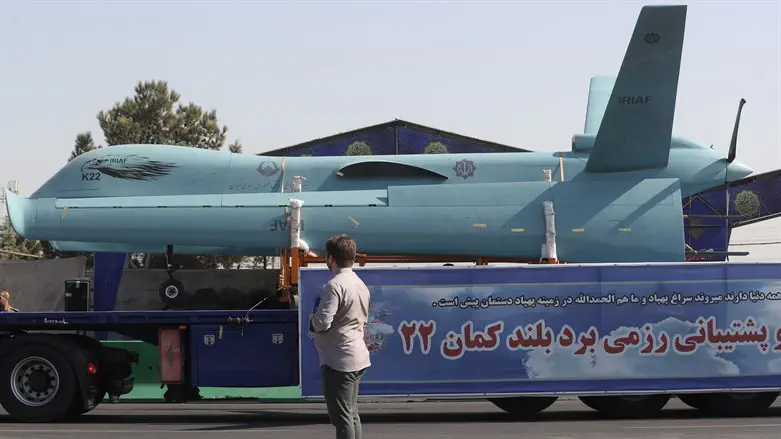
Under the Maduro regime, Venezuela became the launchpad for Iranian asymmetric warfare in the Americas. The 20-year cooperation agreement signed in 2022 codified a military integration that transformed the nation into a drone manufacturing hub.Through the state aeronautics firm Empresa Aeronautica Nacional SA (EANSA), Iran transferred the technical expertise to assemble the Mohajer-6 and the delta-winged "Shahed-style" Zamora V-1 kamikaze drone.These loitering munitions, with a range of up to 1,500 miles, were designed to place Puerto Rico and southern Florida within striking distance of the regime’s irregular forces.
The threat was not limited to hardware; it extended into direct state-sponsored terrorism. In late 2025, a joint intelligence operation involving the U.S. and Israel foiled an IRGC plot to assassinate the Israeli Ambassador to Mexico, Einat Kranz Neiger. The architect of the plot, Hasan Izadi (also known as Masood Rahnema), was a high-ranking IRGC officer serving under diplomatic cover as an aide to the Iranian Ambassador in Venezuela. From his base in Caracas, Izadi recruited and managed a "terrorist network directed by Iran" that sought to avenge Israeli strikes against IRGC personnel in Syria. This plot proved that the Caracas embassy was not merely a diplomatic mission, but the nerve center for Tehran’s global terror operations in the Americas.
Hezbollah’s Sovereign Safe Haven
While the IRGC managed the military hardware, Lebanese Hezbollah established a deep-rooted criminal and financial empire within Venezuelan territory. Margarita Island became the group's "center of gravity" in the hemisphere, where the Nassereddine clan-led by Ghazi and his brothers Abdallah and Oday-oversaw paramilitary training sites and sophisticated document forgery operations. These fraudulent Venezuelan passports provided operatives with the anonymity required to travel undetected across South America and potentially into the United States.
Hezbollah’s survival during Lebanon's financial crises was largely predicated on its partnership with the Venezuelan state-run narcotrafficking network, the Cartel de los Soles. By leveraging the island's duty-free status and partnering with local gangs like Tren de Aragua-which Maduro weaponized as an asymmetric proxy-Hezbollah laundered hundreds of millions of dollars from cocaine and Captagon trafficking. This illicit revenue was funneled back to Beirut through "shadow banking" networks and the smuggling of gold from the Orinoco Mining Arc.
Erdoğan’s El Dorado: The Gold-for-Food Scheme
If Iran provided the teeth for the regime, Turkey provided economic life support. The relationship between Maduro and Erdoğan evolved into a $1.1 billion sanctions-evasion machinery.Under the "gold-for-food" scheme masterminded by Maduro’s fixer Alex Saab, Venezuelan "blood gold" was refined in Turkey to bypass Western financial oversight.Although Caracas claimed this was a legitimate refining operation, the refined gold rarely returned; instead, Turkish entities bought the gold and transferred the proceeds into Venezuelan offshore accounts.
In return, Turkey became the key exporter for the Local Supply and Production Committees (CLAP), supplying 69% of the program's provisions. Saab used Turkish shell companies like Mulberry Proje Yatirim to purchase these supplies at artificially inflated prices, laundering the excess profits for the regime's elite while half of Venezuela’s children faced chronic malnutrition (of course, you did not hear about starving Venezuelan children at the UN). Furthermore, Turkey became a "superhighway" for the Cartel de los Soles, with cocaine seizures at the port of Mersin spiking 44% as traditional Atlantic routes were constricted by the DEA.
Machado’s Vision: A Pro-Israel Paradigm Shift
The fall of the Maduro regime has cleared the way for Nobel Peace Prize laureate Maria Corina Machado to dismantle this anti-Western architecture. Machado has characterized the Maduro years as a period of "foreign occupation" by Iran, Hezbollah, and Hamas. In a radical reversal of the "anti-Zionist" doctrine established by Hugo Chávez-who famously cursed the Jewish state from his "soul and guts" in 2010-Machado has pledged to restore full diplomatic ties with Jerusalem.
Machado’s commitment to move the Venezuelan embassy to Jerusalem is not a mere symbolic gesture but a strategic alignment with the only country she describes as a "genuine ally of freedom". In direct communications with Prime Minister Benjamin Netanyahu, she has vowed that a post-Maduro Venezuela will be Israel’s closest ally in South America. This stance has drawn significant backlash from the "Axis" and its sympathizers, including the Council on American-Islamic Relations (CAIR), which condemned her Nobel win as an endorsement of "Zionism and fascism".
The Contraction of the Axis
The removal of the Venezuelan anchor has immediate consequences for the economies of Iran and Turkey. The loss of billions in "blood gold" and the closure of the Caracas-Istanbul-Tehran logistical corridor will severely degrade the financial capacity of the IRGC and Hezbollah to project power globally.
As Machado begins the monumental task of rebuilding her plundered nation, the "tropical caliphate" is being systematically dismantled. For the first time in nearly three decades, the alliance between Venezuelan gold, Iranian drones, and Middle Eastern terror has been severed, signaling that the reach of the "Axis of Resistance" in the Western Hemisphere is finally contracting.
Amine Ayoub, a fellow at the Middle East Forum, is a policy analyst and writer based in Morocco. Follow him on X: @amineayoubx