

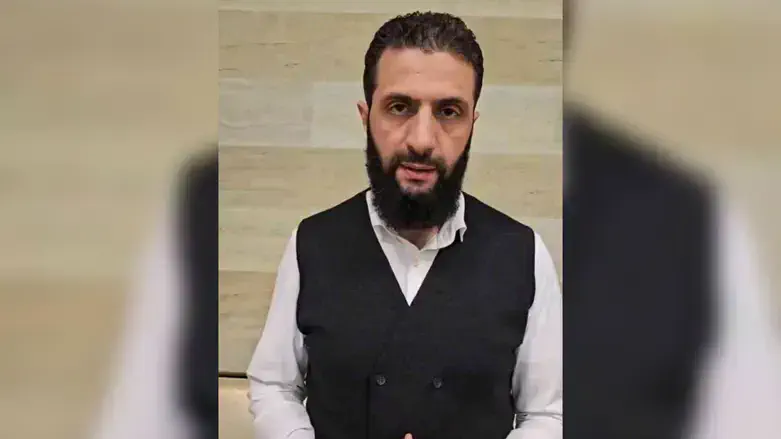
When Bashar al-Assad fled to Moscow on December 8, 2024, the sigh of relief in Western capitals was audible .Policymakers, desperate to close the Syrian file, eagerly embraced the narrative of a "clean" revolution. They toasted the "New Syria" and its suit-wearing President, Ahmed al-Sharaa-formerly the jihadist emir Abu Mohammad al-Julani-as a miraculous stabilizer.
But while diplomats celebrate in the sanitized hotels of Damascus, the coastal provinces of Latakia and Tartus are descending into a nightmare that the world is willfully ignoring.
The "New Syria" is indeed stable, but it is the stability of a graveyard.
In the last days of 2025, the al-Sharaa administration launched a brutal crackdown on the Alawite minority, rebranding a struggle for survival as a counter-insurgency against "regime remnants".This is not a mopping-up operation; it is a foundational purge.
The "Remnants" Libel
The intellectual architecture of this repression relies on a single, poisonous term: fulul (remnants). Much like "de-Ba'athification" in Iraq, the new government uses this label to delegitimize an entire community. When Alawite protesters took to the streets of Latakia and Jableh in late December, they were not calling for the return of Assad, who is widely reviled for abandoning his sect to save his stolen billions.They were calling for federalism and international protection.
The protests were triggered by a horrific bombing at the Imam Ali Mosque in Homs on December 26, which killed eight worshippers. Instead of protection, the community received lead. Security forces opened fire on demonstrators in Latakia, killing at least four and wounding over 100 according to state media , though activists report summary executions and a death toll rising into the hundreds. The Ministry of Interior immediately branded the victims as "outlaws" linked to external agendas.
The Alawite Intifada
The West must understand that the Alawite community is no longer a monolith of regime support. A profound schism has emerged between the old crony elite and the new street leadership. On one side stands Rami Makhlouf, the disgraced tycoon, who issued a video from exile urging Alawites to remain "neutral" and submissive.On the other stands Sheikh Ghazal Ghazal, the head of the Supreme Alawite Islamic Council.
Sheikh Ghazal represents the "Alawite Intifada." He has rejected the suicidal pact with Ba'athism and articulated a new vision: a federalized Syria where minorities can govern their own security.His call for a "Coastal Region" is not secessionist but survivalist. He argues that in a majoritarian Sunni state led by former HTS commanders, the Alawite minority faces existential "dhimmitude" without constitutional guarantees of autonomy.
The government’s response to these political demands has been military force. By criminalizing federalism as "division" in the new Constitutional Declaration , al-Sharaa has legally paved the way to crush minority political agency under the guise of preserving "national unity."
Aleppo: The Myth of Security
The failure to protect minorities is not limited to the coast. On New Year's Eve, the "New Syria" narrowly averted a massacre in Aleppo. Security forces intercepted an ISIS operative in the Bab al-Faraj district before he could detonate his vest in a crowded church, though a police officer was killed. The Interior Ministry revealed a coordinated plot by ISIS-and its shadowy affiliate Saraya Ansar al-Sunna-to target Christian gatherings across the city.
While the government touted this as a counter-terrorism success, it underscores a terrifying reality: the jihadist ecosystem remains vibrant. The integration of various Islamist factions into the national army has created a security apparatus that is aggressive in policing minority speech but porous in preventing sectarian terror.
Christians in Aleppo and Alawites in Homs see the same bearded fighters who shelled them years ago now manning the checkpoints, simply wearing new patches.
The Western Betrayal
The United States and the EU are repeating the catastrophic mistakes of the 1990s Balkans. By prioritizing the "stability" offered by a strongman and easing sanctions , they are greenlighting a majoritarian tyranny. The British and European statements emphasizing a "flourishing Syria" ring hollow to the families burying their dead in Jableh.
The "New Syria" is failing its most basic test. It asks the world to believe that Ahmed al-Sharaa has transformed from a terrorist leader into a technocratic president. Yet, his government handles dissent with the same tools as his predecessor: tanks, torture, and the demonization of the "other."
Amine Ayoub, a fellow at the Middle East Forum, is a policy analyst and writer based in Morocco. Follow him on X: @amineayoubx