
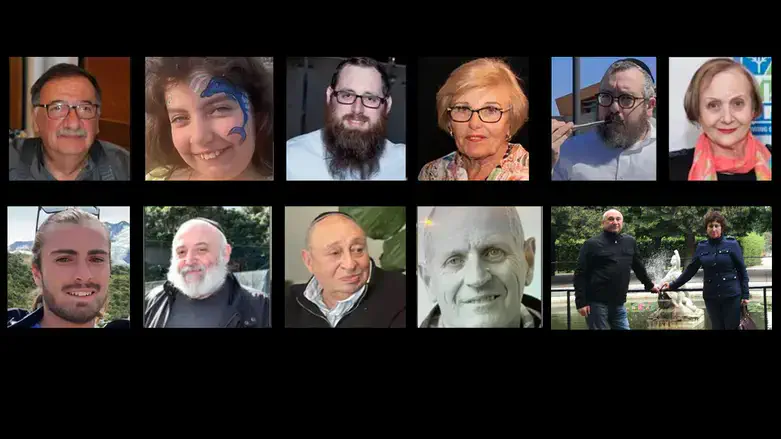
Looking for leadership in times of crisis
In the aftermath of the Bondi Hanukkah massacre, the Jewish community and the Australian people are looking for leadership. Our Prime Minister and his government have failed us with their inaction in addressing rampant antisemitism and their policies over the past two years have only served to fuel it.
Sadly, after what should have been a wake-up call, the response has been grossly underwhelming, starting with the long delay before apologising and taking some level of ownership. They tried to gaslight us by making this about gun control rather than the real issues. And now they stubbornly refuse to hold a Royal Commission.
So what does leadership look like?
Before his passing, Yaakov Avinu’s children surrounded his bed and he shared his parting blessings with them. He calls on the brothers one-by-one in order of their births. These blessings were also prophetic visions of the future roles that each tribe would fulfill.
The eldest three brothers, Reuven, Shimon and Levi, did not receive blessings. Instead, they each faced a stern rebuke from the their father. In what should have been a time of love and endearment, Yaakov condemned their earlier misdeeds.
Reuven was rebuked for having acted tempestuously when he “moved his father’s bed” after the passing of Rachel. Shimon and Levi were chastised for having attacked the city of Shechem and for their involvement in the sale of Yosef.
When Yehuda saw his father rebuking his older brothers for their sins, his face became ashen with fear and he backed away. He too had sinned with his daughter-in-law Tamar and he feared that he would receive the same treatment.
But instead of rebuking Yehuda, Yaakov bestows upon him the blessing of Malchus, that all of the true kings and leaders of the Jewish people up until the coming of Moshiach, will descend from Yehuda. Yaakov declares that his brothers will recognise his leadership and submit themselves to his authority.
As the firstborn, the right of Malchus should have gone to Reuven. But because of his failing, it was stripped away from him. Shimon and Levi, the next in order, were also not deserving of this blessing.
Why was Yehuda deemed worthy of the distinction of kingship and leadership?
The Tosefta in Mesechta Brachos (4:16) relates how Rabbi Tarfon asked his students this very question, why did the tribe of Yehuda merit kingship? The students discussed their Rebbe’s question and posed a number of different answers.
-First they suggested that it was because Yehuda admitted that Tamar was pregnant by him, thereby saving her life and that of her unborn twins. Rabbi Tarfon (according to our version of the Tosefta, Rabbi Akiva) rejected this answer, saying “Do they give reward for transgression?” Yes, Yehuda admitted his wrongdoing, but he had nonetheless sinned.
-They then suggested that it was because Yehuda had saved Yosef’s life. After he had been thrown into the pit, the brothers were still debating whether to kill him. Yehuda said “what gain will we have by killing our brother.” Instead he suggested selling Yosef to the passing merchants, thereby saving his life. Rabbi Tarfon rejected this answer as well, saying “the fact that he saved Yosef should be sufficient to atone for having subsequently sold him”, it should not warrant the reward of kingship.
-The students proposed a third answer, that Yehuda merited kingship as a reward for his great humility. We see this when Yehuda offered to take Binyamin’s place as a slave to Yosef, saying “your servant will become a slave to my master instead of the boy.” Rabbi Tarfon refuted this answer as well, saying that Yehuda did not act on account of humility, but rather because he had pledged himself as a guarantor for Binyamin and was merely fulfilling his duty.
Having failed to provide a satisfactory answer, the students asked Rabbi Tarfon for his own explanation.
-He answered that the reward of kingship was because the tribe of Yehuda would sanctify Hashem’s Name at the Red Sea. When the Jewish people were trapped between the sea and the approaching Egyptians, the tribe of Yehuda jumped into the water, marching forward until the waters threatened to drown them. Only then did the sea split.
Each of these answers describe qualities that a leader must possess, that would make Yehuda worthy of the leadership of the Jewish people.
A leader is fallible and can make mistakes. But when they do, instead of deflecting or shifting blame, they need to be able to admit to their failures. Far from being a sign of weakness, being able to take acknowledge and take ownership of one’s failings is a mark of strength. But simply admitting to one’s failures after the fact, does not erase the harm that was caused.
Humility too is an imperative leadership quality, to see oneself as a servant of the people whom they are charged to take care of.
Our sages teach us that whilst these may be important traits, the most important quality of a leader is to have the courage to take decisive action in critical moments when faced with threats. When others may back away or be plagued with hesitation, a leader has to be able to stand up and jump into action to tackle the threat, without consideration of the fallout or personal risk.
We want to hear our government take ownership of their failures that made our community unsafe. We want to see their humility to submit to our calls for a Royal Commission and accept the criticism being levelled at them. But above all, we need to see real, unhesitating action, to jump in to tackle the raging sea of fundamentalist Islamic ideologies and antisemitism.