

In the opaque world of Egyptian statecraft, leaks are rarely accidental, and timing is never a coincidence. On December 29, 2025, Egyptian Foreign Minister Badr Abdelatty made a sensational disclosure during a televised interview: Cairo had categorically rejected "huge financial offers" and total debt cancellation in exchange for allowing the displacement of Palestinian Arabs from Gaza into the Sinai Peninsula.
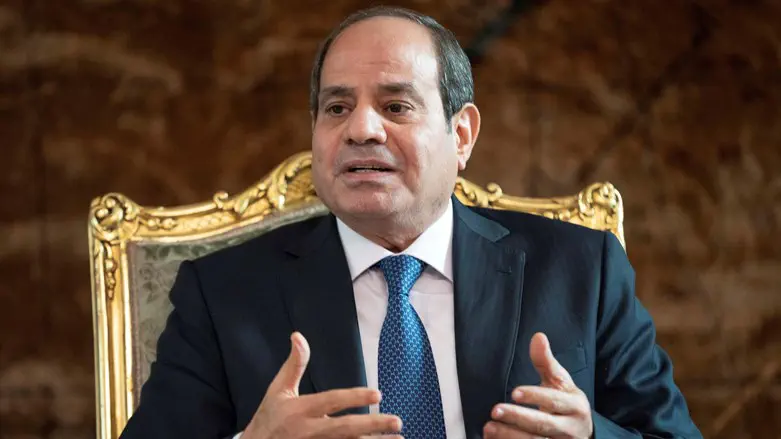
Framed as a defiant defense of national sovereignty and Arab solidarity, the statement played perfectly to the domestic gallery. It portrayed President Abdel Fattah el-Sisi not as a struggling autocrat managing a crumbling economy, but as a principled leader refusing to sell out the Palestinian Arab cause for "blood money." Yet, this sudden pivot to a year-old rumor is not a sign of strength. It is a desperate flare gun fired by a regime that has just suffered a catastrophic strategic defeat on its southern flank.
While the Egyptian public was being fed narratives of moral victory in Gaza, the geopolitical map of the Horn of Africa was being redrawn in a way that poses an existential threat to Cairo’s interests. The timing of Abdelatty’s "revelation" is designed to obscure a harsh reality: Egypt is losing the battle for the Red Sea.
The Horn of Africa Debacle
Just days before Abdelatty’s interview, Israel became the first UN member state to formally recognize the independence of Somaliland, a breakaway region of Somalia.For Jerusalem, this is a brilliant revival of the "Periphery Doctrine," securing a friendly node on the Gulf of Aden to flank Houthi aggression. But for Cairo, it is a strategic nightmare.
Egypt has spent the last year pouring political and military capital into Somalia. Cairo recently deployed troops to Mogadishu under the new African Union Support and Stabilization Mission (AUSSOM) and signed agreements to develop ports in Eritrea and Djibouti.The objective was clear: to encircle Ethiopia, Egypt’s arch-rival in the dispute over the Nile waters and the Grand Ethiopian Renaissance Dam (GERD). By backing the central government in Mogadishu, Sisi hoped to check Ethiopia’s ambitions for a Red Sea naval base in Somaliland.
Israel’s recognition of Somaliland shatters this strategy. It effectively validates the very entity-Somaliland-that is offering Ethiopia a port. Suddenly, Egypt finds itself in an untenable position: its troops are deployed to defend a "Unified Somalia" that its own primary security partner in the Sinai-Israel-has just diplomatically partitioned. Egypt is now awkwardly aligned with Turkey and the Houthis in condemning the move, while Ethiopia and Israel forge a new axis of cooperation that bypasses Cairo entirely.
The "Martyrdom" Narrative
Unable to reverse Israel’s diplomatic coup or militarily confront Ethiopia without risking a disastrous war, Sisi has retreated to the one battlefield where he still commands the terrain: the domestic narrative.
The "Debt-for-Displacement" leak serves as a potent distraction. Egypt’s economy is in a tailspin, with inflation crushing the middle class and external debt servicing consuming the budget. By claiming to have rejected billions in debt relief, the regime is proactively inoculating itself against public anger. The subtext of Abdelatty’s statement is clear: “We are suffering economically not because of mismanagement or corruption, but because we are the only ones paying the price for the Palestinian cause.”
It reframes the nation’s economic misery as a badge of honor. If the IMF demands further austerity, or if the pound devalues further, the regime can now point to these "rejected offers" and claim they are being punished by Western powers for saying no. It turns economic necessity into patriotic resistance.
A Smokescreen for Decline
Furthermore, the "law of the jungle" rhetoric used by Abdelatty regarding the displacement offers serves to rally the "Arab Street" at a moment when Egypt’s regional stock is plummeting. Egypt, once the undisputed hegemon of the Arab world, is watching from the sidelines as Gulf powers mediate conflicts and Israel reshapes the security architecture of Africa.
Sisi is playing the victim card because the "Regional Power" card is no longer in his deck.
The leak confirms that Cairo is now reacting to events rather than shaping them, forced to cannibalize old diplomatic rumors to cover for current strategic failures. The billions may have been rejected, but the cost of Egypt’s diminishing influence will be far higher.
Amine Ayoub, a fellow at the Middle East Forum, is a policy analyst and writer based in Morocco. Follow him on X: @amineayoubx