

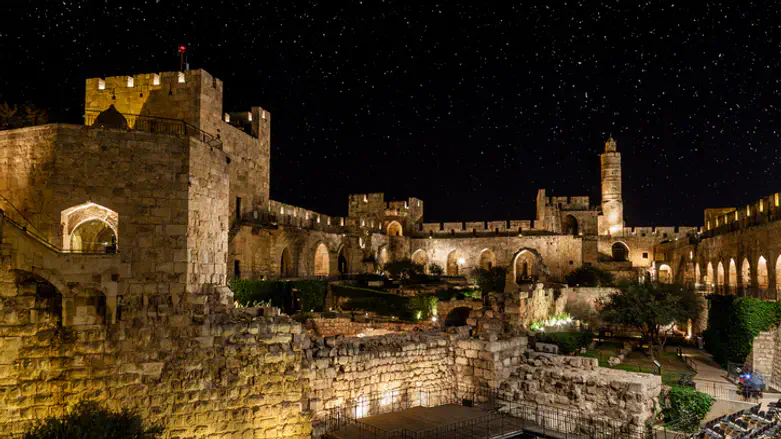
The Tenth of Tevet is a fast day for the Jewish people, commemorating the beginning of the Babylonian siege of Jerusalem by King Nebuchadnezzar - a process that ultimately led to the destruction of the Holy Temple. As the opening stage of that national catastrophe, the day carries special significance as a time for introspection, repentance, and self-improvement.
In our generation, Rabbinic leaders in Israel designated Asarah B'Tevet as a universal day of Kaddish for those who perished in the Holocaust whose dates of passing are unknown.
This year, the fast comes just two and a half weeks after another painful calamity: the antisemitic terrorist attack on one thousand Jews celebrating the beginning of Chanukah in Sydney, Australia. Jews were targeted and murdered simply for being Jews.
This raises a profound question: What is our response when we are attacked for our faith and identity? Do we attempt to conceal our Judaism, to dim our visibility? Or do we look to the Torah for how to react to tragedy?
Aharon's Strength to Continue
The Torah provides a powerful model. On the very first day of the dedication of the Mishkan, Aharon's two sons died while performing the service sincerely but not as instructed. The Torah records Aharon's response - or rather, lack of one, as Leviticus states that "Aharon was silent."
Yet his silence was not withdrawal. He continued the holy mission, the Tabernacle service, without interruption. His response teaches that while questions may exist and pain may be overwhelming, the Jewish response is perseverance, to continue to serve God and, if possible, sanctify His Name in an even greater way.
History bears this out. Again and again, following periods of devastation, the Jewish people have risen with renewed strength and spiritual renaissance. When antisemites attempt to extinguish our light, we respond by bringing more light into the world.
Shema Yisrael: The Core of Jewish Faith
At the heart of Jewish faith stands the Shema prayer from Deuteronomy: "Hear, Israel, the Lord is our God, the Lord is one." It has always been our defining declaration. There is a moving prayer of supplication that reflects the protective power of the Shema:
"O Guardian of Israel, protect the remnant of Israel; let not Israel be destroyed or lost, those who proclaim 'Hear, Israel.'" This passage is recited as part of the morning prayers in Jewish communities worldwide on most days of the year.
The Shema binds us to God, and God, in turn, guards His people, ensuring that we are not destroyed, lost, or assimilated among the nations.
The Structure and Message of the Shema
The opening verse - 'Hear, Israel' - is our acceptance of God's absolute sovereignty.
This declaration is followed by three paragraphs.
The first commands us to love God with our entire being.
The second affirms our commitment to fulfill His mitzvot.
The third is the paragraph of tzitzit, the tassels affixed to four-cornered garments, which includes the commandment to remember the Exodus from Egypt.
The commandment of Tzitzit serves as a visual reminder of all the mitzvot, ensuring that we do not stray. Our Sages incorporated this paragraph into the Shema because it concludes with remembrance of the Exodus, the moment when God redeemed us to become His people. The final verse of the Shema echoes the first of the Ten Commandments:
"I am God your G-d, Who took you out of the land of Egypt, out of the house of bondage."
As long as this faith endures, redemption remains possible.
Shema as a Lifeline of Jewish Identity
Throughout history, the Shema has often been the final words uttered by Jews who sanctified God's Name. After the Holocaust, many Jewish children who had been hidden in convents and orphanages could not be identified.
Great rabbinic leaders devised a remarkable approach. They would visit these institutions at bedtime and softly sing the Shema. Miraculously, children who had no conscious memory of Judaism would suddenly respond, crying and calling out for their parents in Yiddish. The Shema awakened their buried Jewish identity. It became their spiritual lifeline.
Tzitzit, Protection, and Renewal
The Shema remains the secret of Jewish survival, and the mitzvah of tzitzit plays a unique role in preserving Jewish identity. In recent times, there have been moving accounts of IDF soldiers who took upon themselves the wearing of tzitzit during the war in Gaza, viewing it as both spiritual armor and a symbol of faith.
Tzitzit is not merely a garment. When the Tzitzit paragraph is recited with intention, its message is clear: awareness of God's commandments, closeness to Him, and constant remembrance that He is our Redeemer. The Tzitit section concludes the Shema as it began, with the recognition and acceptance of God and the yoke of Heaven.
Bringing Light Through Commitment
Whether one recites all three paragraphs with proper intention, or even only the opening verse of the Shema, one fulfills a great positive commandment and brings great light into the world. For men and boys who take upon themselves the commandment of tzitzit for the first time, this can be a powerful merit, releasing sparks of holiness and blessing.
All who strengthen their observance, deepen their intention, and grow in faith, bring merit to their families and to the nation of Israel.
Dr. Joseph Geliebter, Director
Yizkereim/The Rabbi Leib Geliebter Memorial Foundation
www.yizkereim.org
Dedication and Prayer
This Shema Tzitzit Awareness Campaign was created by the Rabbi Leib Geliebter Memorial Foundation/ Yizkereim and is dedicated in memory of Rabbi Eli Schlanger, who devoted his life to strengthening Jewish connection and observance, and to all those murdered because they were Jews in the Chanukah 5786/2025 massacre in Sydney, Australia.
May our increased commitment to the commandments elevate the souls of the martyrs, and bring comfort to all the families. May God comfort them along with all those who mourn over Zion and Jerusalem, and may we soon hear good tidings, salvation, and comfort, and merit the complete redemption, speedily in our days. Amen.
https://rlgfoundation.org/asarah-bteves/
