

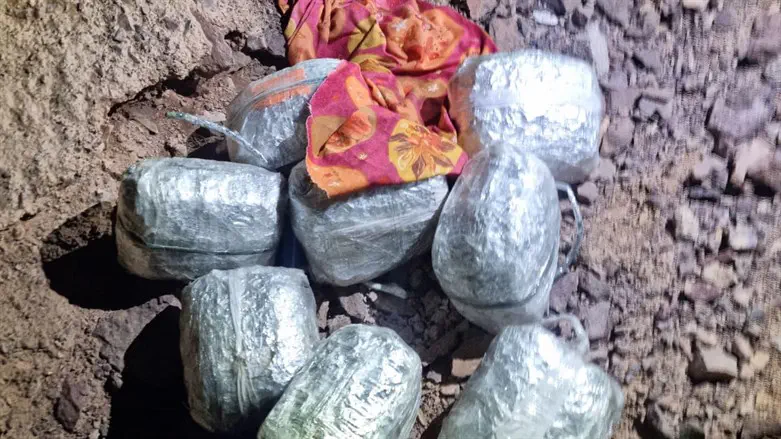
The recent reports of a massive Captagon bust on the Jordanian border, involving a swarm of drone-launched payloads, should serve as the final nail in the coffin of the "Arab Outreach" to the new Syrian government. For the past year, the Hashemite Kingdom of Jordan has operated on the hopeful premise that the post-Assad administration of Ahmed al-Sharaa (formerly the jihadist leader Abu Mohammad al-Julani) could be tamed into a responsible neighbor. That hope has now collided with the gritty reality of the "Drug Front" on Jordan’s northern border.
When Bashar al-Assad fled Damascus in December 2024, a collective sigh of relief swept through Western capitals. The "Narco-President" was gone. In his place stood Sharaa, trading his fatigues for a suit and promising a "purified" Syria free from the corruption of the Ba'athist era. Jordan, facing an existential economic crisis and desperate for stability, was among the first to extend a cautious hand, spearheading an Arab normalization effort intended to incentivize Sharaa to seal the border.
The "New Syria" is not the stabilizing force King Abdullah II was promised. Instead, the illicit infrastructure built by the Assad regime-specifically the industrial-scale Captagon network run by the Fourth Armored Division-has mutated. It has not been dismantled; it has been decentralized and, in some cases, Islamized. Reports indicate that while Sharaa performs high-profile "drug burnings" for Western cameras, the production labs in Suwayda and Daraa have simply gone mobile, protected by a constellation of tribal warlords and unpurged regime remnants who now pay tribute to the new Islamist overlords.
For Jordan, this is no longer a law enforcement issue; it is a hybrid war. The sheer sophistication of yesterday’s interception-involving military-grade drones capable of bypassing traditional border berms-demonstrates a technical transfer of expertise, likely from Iranian or Hezbollah remnants lingering in the chaos, to the new smuggling cartels.The Kingdom is now facing a narco-insurgency that views the Jordanian border not as a sovereign line, but as a distribution gateway to the Gulf.
King Abdullah’s reaction has been a swift and kinetic recalibration. The "soft diplomacy" of 2024 has been replaced by the "Active Defense" doctrine of late 2025. Following the latest escalations, the Royal Jordanian Air Force has conducted precision airstrikes deep inside Syrian territory, targeting "drug farms" and storage facilities in Suwayda.These are not the actions of a partner nation; they are unilateral security measures taken by a state that realizes its neighbor is either complicit in the aggression or too incompetent to stop it.
The strategic implications for the United States are profound. The Trump administration’s tentative engagement with the Sharaa government, driven by a desire to counter Iran and exit the theater, is funding a regime that cannot deliver basic security. The "Anti-Sharia" bloc in Congress, led by Senators like Ted Cruz and Tom Cotton, has correctly identified the danger: normalizing relations with an Islamist government that tolerates-or profits from-a narco-economy is strategic suicide.
The "Drug Front" exposes the lie at the heart of the Sharaa transition. You cannot simply decapitate a narco-state and expect the body to stop twitching. The Fourth Division’s networks-the chemists, the smugglers, the logistical masterminds-are still active.Some have rebranded as "revolutionary" militias; others operate in the shadows of the lawless south. By failing to forcefully dismantle this deep state, Sharaa has allowed the Captagon trade to metamorphose from a centralized family business into a chaotic, multi-headed hydra that is arguably harder to combat.
Jordan has seen enough. The Monarchy’s pivot back to a hardline stance-treating southern Syria as a hostile buffer zone rather than a partner-is the only rational response to a neighbor that floods your streets with amphetamines.
The United States must stop viewing the drug war in the Levant as a secondary issue. It is the primary engine of instability. If Sharaa cannot control the "Drug Front," he does not control Syria. The White House should heed the calls from Capitol Hill to trigger the "snapback" sanctions provisions of the CAPTAGON Act. Normalization must be strictly conditioned on the verified, total dismantlement of the production infrastructure-not just performative bonfires in Damascus.