

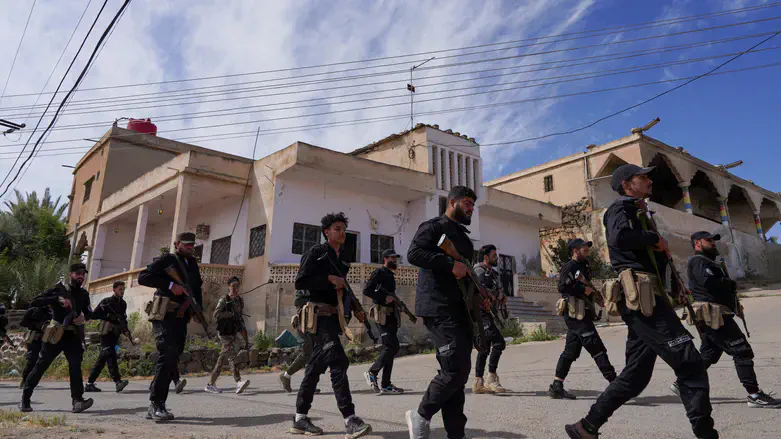
The historic ruins of Palmyra have long served as a silent witness to the rise and fall of civilizations, but on December 13, 2025, they bore witness to a modern strategic catastrophe that Washington can no longer afford to ignore. The murder of Sgt. Edgar Brian Torres-Tovar and Sgt. William Nathaniel Howard was not the result of a chance encounter with a hidden insurgent or a long-range mortar strike. These American soldiers, alongside their civilian interpreter, were executed in cold blood by a man wearing the official uniform of the Syrian internal security forces.
This was not an act of war in the traditional sense; it was a devastating failure of American policy and a brutal reminder that in the Middle East, a change in government does not equate to a change in heart.
While the transitional government in Damascus, led by President Ahmed al-Sharaa, attempts to project an image of a "new Syria" ready for international investment and diplomatic normalization, the blood spilled at Palmyra reveals a far more sinister reality. The Islamic State and its ideological sympathizers have not vanished; they have simply moved into the barracks.
The fundamental mistake made by the international community in the wake of the Assad regime’s collapse was the pursuit of "stability" at any cost. In the desperate rush to fill the massive security vacuum left behind, the transitional authorities engaged in a policy of indiscriminate integration. They absorbed thousands of fighters from disparate rebel militias, many of whom had spent years steeped in the same Salafi-jihadi ideology that birthed the Caliphate. By prioritizing the sheer quantity of boots on the ground to secure cities, the Sharaa government inadvertently turned the Syrian military into a Trojan horse for radicalism.
The details released by the Syrian Interior Ministry following the attack are a staggering indictment of this systemic failure. The fact that the gunman was a serving member of the security forces who had already been flagged for extremist views-and was purportedly "scheduled to be fired" the day after the massacre-is a defense that should worry every policymaker in Washington. It suggests a security apparatus that is either hopelessly incompetent or, more likely, compromised at multiple levels by Islamist sympathizers.
If a known radical is allowed to maintain his weapon and access to high-level diplomatic meetings, then the entire vetting process is a dangerous fiction funded by American taxpayers.
This is the birth of an Afghan-style "Green-on-Blue" crisis in the heart of the Levant, and it serves a very specific strategic purpose for extremists. ISIS and its ideological cousins understand that they cannot defeat the United States in a conventional battle. Instead, they seek to win through "trust-degradation." By infiltrating state institutions, they aim to force American personnel into fortified bunkers, effectively ending the face-to-face advisory missions that are essential for regional intelligence and counter-terrorism.
Furthermore, this institutional infiltration allows Islamists to gather intelligence on state movements and gain access to high-value targets that would otherwise be unreachable.
Palmyra was not just a tragedy; it was a proof-of-concept for a new generation of jihadis who have traded their black flags for government-issued fatigues. Washington must recognize that the "New Syria" is currently a laboratory for this brand of "lawful Islamism," where radicals use the legitimacy of the state as a shield for their extremist goals.
The U.S. military’s retaliatory strikes under "Operation Hawkeye Strike" were a necessary and welcome show of force, but they are a temporary tactical fix for a deep-seated strategic rot.
You cannot eliminate an ideology with a Hellfire missile when that ideology is sitting in an office in Damascus or manning a checkpoint in Homs.
If the United States is to maintain any presence in the region, it must abandon the naive hope that the Sharaa government will police itself.
The families of the fallen deserve more than a press release and a retaliatory bombing. They deserve a policy that prioritizes American lives over the geopolitical vanity of "nation-building" with compromised partners. Palmyra was a warning shot aimed directly at the heart of Western optimism.
Amine Ayoub, a fellow at the Middle East Forum, is a policy analyst and writer based in Morocco. Follow him on X: @amineayoubx