

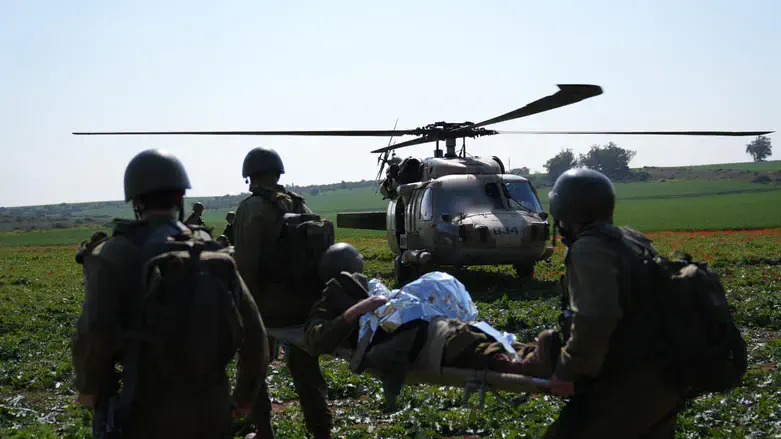
On the Day of Appreciation for the Wounded of the IDF and Security Forces, the Ministry of Defense’s Rehabilitation Division published updated data on the scope of the wounded in Israel. As of December 2025, the division is caring for roughly 82,400 injured, including 31,000 coping with post-trauma and psychological injuries.
Since the outbreak of the Swords of Iron War on October 7, 2023 about 22,000 new wounded have entered the rehabilitation system-58% of them suffering psychological injuries. The division receives 1,500 new recognition requests each month. Forecasts indicate that by 2028, the division will treat around 100,000 wounded, with half expected to require mental-health support. In light of this trend, the Defense and Finance ministries established a public committee led by Prof. Shlomo Mor Yosef to review expanded assistance.
Over the past year, the division’s budget grew by 53% to NIS 8.3 billion, with NIS 4.1 billion designated for mental-health services. The number of treatments provided has doubled, and calls to the “One Soul” hotline rose by 80%.
At the state ceremony on Monday, attended by Defense Minister Israel Katz, Chief of Staff Lt. Gen. Eyal Zamir, and senior officials, the ministry noted that 49% of today’s wounded were hurt during compulsory service, 26% during reserve duty, 13% in permanent service, and 9% are police officers. Overall, 68% are aged 40 and above, 64% are married, and 8% divorced.
There are 873 wheelchair-bound wounded, including 132 since October 7; 612 suffer special disabilities of 100% or more; 115 are blind; and 1,061 are amputees, including 88 injured in the past two years. Modi’in Maccabim-Re’ut has the highest ratio of wounded per capita. The oldest wounded veteran is 98, a former Haganah fighter.
Among those injured since October 7, 63% are reservists, and 49% are under age 30. By the end of 2026, the ministry expects another 10,000 wounded, primarily with psychological injuries.
The division is expanding its treatment network, including the Matan intervention team, which handled 249 crises this year. More than 30,000 receive emotional therapy, and over 11,500 family members are in treatment. The “Nefesh Achat” hotline recorded 20,500 calls.
Employment initiatives include a cyber-training track with full placement and the “We Win with You” high-tech integration program. A dedicated care package for head injuries is in development, and the new “Dror” unit now supports the thirty hostage survivors and their families.