
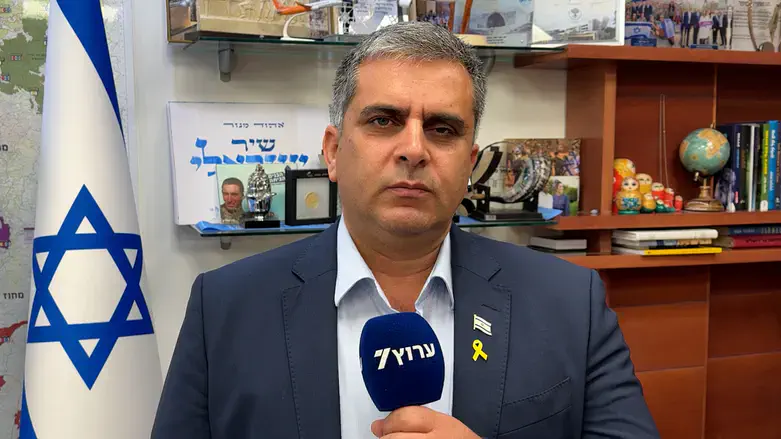
Minister of Aliyah and Integration Ofir Sofer (Religious Zionist Party) expressed clear positions on the issue of drafting the haredim, calling for a gradual process based on trust and understanding - not sanctions.
“The most trivial and most important thing,” he said in an interview with Arutz Sheva-Israel National News, “is to bring haredi soldiers into the system in a genuine way. This is not such a bombastic demand; I’m talking about 2,400 soldiers, which is a trust-building step.”
Sofer opined that recruitment should be carried out through understanding, not sanctions that could backfire.
“My position is to recruit, but through cooperation and genuine trust-building measures. We cannot miss this opportunity, and the more we succeed in developing such a process, the more significant it will be - not only for us but for Israeli society as a whole. I do not see sanctions as a solution.”
Sofer also addressed the relationship with the haredi factions in the coalition: “Indeed, we have a partnership - and on a values level, I have an alliance with all of Israel. Politically, of course, partnership has meaning - but that does not mean we cannot insist on critical issues and on their ability to ease the burden on the army.”
The minister stressed that the recruitment issue should not wait until elections: “If we reach the elections after having recruited 2,400 soldiers to the Hashmonaim Brigade, it will be possible to say that we have achieved something tangible in drafting the haredim. If, as a faction, we bring a practical solution, it will be very powerful. I very much hope we succeed in reaching a joint statement.”
During the interview, Sofer was asked to comment on the appointment of Major General Roman Gofman as head of the Mossad and replied, “Roman is an excellent officer - creative, determined, and principled. He has considerable achievements in managing the campaign. I think he is certainly worthy of this position. The only thing I somewhat regret is that he will not go on to become Chief of Staff.”
As someone who was himself wounded in service, Sofer emphasized the importance of honoring and listening to the injured, especially in the wake of the Swords of Iron War: “This year the significance is much sharper. It is very important that society not only honors but also looks inward, sees how attentive we are to the wounded, and how engaged we are in rehabilitation and in the challenges that have arisen as a result of the war. Israeli society must think about how it supports those who have been hurt.”