
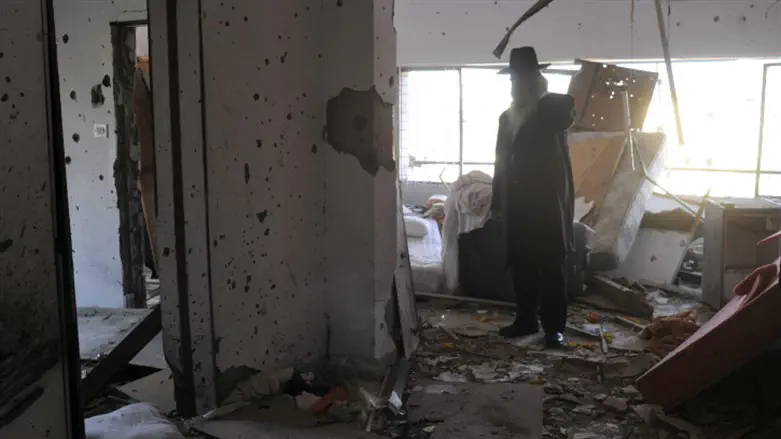
This Shabbat, the 2nd of Kislev, marks the Yartzheit of two holy soldiers who were murdered by terrorists, while on the front lines of antisemitic attacks in the service of Klal Yisrael.
18 years ago, amongst other locations, terrorists stormed the Chabad House in Mumbai, brutally murdering every Jew that they could find. The martyrs of that attack included Rabbi Gabi and Rebbetzin Rivki Holtzberg הי“ד, the local Chabad Shluchim.
As a young couple, Rabbi Gabi and Rivki chose to leave the spiritual and physical comforts of living near their families in Israel. They could have set up their home in a frum community with Torah institutions, schools and Shuls. There they would have access to Kashrut, Chinuch and all of the comforts that we take for granted.
Instead, feeling an inner, higher calling, they moved to India, a third world country, both physically and spiritually. In Mumbai, Kosher milk was not available, and kosher bread and meat would not be available unless you made them that way yourself. There were no schools to send their children to and no observant fellow Jews to form a community.
They didn’t move for a three or five year stint. As Shluchim of the Rebbe, they moved, intending to stay until Moshiach would come. They moved there, selflessly, to serve and care for the thousands of Jews who travel to India; businessmen, tourists and primarily young Israeli travelers.
They hosted tens of thousands of tourists each year for Shabbos, Chagim and Pesach Sedarim. They provided travelers with a home away from home, offering Kosher food, Shiurim and connection. They saved lost young Jewish boys and girls who got caught up in cults or found themselves in the ashrams of idolatry. And when required, they would help to arrange repatriation of the bodies of those who passed away, so that they could be returned to their families for a Jewish burial.
They made this commitment, inspired by the words of the Lubavitcher Rebbe and motivated by their pure Ahavat Yisrael and dedication to their fellow Jews. It didn’t matter whether the traveler was a Chassidic Mashgiach from the Badatz Eidah Chareidit, or a ‘secular’ Israeli who was seeking the pleasures of the world in drugs and rave parties. To them, there was no difference. Every Jew was loved and welcomed.
In recent months in Israel, the issue of drafting Yeshivah students to the army has been reignited, with passions flaring on both sides of the debate. A few weeks ago, we saw hundreds of thousands of haredim shut down the streets of Jerusalem in protest.
When I saw footage of this protest, something bothered me. My discomfort was not about the issue of the draft itself per se, a complex issue which will have to be addressed.
I can understand and appreciate where each side is coming from. All except the extreme Left in Israel recognise the importance of Torah study and its power to protect. I understand the fears and worries of protecting our values and lifestyle. I also understand the frustration and pain of the soldiers and their families carrying the burden of military service in the midst of a war when there are haredi young men who are not spending their time in yeshiva, who are not learning but do not enlist. Those are the ones who cause resentment because they are visible to the average Israeli.
What bothers me is sensing an underlying attitude and message that some project, the feeling that I am not part of your people or more specifically, you are not part of mine. If you are not like me and share my values and way of life, you are not part of Klal Yisrael and I do not need to concern myself about you. The attitude that I only need to look after my own demographic and put my needs above those of others. I think that if we distill it down to the core, this is why people feel resentment.
Educated on the teachings of Chassidut as taught by the Rebbe, this attitude is antithetical to Torah. We are all part of Klal Yisrael and every Jew, without distinction is precious. And we all have a responsibility to serve and contribute to Klal Yisrael and to take care of each individual Jew with their physical and spiritual needs.
This cannot only be through the study of Torah and our personal spiritual service. It must be reflected in an active and tangible, service that benefits others in a way that they appreciate and need.
At the same time, this may not have to be in the form of military service for everyone or at a specific age. It is ultimately about contributing to Klal Yisrael and it is a responsibility that we carry throughout our lives.
No one would be critical of Gabi and Rivki for not serving in the army. Gabi learned seriously in Yeshivah for many formative years, but his learning in Yeshivah did not isolate him from the rest of the Jewish people. On the contrary, it shaped his values to lead him on a path of life-long service to his fellow Jews when he left the Yeshivah walls.
Whilst they did not wear the khaki uniforms of soldiers, Gabi and Rivki were soldiers, serving Klal Yisrael on the frontlines, fighting assimilation and looking after and caring for our children far away from home. For this they paid with their lives, falling bravely at their posts.
This is true of the thousands of Shluchim around the world as well as the hundreds of haredi volunteers in organisations like Hatzalah and Zaka, who dedicate years of their lives to serve all Jews without distinction.
With this approach and with a shift in attitude, I think solutions can be found. We need to encourage more Gabis and Rivkis emerging from the Yeshivahs, to join the ranks of all of those who are serving Klal Yisrael in each of their capacities. יהי זכרם ברוך.