

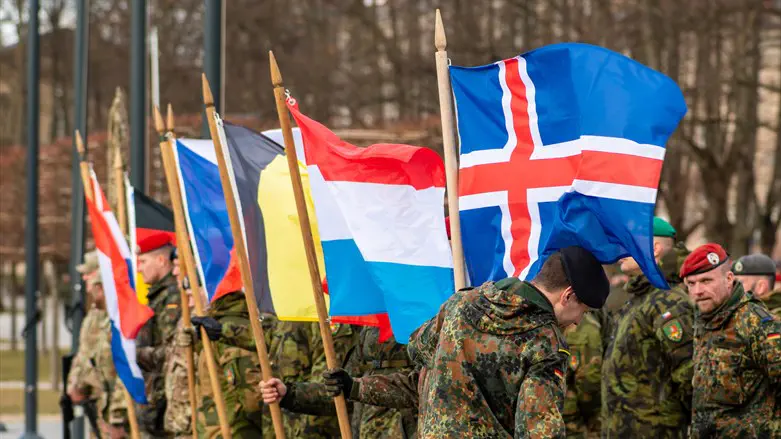
The fundamental bargain of the North Atlantic Treaty Organization (NATO) is collective defense: an attack on one is an attack on all. This week, however, Turkey, a supposed pillar of the alliance, has once again acted not as a reliable partner but as a strategic adversary, prioritizing its own revisionist goals over the security architecture of the West.
The news provides clear evidence of Ankara’s calculated and destabilizing divorce from the American-led alliance. Turkey formalized a major 10.7 billion dollar defense deal with the United Kingdom to purchase twenty Eurofighter Typhoon combat aircraft. Simultaneously, it reinforced its refusal to fully comply with US demands regarding the Russian S-400 missile defense system.
These actions are not minor diplomatic snubs; they are a direct challenge to American leadership, a strategic erosion of NATO interoperability, and a dangerous signal that Ankara views its defense posture as wholly independent of Washington’s security concerns.
The S-400 Security Breach: A Perpetual Vulnerability
The most egregious example of Turkish defiance remains the Russian S-400 missile system.
For years, Turkey has sought to rejoin the F-35 Joint Strike Fighter program, a quest that remains stalled due to its unwavering decision to acquire and retain the S-400. By securing the Eurofighter deal, Ankara signals that it will simply diversify its high-end air power away from US dominance rather than make the necessary geopolitical concessions to return to the F-35 program.
This move directly sacrifices the principle of interoperability, the operational backbone of NATO.
Furthermore, reports this week confirmed Turkey is not abandoning the Russian-made system either. Instead of meeting the unconditional US demand to scrap the S-400, Ankara is proposing a limited-use model and technical coordination that would allow the missile system to remain active. This compromise is wholly unacceptable to the United States. It is an attempt to maintain a direct technological link to Moscow while claiming the benefits of the US security alliance.
The US position has been firm and clear: the acquisition and possession of the S-400 are fundamentally incompatible with NATO security. By pursuing this dual allegiance, Ankara effectively attempts to secure the military technology of a rival power under the umbrella of American protection. The S-400 remains capable of activation within twelve hours if ordered, making it a perpetual and unacceptable vulnerability for the entire alliance.
Turkey’s defense policy is therefore defined by the very friction it creates with its closest allies, forcing them to operate under a cloud of compromised intelligence and questionable loyalty.
Undermining Counter-Terrorism and Supporting Extremism
Turkey’s hostility is not limited to defense procurement; its actions on the ground in Northern Syria directly undermine American counterterrorism efforts.
Following the collapse of the Assad regime, Turkey has become a key supporter of the new Syrian Transitional Government, which is dominated by the formerly jihadist group Hayat Tahrir al Sham (HTS). This strategic alignment forces a dangerous moral compromise. While the US scrambles to offer legitimacy to the new Islamist regime to counter Iran and Russia, Turkey is leveraging its influence to pressure America’s most effective ally against ISIS, the Kurdish-led Syrian Democratic Forces (SDF).
Turkish pressure is a primary driver behind efforts to integrate the SDF into the new Syrian army ranks. Ankara views the SDF as a threat due to its ties to the Kurdistan Workers’ Party (PKK), a designated terrorist organization. However, this forced integration risks dissolving the US’s most reliable anti-ISIS proxy, placing US intelligence and military efforts in a zone controlled by a government that is ideologically compromised. This political coercion actively jeopardizes the delicate security arrangements in post-Assad Syria.
Moreover, Turkey’s willingness to escalate military pressure against the Kurds, including the devastating Operation Dawn of Freedom which led to the mass displacement of Kurdish civilians, underscores its prioritization of ethnic conflict over the shared NATO goal of eradicating terror. The pursuit of its anti-Kurdish policy actively compromises the delicate security arrangements in a post-Assad Syria, a direct betrayal of the spirit of the counterterrorism coalition.
The Cost of Autonomy
Turkey’s foreign policy is often described as a quest for strategic autonomy. In reality, it is a reckless gamble that imposes tangible costs on the West.
First, by continuing to acquire military technology that is non-interoperable with NATO systems, Turkey complicates and weakens the entire alliance's collective defense planning. Second, its geopolitical balancing act exposes the alliance to the economic and security risks of dealing with Moscow and Beijing. The European Union, for instance, has already targeted Turkish entities in sanctions packages for their role in circumventing restrictions against Russia. This suggests Ankara’s independent policy extends into economic spheres, complicating the unified Western front against Russian aggression.
American policy makers must cease treating Turkey’s recalcitrance as an internal matter to be managed. The actions of the past week confirm that Turkey views its relationship with the West as a transaction to be leveraged, not a commitment to be honored.
The US must respond not with appeals for cooperation but with clear consequences. If Turkey insists on maintaining the S-400, defying US security mandates, and actively undermining American-led forces in Syria, the long-term cost of its membership must be reviewed.
Amine Ayoub, a fellow at the Middle East Forum, is a policy analyst and writer based in Morocco. Follow him on X: @amineayoubx