

A new stream has emerged in northern Israel, marking the launch of a major project aimed at reviving the rapidly drying Kinneret (Sea of Galilee), Kan News reported.
On Thursday, water from the national desalinated water system was connected to communities in the Lower Galilee, with surplus water diverted to the Tzalmon Stream, which flows into the Kinneret.
The move marks the beginning of Israel’s national water transfer project to the lake. While the current flow - 1,000 cubic meters per hour - is relatively modest and not enough to save the lake on its own, officials say this is just the initial phase.
“We’re learning the system, monitoring how much water reaches the Kinneret, and will increase the quantities based on national water availability,” project engineers told Kan News.
The newly flowing stream has already become a scenic attraction, with hikers and nature lovers flocking to enjoy the gushing water and high-pressure streams.
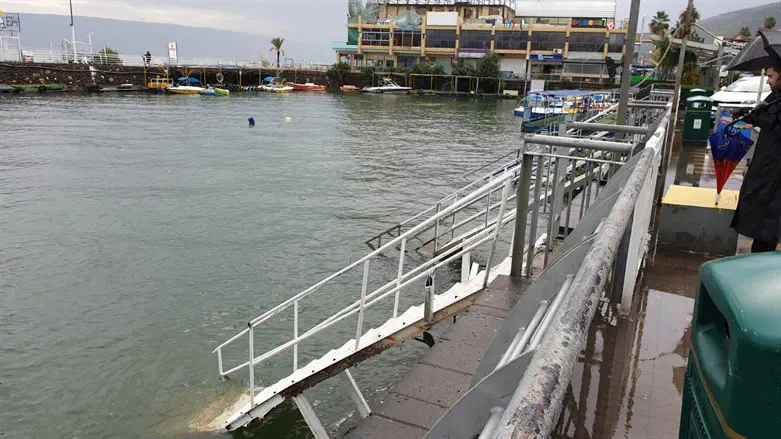
Since the start of November, the Kinneret’s water level has dropped by 4.5 centimeters and currently sits 213 centimeters lower than it did this time last year. The lake is now 4.5 meters below its full capacity.
The flow from the desalinated water will contribute around 700,000 cubic meters per month, adding about half a centimeter of to the water level monthly. Experts stress that only the Dan and Banias springs can meaningfully replenish the lake, and if they remain weak, the lake’s condition will continue to deteriorate.
Due to the water shortage, farmers in the Upper Galilee have already been forced to dry out over 30,000 dunams (7,400 acres) of field crops, resulting in estimated damages of more than 65 million NIS, Kan added. Nevertheless, with cautious optimism for a rainy winter, some have begun planting winter crops in the Hula Valley.
A Knesset session on the drought crisis was held this week, but no concrete relief emerged. Key ministers, including Finance Minister Bezalel Smotrich and Agriculture Minister Avi Dichter, failed to meet as planned, and farmers who traveled from the Galilee to Jerusalem left without receiving attention.
Though rain is forecast for the next three days, temperatures are expected to rise again next week.