
Joseph Feit is Chairman of Struggle to Save Ethiopian Jewry. He began his activities on behalf of Ethiopian Jewry and the Beta Israel left behind in Operation Solomon over thirty years ago at the written request of then Chief Rabbi Mordechai Eliyahu z'tl
Not long ago, Israel’s Ministry of Aliyah and Integration announced that it was being reshaped into a “growth engine” for the economy. The director-general explained that aliyah should help meet Israel’s need for trained engineers and physicians. Minister Ofir Sofer has spoken in similar terms. Their intent was admirable, modernization, but the discussion touches something deeper than economics: the soul of Zionism itself.
Aliyah as Covenant, Not Commerce
From its beginning, aliyah has never been a market transaction. It is the living realization of kibbutz galuyot - the ingathering of exiles - a mitzvah rooted in the belief that every Jew, regardless of wealth or profession, is created b’tzelem Elokim, in the image of God. Our greatest leaders taught that Israel’s purpose was not only to build a thriving state, but to redeem a dispersed people.
Economic strength is essential, but moral strength is existential. When aliyah is measured mainly in shekels or degrees, we risk forgetting the holiness of the act itself.
A Legacy of Religious Zionist Leadership
Few movements have done more to translate that holiness into action than Religious Zionism. Its giants - Rabbi Hanan Porat, Zevulun Orlev, Rabbi Yitzchak Levy, and others - worked tirelessly to bring Ethiopian Jews home. They visited Gondar, fought for budgets, and welcomed Ethiopian children into Religious Zionist schools. They believed, simply and profoundly, that kol Yisrael arevim zeh bazeh - all Israel is responsible for one another.
That legacy still lives in the hearts of the thousands of families in Ethiopia today.
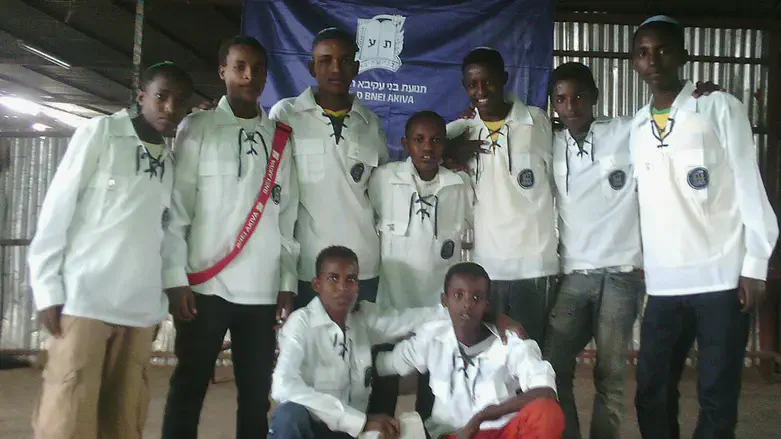
Roughly 7,000 of them, maternally descended from Beta Israel families, remain in Gondar and Addis Ababa awaiting inspection and approval for aliyah.Many already have parents, children, and siblings in Israel - including soldiers serving in the IDF. They live fully Jewish lives: keeping Shabbat, maintaining kashrut, sending their children to Jewish schools, and praying daily for Jerusalem.
The Halakhic and Moral Mandate
No one questions that lineage must be verified with care. But halakhah requires examination, not avoidance. As our sages taught, “ein la-dayan ella mah she-einav ro’ot” - a judge must decide based on what his eyes actually see. To withhold inspection is to close those eyes.
The leading halakhic authorities most closely associated with Religious Zionism understood this clearly. Rabbi Mordechai Eliyahu zt"l ruled that the remaining Ethiopian Jews must be brought home; his position was affirmed by Rabbi Ovadiah Yosef zt"l and Rabbi Shlomo Amar. Their message was consistent: justice and compassion must accompany precision.
A Practical Path Forward
The legal and bureaucratic frameworks already exist. Government Decisions 716 (2015) and 429 (2018) provide for the aliyah of those who meet the halakhic standard. More than 1,200 individuals have already been approved. What remains is simply to finish the job:
-Send inspectors to review the applications of the 7,000 waiting families.
-Implement the existing decisions and begin bringing home those already cleared.
-Allocate a modest budget - a fraction of what Israel rightly invests in other immigrant programs.
-Set a defined timetable so that families are not left in endless uncertainty.
These steps are acts not of politics, but of faithfulness - faithfulness to Torah, to halakhah, and to the moral promise of Zionism.
Faith, Not Frustration
The men and women guiding Religious Zionism today shoulder immense burdens: war, economic stress, and the constant demands of leadership. This appeal is not offered in criticism, but in ahavah ve’achva - love and fraternity. The movement that once led the way can lead again. By doing so, it will remind the nation that material progress and spiritual mission are not rivals but partners.
Why It Matters Now
Since October 7, Israel has faced relentless scrutiny and slander. Yet we know that Israel’s moral standing has never depended on its critics; it depends on our own conscience. Completing the aliyah of Ethiopia’s Jews would proclaim to the world - and to ourselves - that even in war, the Jewish heart remembers its calling: to gather its dispersed, to uphold dignity, and to act with compassion.
A Brotherly Call
The Torah commands, “Lo ta’amod al dam re’echa” - do not stand idly by the blood of your neighbor. Our teachers understood that command not as a slogan but as a covenantal duty.
If Israel seeks renewal, let it begin where our story began - with the ingathering of exiles. Let the next flights depart not only from cities of affluence, but from Gondar and Addis Ababa. Bringing these families home will not weaken our economy; it will strengthen our identity.
Religious Zionism was born to serve as the bridge between faith and nationhood. To extend its hand once more to the Jews of Ethiopia is not only to rescue others - it is to redeem a part of ourselves.