

Michael Smuss, the last surviving fighter of the Warsaw Ghetto Uprising, passed away Thursday at the age of 99.
Just a month ago, German Ambassador to Israel Steffen Seibert presented Smuss with the Order of Merit-Germany’s highest civilian honor-in recognition of his lifelong commitment to Holocaust education and to fostering dialogue between Germany and Israel.
“I was saddened to hear of Michael Smuss’ passing,” Seibert said Friday morning. “He dedicated his life to teaching about the Holocaust. I will never forget the ‘Zikaron BaSalon’ event with him. Just last month, I had the honor of presenting him with the Federal Cross of Merit.”
Born on April 15, 1926, in Danzig, Smuss lived there with his family until the Nazi Party’s rise to power. When he was 12, his father decided the family should move to Łódź, Poland. In Łódź, Smuss attended Isaac Katzenelson’s gymnasium and joined a youth movement.
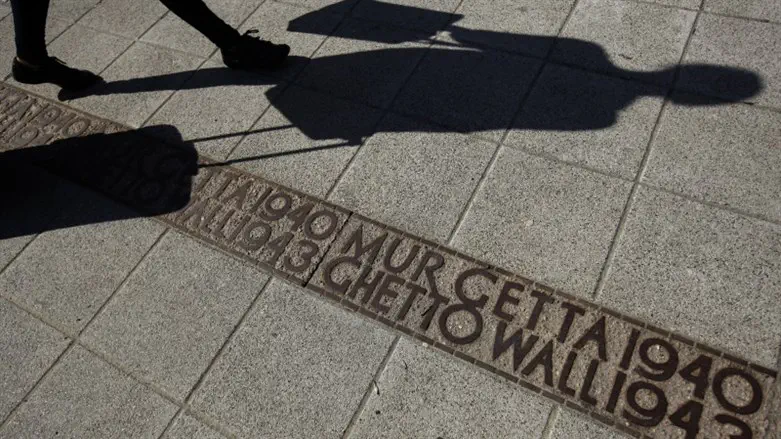
Because his mother held a Danzig passport, the family was forced to split. Smuss and his father relocated to Warsaw, where they lived in the Warsaw Ghetto from 1940 until the uprising in 1943.
They endured constant hunger and disease, surviving thanks to their work in a factory repairing military equipment for the German army.
“In the ghetto, I witnessed the horrors caused by the Nazis to the Jews,” Smuss once said. “A few young friends and I joined the underground resistance. The resistance's goal was to stop the Nazis' terrible deeds. I smuggled weapons for the resistance and made Molotov cocktails - a means of preparing for a revolt against the Nazis.”
He described his survival as both chance and providence. “Additionally, the situation - or, as I call it, God’s grace - played in my favor: I was one of the last people in the Warsaw Ghetto, where tens of thousands had already died. The Nazis wanted to report positively on the so-called successful ghetto, so they invited journalists. That’s why they didn’t kill us.”
After the ghetto’s destruction, Smuss was deported to several concentration and labor camps, including Budzyn, Majdanek, Plaszow, Wieliczka, and Flossenbürg in Bavaria. He endured the brutal “death march” from Flossenbürg to Stamsried in April 1945, surviving seven days and nights of exhaustion and deprivation.
Following the war, Smuss dedicated his life to Holocaust remembrance and the fight against antisemitism. His courage during the Holocaust-and his tireless efforts afterward to bear witness-made him a symbol of resilience and moral clarity.
The organization Zikaron BaSalon, which hosts Holocaust remembrance gatherings in homes and communities, mourned his death.
“We mourn the passing of Holocaust survivor Michael Smuss today,” the group said in a statement. “Michael, whose big heart defined him more than anything, was a close friend and a central partner in Zikaron BaSalon. He dedicated his life to sharing his testimony, not just to remember the past, but as a living moral call."
“He shared this call with thousands of people in Israel and around the world. Michael fought in the Warsaw Ghetto Uprising, and as a young man, he learned that memory is not a ceremony, but a responsibility. He passed that lesson on to us, and with his departure, we mourn the loss of the dear person who was our compass."
“We also commit to continuing his path: to remember and remind. Saying goodbye to Michael is yet another reminder of the responsibility we, as a society, have to pass on the memory to future generations."
“We will continue to share his story and the stories of many others in Zikaron BaSalon memory sessions. His spirit will continue to guide us forward, especially in these times. May his memory be a blessing.”