
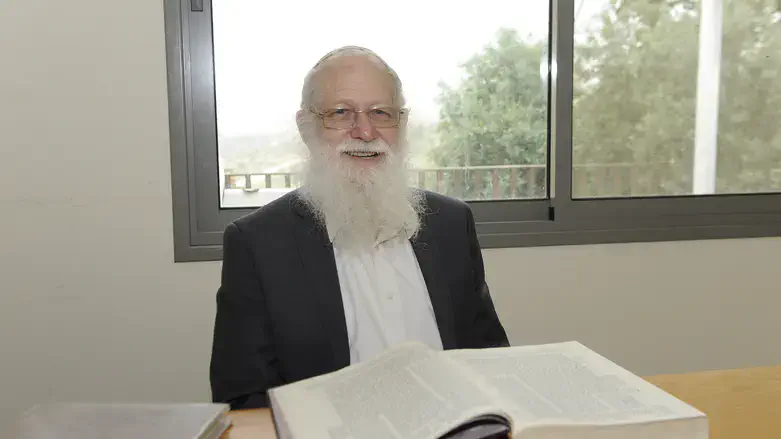
HaRav Dov Begon is Head of Yeshivat Machon Meir
The Ten Days of Repentance between Rosh Hashanah and Yom Kippur contain a special segulah. The repentance of the individual in these days is considered like the repentance of the community. As the words of the Rambam: “Even though repentance and crying out are always good, in the Ten Days of Repentance, it is especially favored and accepted immediately. To whom does this apply? To the individual. But the community, whenever they do repentance and cry out with a whole heart, they are answered” (Laws of Repentance 2:6).
Therefore “all the House of Israel are accustomed in these days to increase the giving of charity and performing good deeds and to engage in commandments”… and to confess many times in the Selichot and especially on Yom Kippur (ibid. 3:4).
About these days it is possible to say: “A person sanctifies himself a little - they sanctify him much. He sanctifies himself from below - they sanctify him from above” (Yoma 39a). Thus, there is special Heavenly assistance in these days to become purified and sanctified, and in our language: in these days a window of opportunities is opened for us, as it is said, “Seek Hashem when He is found, call Him when He is near” (Isaiah 55).
Our Sages bring Nabal the Carmelite as an example of a person for whom an opportunity was opened to do repentance in the days of repentance and he did not utilize it: “And it was about ten days and Hashem struck Nabal” (Rosh Hashanah 18a). Even Nabal - as his name, so was he - ungrateful. Yet his punishment was postponed in the Ten Days of Repentance, as maybe he would do teshuvah. From here we learn how great is the power and segulah of the ten days of repentance, that even constant sinners have the possibility to fix themselves.
As of now, in the Ten Days of Repentance many possibilities are opened to us to rectify our faults, to reconcile with others and to unite, to annul the differences of opinion, the disputes and the angers between man and his fellow, between husband and wife, between children and parents, between political party and political party, between religious and non-religious, between right and left - and to arrive together to Yom Kippur, which is the day of reconciliations for the community and for the individual.
As the words of Rabbi Akiva testify: “Happy are you Israel, before whom are you purified? Before your Father in Heaven, as it is said, ‘And I will sprinkle upon you pure water and you shall be purified…’” (Yoma 85), speedily in our days, Amen. In anticipation of victory and complete salvation. With the blessings for of a good and sweet year.