
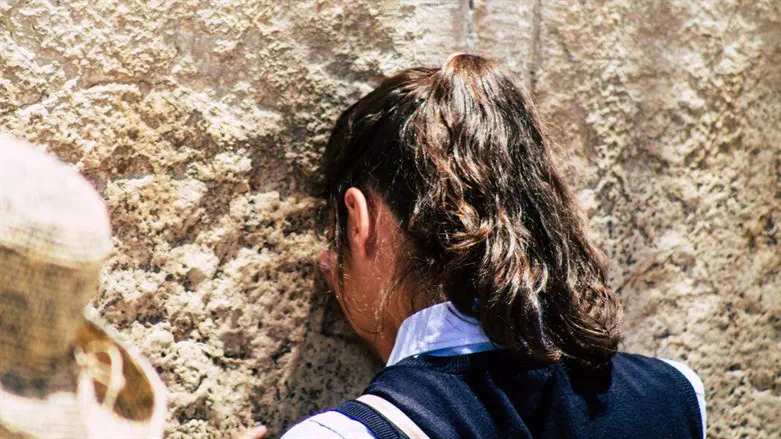
Maybe the most emotionally-charged of all the Rosh Hashanah and Yom Kippur prayers is וּנְתַנֶּה תֹּקֶף, U-netanneh Tokef, which appears in the Mussaf (Additional Service) of both:
“We hereby acknowledge the power of this day’s holiness, for it is awesome and fearsome; on it Your kingship will be exalted…
“On Rosh Hashanah it will be inscribed, and on Yom Kippur fast-day it will be sealed: how many will pass form the world and how many will be created; who will live and who will die; who in his destined time and who not in his destined time; who by water and who by fire; who by sword and who by wild animal; who by starvation and who by thirst; who by earthquake and who by plague; who by strangulation and who by stoning; who will have rest and who will wander; who will have quietude and who will be harassed; who will have tranquillity and who will be persecuted; who will be impoverished and who will become wealthy; who will be humiliated and who will be honoured -
“ - But repentance and prayer and charity avert the evil of the decree”.
These are the three tools which G-d gives us to transform His judgment from bad to good: repentance, prayer, and charity.
Even though His judgment stands, it can be fulfilled for good and not for bad. “Who in his destined time and who not in his destined time”: which could mean dying before his destined time, his life cut short - or dying after his destined time, his life lengthened.
In almost all Machzorim (Festival prayer-books), each of the three words תְּשׁוּבהָ (repentance), תְּפִלָּה (prayer), and צְדָקָה (charity), is crowned with a superscription: צוֹם (fasting), קוֹל (voice), and מָמוֹן (money).
Repentance involves fasting, prayer involves voice, and charity involves donating money.
Interestingly, the three words צוֹם (fasting), קוֹל (voice), and מָמוֹן (money) all have the same gematria (numerical value) of 136, indicating that all three are equally essential before Hashem.
The U-netanneh Tokef prayer is the introduction to the Kedushah (Sanctification), which on Rosh Hashanah and Yom Kippur concludes with four paragraphs beginning with the word וּבְכֵן (read: uvechen), meaning approximately “and so”:
“וּבְכֵן, and so may Your Name be sanctified, O Hashem our G-d, on Israel Your nation, and on Jerusalem Your city, and on Zion the abode of Your glory, and on the kingship of the House of David Your anointed , and on Your dwelling and Your Sanctuary…
“וּבְכֵן, and so instil fear of You, O Hashem our G-d, on all that You have made, and awe of You on all that You have created…
“וּבְכֵן, and so give honour, O Hashem, to Your nation, praise to those who fear You, and good hope to those Who search for You…
“וּבְכֵן, and so the righteous ones will see and rejoice, and the upright ones will be glad, and the pious ones will exult with joyful song…”.
For a Kabbalistic and Hassidic understanding of this beautiful and moving prayer, I turn primarily to the Pri Etz Chaim (composed by Rabbi Chaim Vital in Tz’fat, Israel, in 1573, recording the teachings of Rabbi Yitzchak Luria); to the Tzror ha-Mor (commentary on the Torah by Rabbi Avraham Saba’ first published in Venice, 1523), specifically his commentary on Parashat Toldot, s.v. וישלח יצחק; and Rabbi Tzadok ha-Kohen of Lublin, in his work Pri Tzadik on the Book of Deuteronomy, section on Rosh Hashanah #24.
The gematria of the word בְכֵן(וּבְכֵן without the prefix וּ) is 72:
ב = 2
כ = 20
ן = 50
for a total of 72.
The first of the four paragraphs that it introduces corresponds to the verse:
וַיִּסַּע מַלְאַךְ הָאֱלֹקִים הַהֹלֵךְ לִפְנֵי מַחֲנֵה יִשְׂרָאֵל וַיֵּלֶךְ מֵאַחֲרֵיהֶם, וַיִּסַּע עַמּוּד הֶֽעָנָן מִפְּנֵיהֶם וַֽיַּעֲמֹד מֵאַחֲרֵיהֶם:
“The Angel of G-d, who had been going ahead of the Israelite Camp, moved and went behind them; and the pillar of cloud moved from ahead of them and stood behind them” (Exodus 14:19), which verse contains 72 letters.
This invokes our father Abraham, who sanctified the Name of G-d, hence “וּבְכֵן, and so may Your Name be sanctified, O Hashem our G-d...”.
The second of these corresponds to the next verse:
וַיָּבֹא בֵּין מַחֲנֵה מִצְרַיִם וּבֵין מַחֲנֵה יִשְׂרָאֵל וַיְהִי הֶעָנָן וְהַחֹשֶׁךְ וַיָּאֶר אֶת הַלָּיְלָה וְלֹא קָרַב זֶה אֶל זֶה כָּל הַלָּיְלָה:
“And he [the angel] came between the camp of Egypt and the camp of Israel; the cloud and the darkness were there, and he lit up the night, and the one did not approach the other all the night” (Exodus 14:20), which verse also contains 72 letters.
This invokes our father Yitzchak: Ya’akov referred to G-d as פַּחַד יִצְחָק, “the Fear of Yitzchak” (Genesis 31:42), hence “וּבְכֵן, and so instil fear of You, O Hashem our G-d…”.
The third of these corresponds to the verse:
וַיֵּט מֹשֶׁה אֶת יָדוֹ עַל הַיָּם וַיּוֹלֶךְ ידוד אֶת הַיָּם בְּרוּחַ קָדִים עַזָּה כָּל הַלַּיְלָה וַיָּשֶׂם אֶת הַיָּם לֶחָרָבָה וַיִּבָּקְעוּ הַמָּיִם:
“And Moshe stretched forth his hand over the [Red] Sea, and Hashem moved the sea with a powerful east wind all the night, and He made the sea into dry land; and the waters were split” (Exodus 14:21), which verse also contains 72 letters.
This invokes our father Ya’akov, who said בָּרוּךְ שֵׁם כְּבוֹד מַלְכוּתוֹ לְעוֹלָם וָעֵד, “Blessed the name of His glorious Kingdom forever and ever”.
This reference is somewhat obscure. The Talmud (Pesachim 45a) and the Midrash (Bereishit Rabbah 96:49 and Sifrei Deuteronomy, Va-et’chanan 31) record that when our father Ya’akov was nearing the end of his life and called his twelve sons to his bedside to bless them (Genesis 49), he was struck by a misgiving: Could he be sure that all twelve of his sons would remain faithful to G-d?
After all, his grandfather Avraham had had two sons, one of whom was Yishma’el, who was disqualified from this holy family; and his father Yitzchak had had two sons, one of whom was Eisav, who was disqualified from this holy family. What confidence did he have that none of his twelve sons would be disqualified from this holy family?
They reassured him by saying the Shema: שְׁמַע יִשְׂרָאֵל ה' אֱלֹקֵינוּ ה' אֶחָד, “Hear O Israel, Hashem is our G-d, Hashem is One” (Deuteronomy 6:4).
They all addressed this declaration of their faith in the One G-d to their father Israel; and in his joy, he instinctively responded בָּרוּךְ שֵׁם כְּבוֹד מַלְכוּתוֹ לְעוֹלָם וָעֵד, “Blessed the name of His glorious Kingdom forever and ever”.
Hence we recall this in the Rosh Hashanah prayer with the words “וּבְכֵן, and so give honour, O Hashem, to Your nation, praise to those who fear You, and good hope to those Who search for You…”.
Ya’akov’s children, the progenitors of the Tribes, were the foundation of Hashem’s nation, the Children of Israel.
The fourth and final paragraph corresponds to the Secret Divine Name of G-d which contains 72 letters. Kabbalistic sources (primarily the Zohar, 2:51b) teach that the three verses cited above (Exodus 14:19, 20, 21), each of which contains 72 letters, correspond to the three Divine Attributes of Chessed (Lovingkindness), G’vurah (Power), and Tif’eret (Splendour).
This Divine Name is represented by “וּבְכֵן, and so the righteous ones will see and rejoice…”, hence this fourth paragraph corresponds to King David, the foundation of Righteousness and Justice.
The Mussaf (Additional Service) of Rosh Hashanah
This prayer is unique in consisting of nine Blessings, and it is well worth investing a few paragraphs in analysing the structure of this Prayer:
The Amidah (Standing-Prayer) for most of the year consists of 19 brief Blessings. Rabban Gamliel of Yavneh commissioned Shimon the Pakuli to compose this Prayer shortly after the destruction of the Second Holy Temple (Megillah 17b), and it originally contained 18 Blessings, which is why we still call it the Shmoneh-Esrei or Eighteen-Blessings.
Shortly thereafter, however, Rabban Gamliel commissioned Shmuel ha-Kattan (“the Small”, in this case denoting “the humble”) of Yavneh to add a nineteenth Blessing, the Blessing against heretics, specifically informers, Jews who collaborated with the Romans against the Jews (Berachot 28b).
This is how we reached the 19 Blessings of the Amidah with which we are so familiar today.
The first three Blessings (Patriarchs, G-d’s power, Sanctity of G-d’s name) and the final three Blessings (Temple Service, Thanksgiving, Peace) are the same for all Services on all days of the year.
The middle 13 Blessings are recited only on weekdays.
Every Amidah for Shabbatot and Festivals, and for the Mussaf of Rosh Chodesh and Chol ha-Mo’ed (Intermediate Days of Festivals), begins and ends with the same Blessings. However the middle 13 Blessings are replaced with one single Blessing, קְדֻשַׁת הַיּוֹם, Sanctification of the Day.
Therefore almost all Festival Prayers consist of 7 Blessings.
The Mussaf of Rosh Hashanah, like all the Amidot, begins and ends with the same Blessings. However the middle section uniquely contains three Blessings: מַלְכוֹיוֹת (Malchuyot), G-d’s Kingship; זִכְרוֹנוֹת (Zichronot), Remembrance; and שׁוֹפַרוֹת, Shofarot (Shofar-blasts).
Each of these three Blessings follows the same structure:
It opens with a paragraph introducing the theme; then a paragraph containing three verses from the Torah on the theme, a second paragraph containing three verses from the Psalms on the theme, a third paragraph containing three verses from the Prophets on the theme, and finally a tenth verse from the Torah on the theme; then a final paragraph summarising the Blessing, and then the Blessing itself (Blessed are You, Hashem…).
This brings us to the nine Blessings of the Mussaf for Rosh Hashanah.
The Haftarah of the first day
The Talmud (Megillah 30b-31a) decrees that the Haftarah (the Prophetic reading following the Torah-reading) for the first day of Rosh Hashanah is 1 Samuel 1:1-2:10, recording the events surrounding the birth of the Prophet Samuel.
Hannah, Elkanah’s wife, was barren, and prayed to G-d for a son; our Haftarah records how she prayed for a son, and concludes with her prayer of gratitude to G-d for her son - the son who was born on Rosh Hashanah, who would serve Eli the Kohen Gadol (High Priest) in the Mishkan (Sanctuary) in Shiloh, and who would grow up to become the Prophet Samuel.
When Hannah prayed for a son, she prayed silently, which was apparently not standard practice in those days, which was why when Eli saw her lips moving silently, he thought she was drunk (1 Samuel 1:12-14).
This is the precedent for praying silently, and we memorialise Hannah’s prayer for a son by praying silently every day.
And we memorialise Hannah’s prayer of gratitude in the Mussaf of Rosh Hashanah: the Talmud (Berachot 29a) cites the otherwise-unknown Rabbi Yitzchak of Kartignin, who observed that in Hannah’s prayer of gratitude (1 Samuel 2:1-10), she mentioned the Name of Hashem nine times; and the nine Blessings in the Mussaf of Rosh Hashanah correspond to these nine mentions of His Name.
And we memorialise Hannah’s prayer of gratitude the rest of the year in the nineteen Blessings of the Amidah. Rabbi Elazar Rokeach (Poland, Amsterdam, and Israel, c.1685-1742), in his book Ma’asei Roke’ach (“Perfume-maker”) notes that the conclusions of the nineteen Blessings contain a total of 113 words:
- בָּרוּךְ אַתָּה ה', מָגֵן אַבְרָהָם:
- בָּרוּךְ אַתָּה ה', מְחַיֶּה הַמֵּתִים:
- בָּרוּךְ אַתָּה ה', הָאֵל הַקָּדוֹשׁ:
- בָּרוּךְ אַתָּה ה', חוֹנֵן הַדָּעַת:
- בָּרוּךְ אַתָּה ה', הָרוֹצֶה בִּתְשׁוּבָה:
- בָּרוּךְ אַתָּה ה', חַנּוּן הַמַּרְבֶּה לִסְלוֹחַ:
- בָּרוּךְ אַתָּה ה', גּוֹאֵל יִשְׂרָאֵל:
- בָּרוּךְ אַתָּה ה', רוֹפֵא חוֹלֵי עַמּוֹ יִשְׂרָאֵל:
- בָּרוּךְ אַתָּה ה', מְבָרֵךְ הַשָּׁנִים:
- בָּרוּךְ אַתָּה ה', מְקַבֵּץ נִדְחֵי עַמּוֹ יִשְׂרָאֵל:
- בָּרוּךְ אַתָּה ה', מֶלֶךְ אוֹהֵב צְדָקָה וּמִשְׁפָּט:
- בָּרוּךְ אַתָּה ה', שׁוֹבֵר אוֹיְבִים וּמַכְנִיעַ זֵדִים:
- בָּרוּךְ אַתָּה ה', מִשְׁעָן וּמִבְטָח לַצַּדִּיקִים:
- בָּרוּךְ אַתָּה ה', בּוֹנֵה יְרוּשָׁלָיִם:
- בָּרוּךְ אַתָּה ה', מַצְמִיחַ קֶרֶן יְשׁוּעָה:
- בָּרוּךְ אַתָּה ה', שׁוֹמֵעַ תְּפִלָּה:
- בָּרוּךְ אַתָּה ה', הַמַּחֲזִיר שְׁכִינָתוֹ לְצִיּוֹן:
- בָּרוּךְ אַתָּה ה', הַטּוֹב שִׁמְךָ וּלְךָ נָאֶה לְהוֹדוֹת:
- בָּרוּךְ אַתָּה ה', הַמְבָרֵךְ אֶת עַמּוֹ יִשְׂרָאֵל בַּשָּׁלוֹם:
These 113 words, says Rabbi Elazar Rokeach, correspond to the 113 words in Hannah’s prayer.
The U-netanneh Tokef prayer assures us that prayer averts the evil of the decree. As Hannah’s prayer transformed her from a barren childless woman to a joyful mother, and as she later prayed her heartfelt gratitude to G-d for her transformation, so too our prayers can transform our lives today.
May this Rosh Hashanah 5786 usher in a new year in which Hashem answers our prayers for the good, in which all evil decrees upon us are transformed into good.
שָׁנָה טוֹבָה וּמְתוּקָה!