

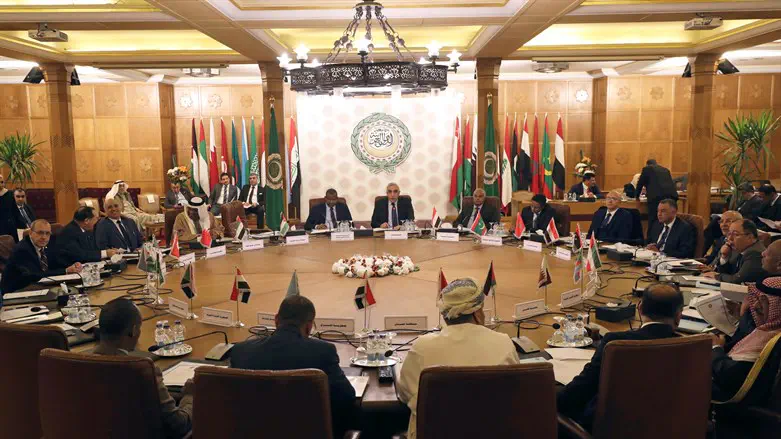
After Israel’s decisive strike in Doha on Sept. 9, 2025, the Arab world is once again in crisis mode. Egypt has floated the idea of forming a “joint Arab army” modeled on NATO, a force supposedly capable of countering Israel and projecting Arab unity. The proposal has made headlines, but a sober look reveals it for what it is: a hollow gesture by regimes more concerned with their own survival than any genuine collective defense.
The Arab League has talked about military coordination for decades. From the failed United Arab Command of the 1960s to more recent proposals for joint rapid-response forces, the pattern is consistent: declarations are made, communiqués are issued, and little to nothing materializes. The reason is structural. NATO rests on shared democratic institutions, transparency, and mutual trust. The Arab world is fractured by deep rivalries, sectarian divides, and authoritarian rulers who trust neither their neighbors nor their own people.
Egypt, leading the charge for this new initiative, is a case in point. President Abdel Fattah el-Sisi presides over an economy in freefall, with soaring debt, currency crises, and a restive population. The Egyptian army, bloated and deeply entangled in business interests, is far better at repressing its citizens than projecting power abroad. The notion that it could serve as the backbone of a credible Arab NATO stretches the imagination.
Across the region, the dysfunction runs even deeper. Lebanon is paralyzed by political deadlock, with Hezbollah acting as a state within a state. Iraq is fragmented by sectarian militias beholden to Iran. Yemen is divided among warring factions, its national army in shambles. Sudan is consumed by civil war. Algeria, while posturing against Israel, faces its own economic stagnation and mass youth discontent. These are not pillars of a future alliance; they are brittle states struggling to keep order within their own borders.
The truth is that Arab regimes are not building a military bloc to confront Israel. They know that such a confrontation would be disastrous, as the swift precision of the Doha strike demonstrated. Rather, the talk of a joint army is political theater, designed to reassure domestic audiences that leaders are “responding” while their real battles remain internal. A NATO-style force makes for good headlines, but its purpose is not to fight Israel—it is to buy time for rulers worried about unrest at home.
Israel, meanwhile, continues to demonstrate the gap between rhetoric and reality. Its strike on Doha did not just damage Hamas’s infrastructure; it shattered the illusion that foreign capitals can indefinitely shield terror groups. Arab leaders can convene summits and issue statements, but when Israel identifies a direct threat, it acts decisively. That credibility is precisely what the Arab regimes lack, and no paper alliance can change it.
Moreover, Arab populations themselves are unconvinced. Ordinary citizens see through the spectacle. They know their leaders’ priorities lie in consolidating power, silencing dissent, and clinging to fragile legitimacy. The young men and women who demand jobs, reform, and dignity are not swayed by promises of military unions. For them, the greatest insecurity is not Israel—it is the corruption, stagnation, and repression of their own governments.
This is why the idea of a joint Arab army will remain a mirage. It is not a serious strategic project but a political distraction. Even if an alliance were to be announced with great fanfare, the lack of trust, resources, and cohesion would doom it from within. Arab leaders know this, but they also know that projecting the image of unity buys them time and deflects attention from their failures.
Israel and the West should not be fooled. The region’s dictators may talk of joint armies, but their only real war is against their own people’s aspirations. That is why, despite all the noise, the balance of power will remain unchanged: Israel will continue to defend itself with proven military capability, while Arab regimes continue to defend their own survival with slogans.
The joint Arab army, like those proposed before it, will exist only in speeches. The problems tearing apart the Arab world—sectarianism, authoritarianism, economic collapse—cannot be solved by another summit or another declaration. They require reform and accountability, the very things Arab rulers fear most.
Amine Ayoub,a fellow at the Middle East Forum, is a policy analyst and writer based in Morocco. Follow him on X: @amineayoubx.