

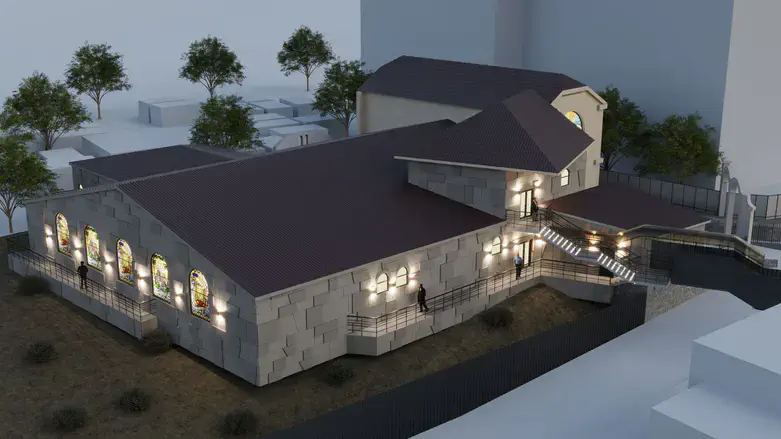
The 'Breslov Union' has announced the launch of an ambitious renovation project at the tomb of Rabbi Nachman of Breslov in Uman, with an estimated cost exceeding $2 million.
Scheduled to begin in the winter of next year, the comprehensive project aims to transform the entire tomb complex, enhancing the experience for the hundreds of thousands of worshippers who visit the site annually.
Spanning 1,800 square meters, the renovations will address long-standing challenges faced by visitors and introduce significant upgrades to improve prayer conditions. The initiative’s central goal, according to the Breslov Union, is to ensure that every Jew can come to Rabbi Nachman's gravesite and pray without distraction or discomfort.
A major milestone in the project will be the construction of a permanent women's section — the first in over 20 years — replacing the current temporary structure. Additionally, three new prayer halls will be built: one for Ashkenazi worshippers, one for Sephardim, and a third that can be adapted based on future needs.
To maintain the traditional Breslov practice of dancing without disturbing those in prayer, a dedicated dance hall will also be added to the site.
One of the more innovative aspects of the plan includes specialized solutions to allow Kohanim to remain on-site in accordance with ritual purity laws. Other planned improvements include proper restrooms for women — a first for the site — and a refreshment area offering coffee, tea, and light snacks.
A key feature of the redesign is the separation of the tomb itself from the general prayer areas, which are currently combined due to space constraints. This will allow individuals to pray closer to the grave in a less crowded and more respectful environment.
Beyond the initial $2 million construction cost, the Breslov Union also bears the burden of significant ongoing expenses — more than $800,000 annually for site maintenance, and over $350,000 in preparations each year for Rosh Hashanah.
To support this monumental effort, the organization is planning a public fundraising campaign, inviting widespread participation in the renewal of one of the Jewish world’s most famous Hasidic pilgrimage sites.