

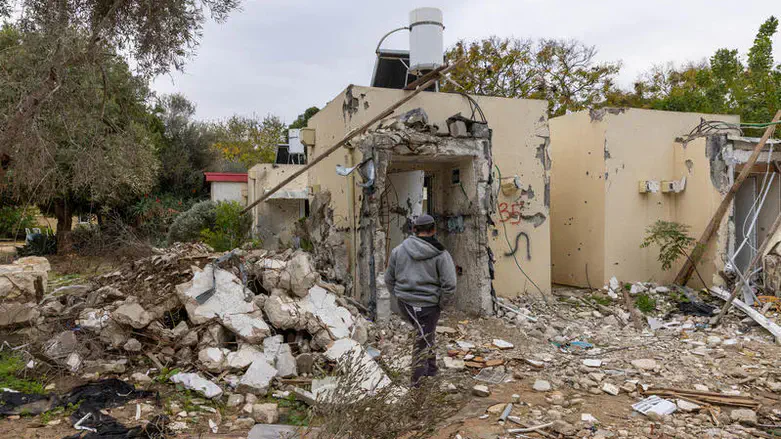
The IDF on Friday published the results of its extensive investigation into the events of October 7 at Kibbutz Nirim, after the findings were presented to members of the kibbutz, the families of the murdered and the abducted, and the families of IDF soldiers stationed at the nearby "white house" post at the time of the attack.
The investigation unequivocally states that the IDF "failed in its mission to protect the residents of the kibbutz" from Hamas’ murderous surprise attack.
During the massacre in Kibbutz Nirim, five civilians were murdered, five were kidnapped (three of whom have been released, and two of whom were murdered in captivity), and eight IDF soldiers were abducted to Gaza (three were returned as corpses, three were defined as dead, and five are still in captivity, two of whom are alive). According to the findings of the investigation, about 150 terrorists infiltrated the kibbutz and the nearby outpost in three waves, and for hours committed murders, massacres, looting and other cruel crimes. On the morning of the attack, the fighters of the 51st Battalion of the Golani Brigade and armored fighters from the 77th Battalion of the 7th Brigade were active in the area, and the kibbutz's security squad consisting of only eight fighters.
The investigation paints a difficult picture of the events: When the Hamas attack began at 6:29 a.m., the kibbutz commander ordered the residents to enter protected areas. A southern brigade commander identified a breach in the fence and went out into the field, declared a "war" and called in forces. Terrorists began to enter the kibbutz at around 6:42, after taking out its surveillance cameras and defense systems. The brigade commander clashed with terrorists outside the fence, fought a battle, entered the kibbutz, and was severely wounded. Three soldiers from the brigade commander's brigade commander, who tried to evacuate him and protect him, fell in battle.
A tank positioned on the fence destroyed a terrorist squad but was hit by an anti-tank missile. The SWAT team took out another squad. Another tank, under the command of Captain Omer Neutra (whose body is being held in Gaza), was hit by missiles and disabled, and four soldiers were kidnapped from it. At the same time, Golani fighters killed a number of terrorists who tried to infiltrate the kibbutz.
The investigation indicates a critical point in time when the first military forces left the kibbutz after no more terrorists were identified, but shortly thereafter dozens of other terrorists penetrated another breach of the fence and carried out the massacre and abductions among the civilians. The residents of the kibbutz bravely faced the terrorists who took control of homes and set fire to vehicles, and barricaded themselves in the bomb shelters. Only in the late afternoon did larger forces arrive at the kibbutz and eliminate the last terrorists.
The main conclusions of the investigation include severe failures in formulating an up-to-date picture of the situation due to the fall of the chain of command and the collapse of the command centers, as well as difficulties in communication between the forces in the field and the communities.
The investigation positively notes the rapid arrival of the brigade commander and the fighting of the company combat team during the first hours, which helped stop the enemy's main force.
In addition, the actions of Kibbutz Nirim's armed civilians and members of its security squad are noted, as well as the firing from a fighter helicopter that contributed to the withdrawal of some of the terrorists.
Among the key lessons raised in the investigation: The need to formulate a defense based on a large security area and preventive actions against any enemy, as well as the establishment of IDF posts before the settlements.