

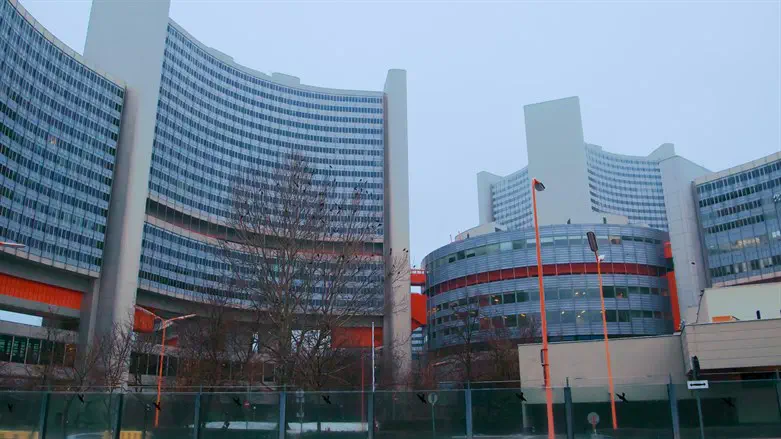
The International Atomic Energy Agency (IAEA), the UN’s nuclear watchdog, on Wednesday criticized Iran for making an undeclared change to the interconnection between the two clusters of advanced machines enriching uranium to up to 60% purity, close to weapons grade, at its Fordow plant, Reuters reports.
The IAEA found the change during an unannounced inspection on Jan. 21 at the Fordow Fuel enrichment Plant (FFEP), a site dug into a mountain where inspectors are stepping up checks after Iran said it would dramatically expand enrichment.
In a confidential report to member states seen by Reuters, the IAEA did not say how the interconnection between the two cascades of IR-6 centrifuges had been changed except that "they were interconnected in a way that was substantially different from the mode of operation declared by Iran (to the IAEA)".
In a public statement summarizing that confidential report, the IAEA said its chief Rafael Grossi "is concerned that Iran implemented a substantial change in the design information of FFEP in relation to the production of high-enriched uranium without informing the Agency in advance."
"This is inconsistent with Iran's obligations under its Safeguards Agreement and undermines the Agency´s ability to adjust the safeguards approach for FFEP and implement effective safeguards measures at this facility."
In June of 2022, the IAEA reported that Iran is escalating its uranium enrichment further by preparing to use advanced IR-6 centrifuges at its underground Fordow site that can more easily switch between enrichment levels.
A month later, Iran announced that it has begun enriching uranium up to 20% using sophisticated centrifuges at Fordow.
The latest IAEA report comes as talks between Iran and world powers on a return to the 2015 Iran deal remain stalled.
Former President Donald Trump withdrew from the 2015 Iran nuclear deal in 2018, and Iran responded by scaling back its compliance with the agreement.
The Biden administration sought to return to the deal and held indirect talks with Iran on a return to compliance.
Those talks have been stalled since September, when Iran announced it had submitted its comments to the US response to the European Union’s draft for reviving the 2015 Iran nuclear deal.
While Iran’s Foreign Ministry spokesperson said at the time that Iran’s response was prepared based on a constructive approach, a senior Biden administration official said the Iranian response "is not at all encouraging.”
A US official later said that the efforts to revive the 2015 Iran nuclear deal have “hit a wall” because of Iran's insistence on the closure of the UN nuclear watchdog's investigations.