


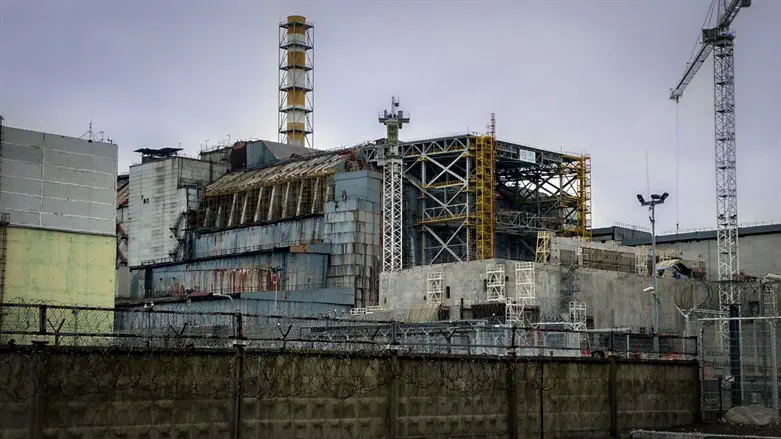
One of the most disturbing events that took place early on in Russia's invasion of Ukraine was the Russian takeover of the Chernobyl nuclear power plant. This is Ukraine's most sensitive facility – not only because, 36 years ago, it was the site of the worst nuclear disaster in history, but also because it is still home to huge amounts of spent nuclear fuel, despite the fact that the reactor is no longer active.
On February 24, Russian forces entered the Chernobyl Exclusion Zone, an area with a radius of 30 kilometers (18 miles) around the power plant, where movement is restricted due to the high levels of radioactive particles in the air. A unit from the National Guard of Ukraine, responsible for securing the reactor, decided against resisting the Russians in order to avoid an even greater disaster than a firefight in the volatile area, but the damage was already done.
"With their arrival, the Russians immediately took control of the building that served as residence and headquarters, and essentially turned all the 210 people on duty into hostages," one of the reactor's employees, who asked to remain unnamed, told Israel Hayom in an exclusive report. "In addition, members of the National Guard, who were securing the site, were also taken captive, along with firefighters, the medical team, and four people who happened to be there at an especially bad time. The situation could have been much worse given that a total of 2,200 people are employed at the reactor, but most of them were working remotely because of COVID restrictions."
A short while later, the staff on shift returned to carry out their regular work at the reactor, but their movements are restricted by the Russians and they are mostly forced to be accompanied by soldiers. The members of the Ukrainian National Guard were taken to a protected compound, where they are still being held.
The employee told Israel Hayom that a shortage of both food and equipment quickly developed because of transportation issues. Chernobyl is 111 kilometers (69 miles) from the capital, Kiev, and the city of Slavutych (where most of the workers live) is 46 kilometers (28 miles) away, accessible via a Belarussian border crossing.
According to the employee quoted, last month the Russians sent a television crew to document the situation at the reactor for Russian viewers.