
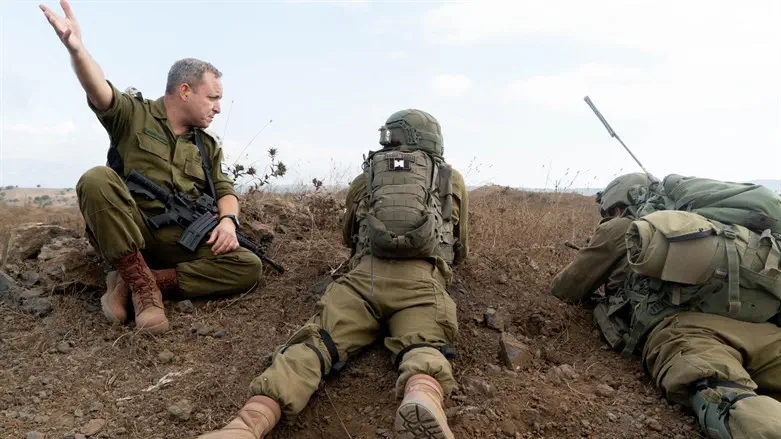
The commander of the Southern Region, Major General Eliezer Toledano, was interviewed this weekend by the Israel Hayom and discussed the Gaza Strip, which is within his area of responsibility.
During the interview, Toledano was asked by military correspondent Yoav Limor: "How do you view the incident in which Barel Shmueli was killed?"
Toledano responded: "There are two main aspects here. The first is that even though we are a strong nation, we are still threatened, and even if the threats are not existential, we still have to deal with them. The second aspect is that of the media, which has effectively taken over here. Today, every event is filmed and has nine million 'interrogators' who know exactly what happened, draw their own conclusions, and have even pass judgment. What I want to tell them is, 'Slow down, calm down.' This is the situation, and we need to know how to live with it. None of my encounters in life would have looked good if they had been filmed.
"So what is the lesson we should learn here? That this is the situation and we have to know how to live with it. We aren't going to achieve a high level of security with zero costs. There is no such thing. There will be casualties. Both on the front lines and elsewhere. And we have to know how to deal with that, and deal with it in solidarity. That is a fundamental issue."
Toledano was then asked: "What do you answer to people who claim that Barel Shmueli was executed? I'm sure you've heard people saying that, and other similar things."
"Barel was a skilled sniper, part of the Israel Border Police unit. He was a fighter, and he was killed in battle, in defense of Nahal Oz. That's how I see it. There is no exercise or battle in which there are no mistakes."
"And there were mistakes?"
"There always are."
"What lessons were learned from this event?"
"We subsequently improved the barrier, and incorporated additional techniques."
"Fighters sharply criticized the opening fire regulations," Limor pressed.
"I do not agree that there are problems with the opening fire regulations or that they are problematic," Toledano insisted. "Barel himself fired seven bullets before he was killed. In total there were 43 sniping targets, which we hit. We killed a child there, and killed a terrorist, which indicates the complexity of these events."
The Torat Lehima organization, which has been engaged in a struggle to change the IDF's open-fire instructions, responded to the general's words:
"General Toledano believes that the public should accept the failure in which Barel Shmueli was killed and learn to live with the situation. So here are the facts: 1) Until a decade ago, terrorists could not approach the fence. 2) The terrorist managed to flee the scene, even though his identity and location were known to the general.
"The problem is that terrorists have in effect a high level of immunity, whereas our soldiers are hampered by poor instructions and distorted moral standards," they continued. "With all due respect to the general, it is a shame that we are idealizing failure and weakness."
- Investigation reveals failures that led to shooting of Border Police officer Barel Shmueli
- Critically injured Border Police officer named: Barel Hadarya Shmueli
- Hamas releases terrorist who murdered Border Police officer
- Nitzah Shmueli, mother of slain Border Police officer, mourns: 'My life was burned'