

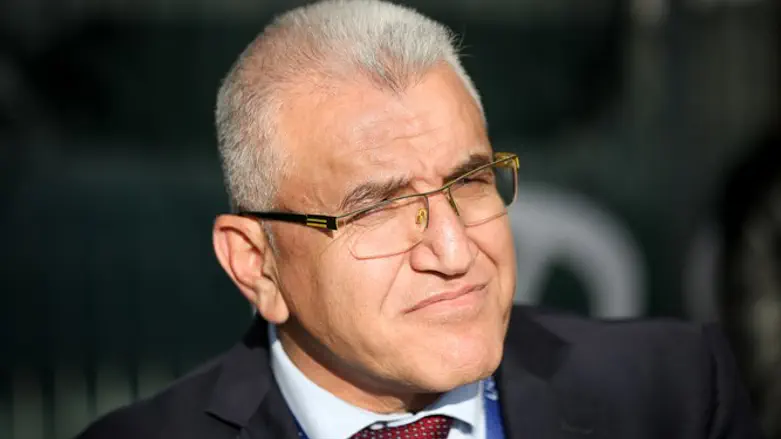
Coronavirus czar Professor Salman Zarka on Thursday morning said Israel may need to reconsider starting the school year on time.
In an interview with 103 FM Radio, Prof. Zarka said: "The data worries me very much, and at the same time I am not sure that a lockdown is the solution which will bring us back to reasonable infection rates. This morning there are over 400 seriously ill patients in the various wards, so we have opened the wards in all of the hospitals."
"Coronavirus is here, and it will remain. Our main weapon to allow us to live with coronavirus is vaccines, the Green Pass, and masks. None of us want to be stuck at home."
Regarding the decision to expand the restrictions, he said: "They are pressing on the brakes. It's true that we're used to brakes being equivalent to lockdown, but we had the third lockdown, which did not achieve its purpose."
"In the midst of the lockdown the vaccines arrived and that's what got us out of the third lockdown. If we see that the decisions are not being implemented, that people are not getting vaccinated, then it could be that from a lack of options we will need to come and bravely say, 'We've exhausted our abilities, and there's no option other than a lockdown.'"
Prof. Zarka added that he believes that most of those who are not vaccinated will end up getting the vaccine.
However, he added, "The pockets of people are are anti-vax, as a worldview, as an ideology, I think that they need also need to do some soul-searching, to look at the data, and to lend a hand."
When asked whether eligibility for the third dose of the vaccine would be expanded, Prof. Zarka said: "We don't need to be looking at chronological age, we need to be looking at the risk. For instance a 50-year-old with a chronic illness who is in a high-risk group, or the medical staff who are on the front lines. These are things that will be brought up in the professional committee's discussion. It's a professional, not political, decision."
About the upcoming school year and the suggestion that it begin in October instead of September, Prof. Zarka said: "We want our children to go back to regular school."
When pressed, he added: "There is room to consider this issue. But we need to take into account that we're talking about September, about six days of studying, but there are communities such as the Arab public that start in September on full gas."