

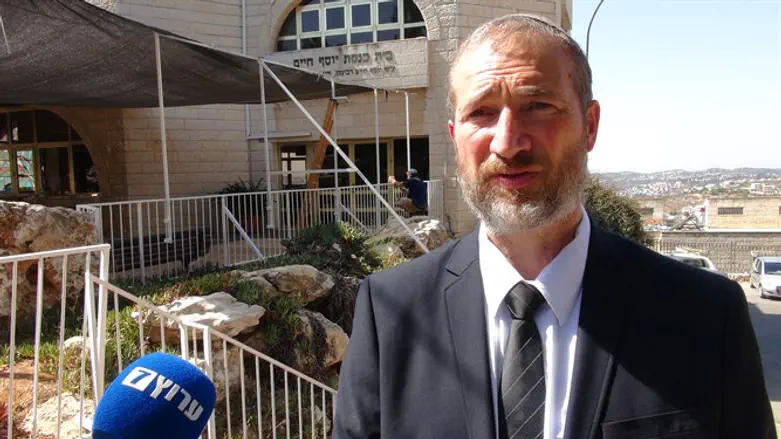
Rabbi Shmuel Slotky, who heads the International Association of Synagogues, told Arutz Sheva that the government's approval of the plan to reopen synagogues is significant - but must be done at zero risk to worshipers.
"There's a very significant change here, compared to what we had earlier," he said. "Synagogues which were careful about the guidelines allowed only five people inside and ten outside, which means that in most places which were careful about the guidelines, people prayed outside the synagogue. Now, they will be able to enter. This is very good news, because the winter is not over and the option to go inside the synagogue is good and can really bring great benefit.
"Under the guidelines, you will need to register ahead of time in order to enter the synagogue, and send a certificate that you have been vaccinated, and it's all supposed to be recorded, organized, and written down. That's the formal side.
"But the ethical side demands very great responsibility and truth from the worshipers. To ensure that synagogues don't become petri dishes for coronavirus, we need to act with honesty and trustworthiness, with no leniencies and no mistakes. The guideline that needs to come from the rabbis, from the synagogue sextons, and from the Torah leaders is that anyone who comes in to pray not according to the guidelines, who is not vaccinated or recovered from coronavirus and enters a synagogue, puts others in danger, and not only does he cause harm and danger to others, but his prayers are completely worthless. The Talmud says about such people that they come to 'bless G-d' and end up 'cursing G-d.' There needs to be a very clear instruction not to enter a synagogue if you do not meet the criteria."
When asked how he sees this working in practice, Rabbi Slotky said: "People need to be appointed to ensure that the guidelines are kept, because the restrictions of mask-wearing and social distancing are still in force. In regular and community synagogues, it stands to reason that there people will know each other, and they won't want to endanger each other. The problem is more in synagogues that serve as 'shtieblach' (walk-in synagogues where people enter randomly to find a quorum to pray with), which a lot of different people pass through and which see a lot of guests. There, there needs to be very clear signage regarding who is allowed to enter, and people need to be appointed to prevent those who might endanger the worshipers from entering."
"By the way," he added, "a synagogue can decide that it is not adopting the 'Green Passport' plan and continue to allow only up to ten people to enter the synagogue. And in that situation, the ten people praying inside do not need to be vaccinated. Every synagogue can choose, but in a clear fashion."
Rabbi Slotky also called on the government to find a solution for those who are too young to receive the vaccination.
"We need to remember that there are young men below the age of 16, who cannot be vaccinated and who want to pray in the synagogue," he said. "It's important to find a solution for them, to hold prayer sessions outside for them with help of the adults, to find them a proper place where they will be protected and where they can pray even in the rain. It would be proper that the community rabbi pray together with them sometimes, to give them the feeling that they are not alone."