
The situation could only be described as surrealistic, bizarre, inconceivable, and even grotesque. The participants, on both sides of the issue; those who stood for Hashem, for Torah, for Yiddishkeit versus those who turned their backs in denial of all they had mastered over the previous four decades: all behaved and responded inappropriately.
On the wrong side of Torah were 24,000 Jews together with Zimri ben Salu, head of the tribe of Shimon, who permitted themselves to be seduced by the Midianite and Moabite women, as opposed to Moshe, Aharon, Yehoshua, and the Sanhedrin, whose behavior was beneath expectations. The reaction, or rather the absence of reaction of the nation’s leaders was bizarre; they were paralyzed by what they saw. They did nothing!
Moshe was probably thinking at the time, “I, Moshe, son of Amram and Yocheved have failed my God, my nation, my family, my tribe. The forty years of teaching Torah and Yirat shama’yim have been for naught. Now after forty years of Torah study, as we stand on the banks of the Jordan River about to enter the land of our dreams, if 24,000 Jews and the head of a tribe could sink so low then all my efforts to raise these people to be Hashem’s chosen nation will be remembered as the failure of Moshe son of Amram and Yocheved”.
Aharon stood paralyzed by shame. “I stood with my brother in all the enduring challenges Hashem had set before this nation. Together we believed that we had succeeded in building a sacred nation. For 39 years I and my sons offered up their sacrifices in the Mishkan believing that they were indeed the chosen people, when all the while our influence did not penetrate beyond a thin superficial veneer.”
Yehoshua, who was about to receive the mantel of leadership from Moshe, was fraught with fear of the future.
The entire leadership of the nation stood ineffectively in the face of the spiritual bankruptcy of Am Yisrael. While 24,000 Jews sinned no one within the 600 thousand of the entire nation raised a hand to object to their vile acts.
There were all ineffective, passive bystanders; except for a single man out of 600,000 - Pinchas ben Elazar ben Aharon.
Pinchas approached Moshe and reminded him of a halakha that Moshe himself had taught that a Jew who publicly and callously shows disregard for the Torah by living with a non-Jewish woman is liable for the death penalty without trial. Moshe directs Pinchas to act upon the halacha. Pinchas does not approach Zimri ben Salu, head of the tribe of Shimon, to convince him of the folly of his ways. Pinchas takes a spear and enters the tent where the abomination is taking place and plunges it into the man and woman who so disdain and repudiate the moral codes of the Torah.
Pinchas shocked the leadership out of their apathy, and they began to lead the nation back to sanctity by first ordering the death of the 24,000 who had sinned.
Pinchas was rewarded by Hashem by joining his father, grandfather and uncle in becoming among the first generation of Kohanim.
Thirty years ago, there was one man out of the millions of Jews in America who had the passion and the resolution to defend the honor of the Jewish people. That man was my brother, the martyred Rav Meir Kahana z”l.
The leadership of American Jewry were timidly sidelined in the face of unabashed anti-Semitism, while Rav Meir organized security groups to protect Jewish lives and property. Meir preached Jewish pride and our status as Hashem’s chosen people. Most rabbis refused to let him speak in their shuls-- and established organizations, and their leaders went out of their way to denigrate him.
Would Meir be alive today, the daily disasters on university campuses where Jewish students are relegated to the status of third-rate human beings, would not be happening.
The contemporary leaders of U.S. Jewry did not for the most part ever meet Rav Meir Kahana, so their hands are not defiled with abandoning and renouncing him, and in some way guilty of projecting the idea that in his life he was a thorn in the side of the rose garden of American Jewry. Were the leaders of the federations, organizations, and shuls of 30-50 years ago alive, I would suggest that they go to his grave in the Har Hamenuchot cemetery in Yerushalayim and beg for forgiveness.
With every passing day everyone who reads this will better understand what I mean. But above all remember JLMM: JEWISH LIVES MATTER MORE
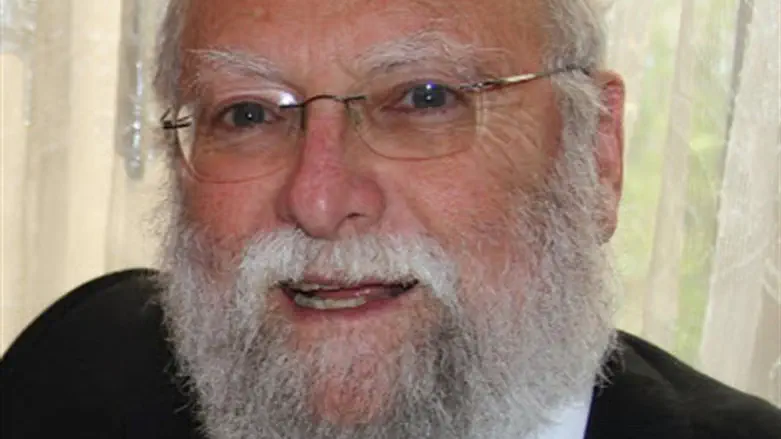
Rabbi Nachman Kahana is a Torah scholar, author, teacher and lecturer, Founder and Director of the Center for Kohanim, Co-founder of the Temple Institute, Co-founder of Atara Leyoshna – Ateret Kohanim, was rabbi of Chazon Yechezkel Synagogue – Young Israel of the Old City of Jerusalem for 32 years, and is the author of the 15-volume “Mei Menuchot” series on Tosefot, and 3-volume “With All Your Might: The Torah of Eretz Yisrael in the Weekly Parashah” (2009-2011), and “Reflections from Yerushalayim: Thoughts on the Torah, the Land and the Nation of Israel” (2019) as well as weekly parasha commentary available where he blogs at http://NachmanKahana.com
Reflections from Yerushalayim and other books that he has authored are available at the Pomorantz Book Store, Rechov Be’eri 5 (between King George and Shmuel Hanagid streets, refer to map) in Yerushalayim, by calling 052 317 0647 and online.