One life
Does man have the ability to change the Nature of Man?

One must first be Nitzavim - standing in stillness and reflection - before he can be Vayelech.
Many of those present cherished the memory of that winter night when young secular pioneers sang and danced with the Chief Rabbi of Jaffa.

The last Shabbos of the year is also as the beginning of the entire year. So what’s our job on this Shabbos?
In one of his last speeches to the Jewish People, Moshe refers to 'this mitzvah.' Later he describes the opposite attitude. Why?
Where is our generation alluded to in the Torah?
Within the Jewish soul, as part of our DNA so to speak, no matter how far we have strayed, we know that we are a covenantal people,
We all stand together, as one, as G-d, our Father our King, decides what will be in store for the coming year.

In Nitzavim, the Covenant with Hashem is described as binding future generations. How could those present bind those who are not present?
Tears flow when we experience more than our minds and hearts can bear, whether sadness, bitterness or joy.
The Mechillta asks this question and provides two answers.They symbolize a deeper message telling the reasons for Hashem's preference.
What if God says "No", or He says nothing? Maybe He is undecided?
“If we had the capability,” he wrote to his son, “it would be appropriate to buy land and make aliyah to Eretz Yisrael.”
The Tanya compacts four millennia of Jewish wisdom to answer the great personal and existential questions of life.
Not only do we ask for Hashem to take revenge… but we are asking that He let us see it! What kind of revenge?
On the first English book by renowned founding head of Machon Meir in Jerusalem, seen as the baale t’shuva wing of Yeshivat Mercaz HaRav.

Establishing faith passes through 3 foundations: revelation through Am Yisrael, observing creation, and putting talents to work.
Every year when the shofar was blown, the elderly man ran out of shul. Why?

In the case of surrogate childbirth, who is the halakhic mother?
A true story from WWI on the futility of wasting precious hours arguing about the unimportant things in life.
The right link is the vital component of Jewish survival, both personally and nationally. Op-ed.
Tefillin, containing passages from the Torah mentioning God’s Name, are a visible sign for others that “God’s Name is called upon you."
What question was the farmer answering as he stood before the priests ( Kohanim) with his first fruit offering?
We want to be there first, at the head of the line, to ask for mercy and forgiveness, before the Day of Judgment..
From the harsh, condemning tone of some of the articles opposing Rabbi Melamed's opinions, you might think he was a serial murderer.
To know who we are is, in large part, to understand the story or stories of which we are a part.
Parashat Ki Tavo tells us just what defines an 'illegal settler' - providing food for thought.
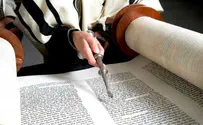
The Tanya compacts four millennia of Jewish wisdom to answer the great personal and existential questions of life.
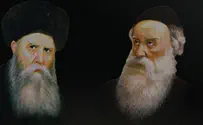
To be involved in keeping the mitzvot outside of the national collective, is like catching a floating cloud which has no substance.
The law of the first fruits teaches a basic principle of Jewish ethics, that we should have a sense of gratitude and appreciation.
Never cease to praise and glorify God with the utmost enthusiasm.
As Rosh Hashannah nears, stories of faith and sacrifice that occurred behind the Iron Curtain and how the Jews of the USSR stood the test.
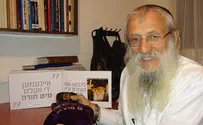
1. The religious moshavim in the north had a considerable environmental impact on their secular neighbors 2. The "Tradition meal" experience
We have a license to enjoy the resources of the world: We can eat its food, utilize its vast possibilities. But there are several caveats.
Why don't we ask forgiveness for our personal sins on Rosh Hashana if it is the Day of Judgment?
There is a cataclysmic traffic jam on the highways of our national existence, and it is not easy to remain optimistic

We should never give up on a single Jewish soul. “A myrtle among the reeds is still a myrtle and is called a myrtle“ (Sanhedrin 44a).
Rabbi Shmuel Eliyahu: 'Saying 'Kaddish' with earnest has the power to bring the Redemption.'
Some form of the word 'hate' appears quite frequently in Parshat Ki Taytze. Why and what should we learn from it?

The Torah tells us not to be late fulfilling a vow & says a person who didn't vow, didn't sin. Why would we think of not vowing as a sin?
Young religious Zionist Torah scholars on the two aspects of mitzva observance and their applications to living in Israel.
The Netziv asks:’’What is this beautiful woman, adorned and dressed in her finery, doing in battle?’"
A plea for peace and understanding. Divorce, with all its hurt, uncertainty and loss should not lead to lifelong enmity.

By increasing in all acts of loving kindness we will bring about much more than “herd-immunity” but a world of healing.
Food: making it, sharing it, giving it. so deeply ingrained in Jewish culture. Why it's important to give, even where food isn't lacking!
In our personal lives, the broken and the potential for wholeness exist together.Will we be dazzled by the promise or blinded by the dark?

As part of the IsraelNationalTorah series, Rav Uriel Tuito delivers an important answer to a series of similar questions on a crucial topic

Rabbi Avraham Kook ztz”l proposed a unified concept that would contain all the customs, along with the Ingathering of the Exiles.
The Tanya compacts four millennia of Jewish wisdom to answer the great personal and existential questions of life.
Vials of valium and an assortment of anti-depressants and “uppers” can be found in the medicine cabinets of the very best homes.

Who is the mother when a woman carries to term the fertilised egg of another woman?
In modern day Hebrew, we say that someone who is Tamim is someone who is naïve. This certainly is not the Torahs` request.
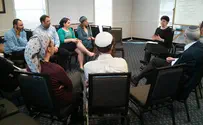
Biblical kings had prophets to guide them, but they continued to learn. That is the mark of a statesman rather than a politician.
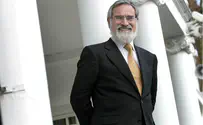
Here we are again, not having met our past aspirations. What can we do to be more successful in the coming year?
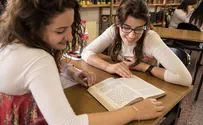
The Leviim represent Am Yisrael in spiritual tasks - but does that mean they don't deserve their own land?
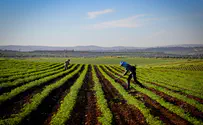
The Torah exempts three categories of men from going out to a voluntary war. And it explains why.
Being Hashem's children means we have obligations, but also that we must keep from harming ourselves.
The Parsha in Chesed – Shoftim. "Never underestimate what your smile, greeting and sincere concern can do for another person".

We are individuals in our own right and at the same time we are part of our nation.
The Torah set standards for us to try and achieve. It never demands the impossible from human beings.