


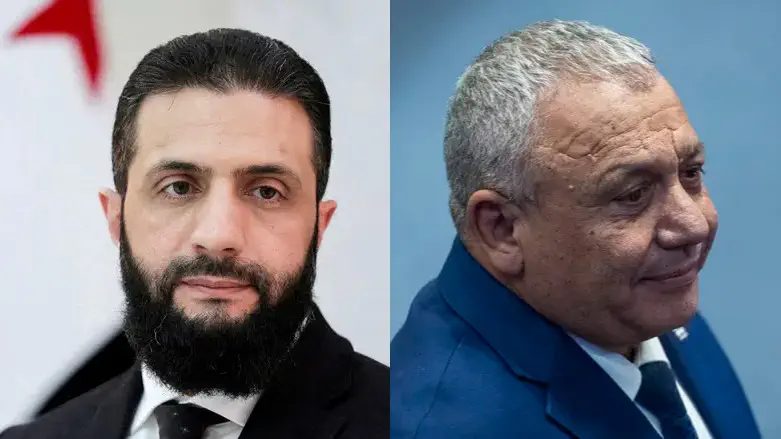
As the possibility that Gadi Eisenkot will be Israel's next Prime Minister grows, some in Damascus are hopeful, believing the Yashar chairman would be more willing than Prime Minister Benjamin Netanyahu to pursue agreements with Syria.
A Syrian source close to the government in Damascus told Kan News that few there expect a change in Israeli leadership to bring a fundamental shift in policy toward Syria. Even those who see Eisenkot as more open to an agreement expect him to be reluctant to make concessions.
The source said much of the optimism stems from frustration with Netanyahu. In the source’s account, Damascus saw little sign of goodwill from the prime minister and believed he had failed to take the negotiations seriously, missing several opportunities to reach an understanding.
According to the report, Damascus viewed Netanyahu’s approach as aggressive and believed it had brought Syria and the wider region close to a crisis. That experience, the source added, had left some in Damascus convinced they would fare at least as well under his successor.
In September, Syrian President Ahmad al-Sharaa described how close he believed the two sides had come to a security agreement. Speaking at an Atlantic Council event in New York, he said negotiators had come close to settling 90% of the agreement before Israel pulled out. In his view, a successful security arrangement could have opened the way to talks on a lasting peace.
Israeli sources had identified a dispute over troop withdrawals in November 2025. They told Kan News that Syria wanted the IDF to leave all the positions it had taken in Syria after Bashar al-Assad’s fall. Israel, they said, would consider leaving some of those positions only as part of a comprehensive peace agreement.