

When Rabbi Liraz Zeira heard his company commander report over the radio that both his legs had been severed, his first thought was not about what he had lost, but about what still lay ahead. He recalled, "Wow, I have a new mission in life".
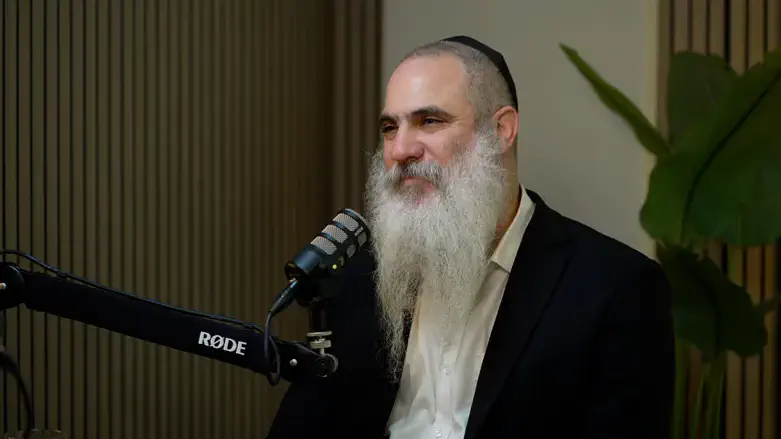
In an interview at the Israel National News-Arutz Sheva studio as part of the 'Walking and Saluting' initiative and the day honoring wounded IDF soldiers, Zeira, a reserve major and Chabad emissary, spoke about his severe injury in Syria, his rehabilitation and the strength he draws from Hasidic teachings and his love for the Jewish people.
The injury occurred a few days before Yom Kippur, following seven months of reserve duty on the Syrian front and an extended period of service in Gaza. Zeira had already promised his children that he would soon return home. A day before the end of his operational deployment, he came to say goodbye to the soldiers and bring them supplies and equipment ahead of the holidays.
One of the soldiers asked him to check whether the outpost's eruv was valid under Jewish law. During the inspection, Zeira slipped on a grenade lying on the ground. The explosion threw him into the air and severely wounded him.
When he realized he could not move his legs, he focused on one task: staying alive and reaching a place where his fellow soldiers could provide medical care.
He recalled, "I have to stay alive. I'm not going anywhere. I have a mission in life".
With his last reserves of strength, he crawled toward the outpost and managed to alert the soldiers. Even after they reached him, he kept talking and giving instructions in an effort to remain conscious. He spoke with deep appreciation of the professionalism of his fellow soldiers, who treated him and saved his life.
Only when he heard the radio report did he first understand the severity of his injuries. Later, when he woke up at Rambam Hospital, he told a friend that if God had taken his legs, He would give him wings instead.
Zeira attributes the strength he found in those moments to years of studying Hasidic teachings, faith and dedication to his mission. He also recalled Tehila Cohen, who lost both legs in the attack on a children's bus in Kfar Darom and had attended classes and Shabbat meals at his home over an extended period. Their conversations about faith and trust in God took on new meaning for him after his injury.
Alongside his optimism, he does not hide the difficulties of rehabilitation. Even simple daily activities, such as moving from the couch to the bed after removing his prosthetic legs, require effort.
He emphasized, "You won't hear me say that it's easy for me or that I don't have difficulties". At the same time, he seeks to distinguish between difficulty and challenge, and between sadness and bitterness.
He shares this outlook with other wounded people he meets during rehabilitation. Sometimes, he said, simply walking through the corridors is enough to give strength to people coping with injuries of their own.
He said, "Many people stop me and tell me: Just seeing you walk gives me strength. So I have to walk. How can I remain seated if walking gives people strength?"
Another source of inspiration is the Lubavitcher Rebbe's call to refer to disabled IDF veterans as 'Israel's outstanding ones,' in recognition of their strength and dedication to the Jewish people.
One of the most moving moments of his rehabilitation came when he joined a live broadcast from his hospital bed during Chabad's International Conference of Emissaries in New York.
Zeira, who had undergone complex surgery and was in severe pain, appeared before thousands of emissaries. When the entire audience rose to its feet and cheered him, he struggled to hold back his tears.
He said, "I felt all the love coming from the five or six thousand people standing there, who, to me, represented the entire Jewish world".
He described the feeling that had accompanied him since his injury in a single sentence, "I felt that the Jewish people were holding me up".
Zeira now hopes to expand his social media activity, strengthen people facing crises and pass on the strength he has received. He has also set himself a personal goal: to run 10 kilometers.
Rabbi Zeira, who previously ran marathons, is determined to run again despite losing both legs. He hopes to turn his journey into an invitation for everyone to discover their inner strength and believe in their ability to make a difference in the lives of others.
He said, "There is someone waiting for you to say good morning, someone waiting for you to say hello and tell them they can do it. So believe in them".