
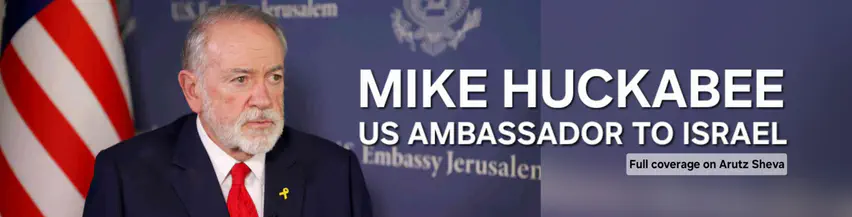

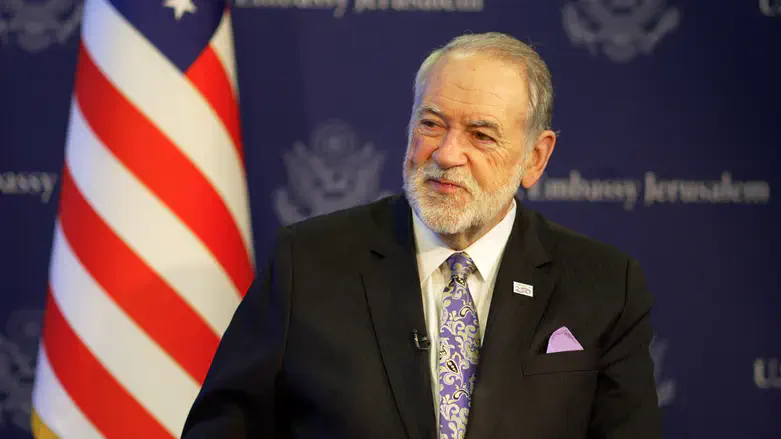
US Ambassador to Israel Mike Huckabee said on Tuesday that President Donald Trump has not ruled out further military action against Iran if the regime in Tehran refuses to accept the conditions set by the US administration.
Speaking at an Institute for National Security Studies (INSS) conference, Huckabee explained that Trump wants a diplomatic solution but will not compromise on three central demands: preventing Iran from acquiring nuclear weapons, barring it from possessing enriched uranium and preventing it from controlling the Strait of Hormuz.
The ambassador said, "If they can live with those conditions, we may be able to reach a diplomatic solution. If they are not willing, the president has demonstrated twice in the past year and a half that he is prepared to use military action. And he is prepared to do so again".
Huckabee sharply criticized the international community over pressure on Israel concerning the Gaza Strip. He said Hamas bears responsibility for the delay in implementing Trump's 20-point plan because it refuses to fulfill its commitment to disarm.
Huckabee said, "They have not handed over a single bullet, a single bomb, a single rifle, a single pistol or a single rocket. Nothing". He stressed that Israel and the United States have shown considerable patience with the process.
The ambassador expressed frustration with countries that pressure Israel rather than demand that Hamas meet its commitments. Recalling the massacre and the abduction of civilians on October 7, he said, "International pressure should be directed at Hamas, not Israel".
Huckabee also discussed talks between Israel and Lebanon in Washington as part of an initiative led by US Secretary of State Marco Rubio.
The ambassador described how, during the third meeting, the Israeli and Lebanese representatives asked, on their own initiative and without American intervention, to move their tables closer together to allow for a more direct conversation.
Huckabee recalled, "When I saw that, I realized there was genuine dialogue, sincerity and openness here".
He said the Lebanese representatives understood that Israel's military presence in their country was intended to ensure the security of residents of northern Israel. He said he believed that once the Lebanese army can assume responsibility for security and Hezbollah is disarmed, Israel will be happy to withdraw its forces.
Huckabee expressed hope that Israelis would one day be able to travel freely from Jerusalem to Beirut, as President Isaac Herzog has previously described. He said, "It will not be easy, and it will not happen quickly, but it is possible".
The ambassador later addressed the future of Israel-US relations following the midterm election results and changes in the Democratic Party's attitude toward Israel. He expressed hope that Israel would not become a focus of partisan conflict in the United States during the remaining two years of Trump's term.
Regarding the possibility of ending US military aid to Israel, Huckabee said he doubted such a move could take effect before 2028 without congressional intervention, given budgetary commitments already approved.
The ambassador sought to counter the perception that aid to Israel amounts to handing American money to a foreign country. He explained that the funds are used to purchase US-made defense systems and provide jobs for thousands of Americans.
Huckabee said, "All $3.8 billion goes back to the US". He stressed that the partnership between the two countries rests not only on security, intelligence and economic interests, but also on shared values of democracy, liberty and freedom of expression.