

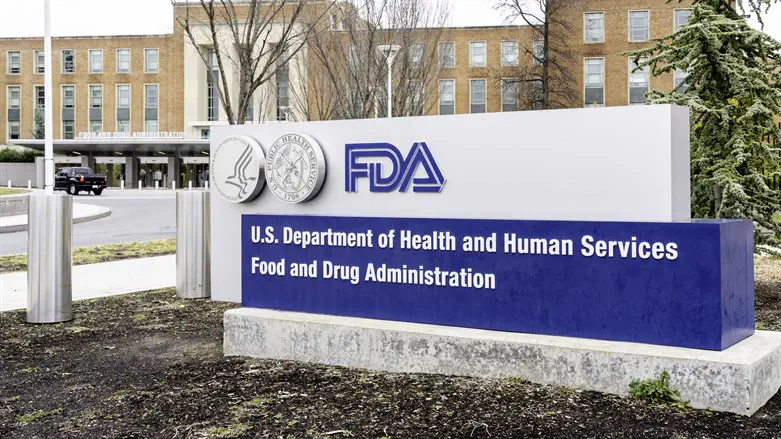
Israel’s standing abroad is argued over every day, in newsrooms, on campuses and in boardrooms. Almost none of that argument reaches the offices in Silver Spring, Maryland, where the US Food and Drug Administration reviews medical devices. The reviewers there are not asking which country is popular. They are asking whether a device works, whether it is safe, and whether the evidence in the file says so.
Israeli companies keep passing that test, and the country rarely gets credit for it.
The gate to the largest market
The United States is the largest single market for medical devices, and the FDA decides who may sell in it. Most products enter through one of three doors. The 510(k) is for devices shown to be substantially equivalent to one already on the market. De Novo is for new, lower-risk devices with no precedent. Premarket approval is for the highest-risk products and demands clinical evidence.
For a small company in Yokneam or Tel Aviv, a decision from Silver Spring is the difference between a promising prototype and a product that can earn revenue. Investors know it. When Pulsenmore, the Tel Aviv-listed maker of a home ultrasound device for pregnant women, announced its FDA clearance, its shares jumped 33 percent on the Tel Aviv Stock Exchange.
A verdict nobody can lobby
Funding rounds and exit valuations dominate coverage of Israeli technology, and they measure sentiment as much as substance. A regulatory decision is a different kind of fact. It comes from an agency with no stake in the company, it carries a date and a number, and anyone can check it.
Consider Rapid Medical, of Yokneam. Its adjustable clot retriever for ischemic stroke, the Tigertriever, was cleared in March 2021 after a 160-patient pivotal trial run at 16 American stroke centers and one Israeli hospital. American doctors were treating patients with it within about six weeks. In October 2025 the FDA cleared a longer version, the Tigertriever 17 Ultra, for removing clots from large brain vessels in patients treated within eight hours of symptom onset. The company says the first US commercial case followed in January 2026, and CE Mark approval for Europe came in September. The American decision came first, and Europe followed.
None of this makes clearance a guarantee of commercial success. The FDA says as much in its own letters, noting that a finding of substantial equivalence does not mean a device meets every other legal requirement. But it is an independent check, and independent checks are scarce.
Different fields, same answer
Rapid Medical is not an outlier. Momentis Surgical, an Israeli surgical robotics company, first won FDA marketing authorization for its Anovo system through the De Novo pathway, for transvaginal procedures. In October 2024 it added a 510(k) clearance for single-site ventral hernia repair, and a month later it cleared a second-generation platform. This July it announced clearance for a multiport configuration, so one robot can now be used through natural orifice, single-port and conventional multiport approaches.
Then there is software. Aidoc, the Israeli-founded imaging AI company, announced in January that the FDA had cleared a triage tool for abdominal CT scans built on its CARE foundation model. The tool had received the agency’s Breakthrough Device designation in August 2025. It combines 11 newly cleared indications with three earlier ones, and the company says it is the first clearance of a double-digit set of acute conditions from a single AI model. In the FDA-reviewed pivotal study, the company reports, the new indications averaged 97 percent sensitivity and 98 percent specificity.
In September, Medibyt, an Israeli digital health company, received 510(k) clearance for CPETWise, which helps analyze cardiopulmonary exercise tests. Before filing, it ran a proof-of-concept study at the University of Washington. The clearance, K260242, lets it begin selling in the United States.
Stroke devices, surgical robotics, imaging AI and exercise diagnostics: different founders, different technologies, one regulator, and the same answer whenever the evidence held.
A two-way street
These are not stories of Israeli companies knocking on a closed door. They are partnerships. Rapid Medical’s pivotal trial ran at American stroke centers, and Medibyt tested its software with American researchers. Momentis issues its news from Tel Aviv and Fort Lauderdale at once. American clinicians help prove the devices, and American patients gain access to them. The FDA process makes that collaboration workable, because it gives both sides a common standard of evidence.
Building on a clearance
A closer look at the files shows a pattern. The FDA record for Rapid Medical’s 2025 device names its own earlier Tigertriever 17 as the predicate. The file for Momentis’s Anovo 6Ne model rests on the earlier Anovo 6N. Aidoc’s expanded clearance builds on three indications it already held.
That matters because the 510(k) system rewards companies with a clearance already behind them. The first one opens the American market. Follow-on filings widen what a company can sell without starting from zero, and each one is a dated public record of progress.
A credential that travels
An FDA decision also works as an export credential, and Israel’s own regulators lean on it. The health ministry’s medical device division, known as AMAR, registers devices largely on the strength of approval in a recognized reference market, among them the United States, Europe, Canada and Australia. In 2024 the ministry opened a Fast-Track route, with review times of 45 or 60 business days, for some medium-risk devices approved abroad, according to the regulatory consultancy Emergo.
The sequence shows up in practice. Microbot Medical announced FDA 510(k) clearance for its Liberty endovascular robotic system in September 2025. Israel’s AMAR division granted marketing clearance in May 2026. A regulator’s decision made far away, on evidence alone, carried weight at home.
That makes a clearance one of the few assets a small country’s company can carry into any room, whatever the mood in that room.
What follows
If regulatory credibility is Israeli medtech’s most portable strength, it deserves attention alongside funding totals. Trade and export offices could track clearances next to investment figures. Founders could open conversations with foreign buyers with their FDA record, ahead of the pitch deck. American hospital groups and investors can do their own diligence cheaply, because every decision is public.
The records are searchable. This site organizes manufacturer profiles and FDA records, with each record linking to the FDA’s own entry, so a claim can be checked in minutes. In a period when so much about Israel is contested, verification of that kind is valuable. A regulator’s signature is not an opinion, and a country whose companies keep earning it has a story that does not depend on who is listening.