

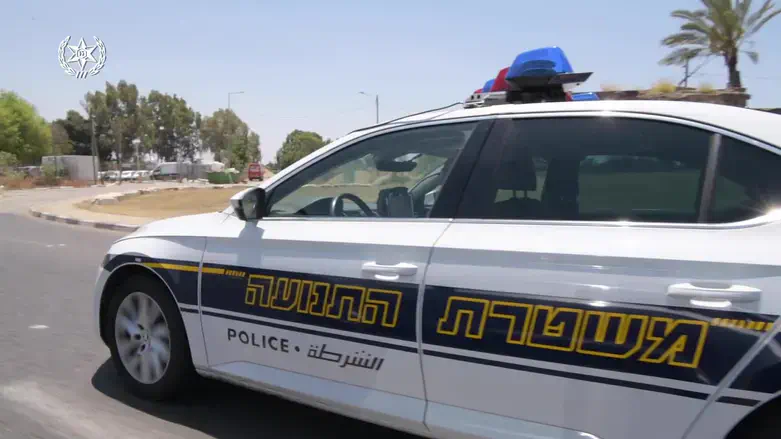
Israel Police has begun sending traffic tickets by SMS to vehicle owners in recent days, allowing drivers in Israel to learn of violations within hours rather than waiting for a ticket to arrive by mail.
The new system sends text messages directly to the phone number of the owner of the vehicle in which the violation was committed.
According to a report on the Geektime website, the messages include the last four digits of the vehicle owner's identity number, the ticket number, the vehicle's license plate number, and the date and time the ticket was issued. A link accompanying these details allows recipients to view the full ticket.
Under the existing system, drivers may receive a ticket by mail weeks after committing a violation, but the new mechanism allows notification within hours. The text message is sent after the ticket is entered into police systems and, according to reports, is expected to arrive within 12 hours at most.
The system began operating on November 17, after police announced earlier in the month that they intended to launch a pilot program for digital tickets. The service is being rolled out gradually at this initial stage, so not all vehicle owners are expected to receive messages. Tickets will also continue to be sent by mail.
The message is sent to the vehicle's registered owner, who is not necessarily the person who was driving when the violation occurred. For example, if a family member drives a vehicle registered to someone else, the text message may go to the vehicle's owner instead.
The new system consolidates data from several police and government systems, including the DOTAN system, the National Driver Inquiries Center and administrative ticketing systems. Reports also indicate that vehicle owners whose contact details are up to date on the government website may receive the messages even if their phone number does not appear in the police database.
The initiative is part of a broader plan to step up traffic enforcement. Earlier this month, Deputy Commissioner Shimon Marciano of the Traffic Division announced at the National Road Safety Authority's road safety conference that police planned to deploy about 200 new traffic cameras.
He said the new cameras would replace tactical cameras whose operation required close involvement by police officers. The planned cameras will automatically transmit records of violations to the police footage review center in Jerusalem's Har Hotzvim, where the evidence will be examined and tickets approved.
Marciano clarified that the aim was not to increase the number of tickets but to change driving habits and strengthen deterrence. He said drivers who learn of a violation shortly after committing it are more likely to be aware of their behavior on the road.
Police also plan to recruit about 150 additional officers for footage review and enforcement, and to introduce technological systems to help identify violations and refer them to officers for review.
Alongside the technological innovation, however, there are concerns about attempted fraud. In recent months, Israel Police has warned of fake SMS messages posing as official notifications about traffic tickets and unpaid fines.
Some of the messages included links to fraudulent websites designed to trick drivers into providing personal information and credit card details. Police recommend avoiding suspicious links and verifying any payment demand only through official government websites.
Even when a message appears to be a genuine traffic ticket, recipients are therefore advised to access the government website independently and check the ticket details. Committed a traffic violation? You may soon find out through a message on your mobile phone, even before the ticket reaches your mailbox.
Israel Police has begun operating a new system in recent days to send traffic tickets by SMS directly to the phone number of the owner of the vehicle in which the violation was committed.
According to a report on the Geektime website, the messages include the last four digits of the vehicle owner's identity number, the ticket number, the vehicle's license plate number, and the date and time the ticket was issued. A link accompanying these details allows recipients to view the full ticket.
Under the existing system, drivers may receive a ticket by mail weeks after committing a violation, but the new mechanism allows notification within hours. The text message is sent after the ticket is entered into police systems and, according to reports, is expected to arrive within 12 hours at most.
The system began operating on November 17, after police announced earlier in the month that they intended to launch a pilot program for digital tickets. The service is being rolled out gradually at this initial stage, so not all vehicle owners are expected to receive messages. Tickets will also continue to be sent by mail.
The message is sent to the vehicle's registered owner, who is not necessarily the person who was driving when the violation occurred. For example, if a family member drives a vehicle registered to someone else, the text message may go to the vehicle's owner instead.
The new system consolidates data from several police and government systems, including the DOTAN system, the National Driver Inquiries Center and administrative ticketing systems. Reports also indicate that vehicle owners whose contact details are up to date on the government website may receive the messages even if their phone number does not appear in the police database.
The initiative is part of a broader plan to step up traffic enforcement. Earlier this month, Deputy Commissioner Shimon Marciano of the Traffic Division announced at the National Road Safety Authority's road safety conference that police planned to deploy about 200 new traffic cameras.
He said the new cameras would replace tactical cameras whose operation required close involvement by police officers. The planned cameras will automatically transmit records of violations to the police footage review center in Jerusalem's Har Hotzvim, where the evidence will be examined and tickets approved.
Marciano clarified that the aim was not to increase the number of tickets but to change driving habits and strengthen deterrence. He said drivers who learn of a violation shortly after committing it are more likely to be aware of their behavior on the road.
Police also plan to recruit about 150 additional officers for footage review and enforcement, and to introduce technological systems to help identify violations and refer them to officers for review.
Alongside the technological innovation, however, there are concerns about attempted fraud. In recent months, Israel Police has warned of fake SMS messages posing as official notifications about traffic tickets and unpaid fines.
Some of the messages included links to fraudulent websites designed to trick drivers into providing personal information and credit card details. Police recommend avoiding suspicious links and verifying any payment demand only through official government websites.
Even when a message appears to be a genuine traffic ticket, recipients are therefore advised to access the government website independently and check the ticket details.