

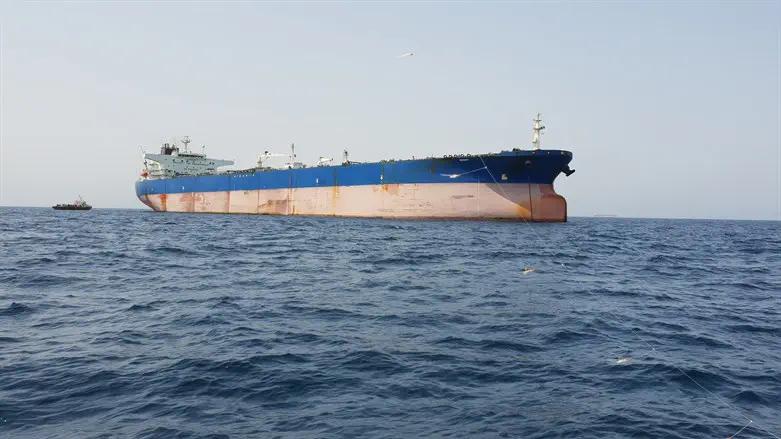
British endurance swimmer Lewis Pugh has completed a challenging swim through the Strait of Hormuz, using the sporting achievement to raise awareness of the region's rich marine ecosystem and the threats it faces amid the ongoing war with Iran.
Pugh, 56, a United Nations Patron of the Oceans, covered approximately 9.3 miles over three days, navigating one of the world's most strategically important waterways despite nearby attacks on commercial vessels.
Wearing swimming trunks, goggles, and a cap displaying the United Nations logo, Pugh began his journey near Oman's Musandam Peninsula and concluded by rounding the Cape of Hormuz. The swim took approximately six and a half hours in total, divided into sections for safety.
The British athlete, who has previously completed extraordinary swimming challenges in the Arctic, Antarctica, and other remote locations, described the Strait of Hormuz as an exceptional natural environment deserving greater international attention.
"Most people, when they think about the Strait of Hormuz, they think of a shipping lane," Pugh told The Associated Press. "But it is also one of the most beautiful places I have ever been … it's one of the treasure troves of the natural world."
During his expedition, Pugh encountered signs of the region's remarkable biodiversity, including dolphins, sea turtles, and ospreys. He recalled seeing hundreds of turtles while swimming along Oman's coastline before the conflict.
The journey also brought him close to the dangers facing the marine environment. Shortly after entering the water on the first day, Pugh heard explosions from an oil tanker that had been struck several kilometers away.
On another day, he witnessed a damaged gas carrier engulfed in flames, with burning material spreading across the surrounding water.
Despite these incidents, Pugh successfully completed his planned swimming challenge, highlighting both the beauty of the marine environment and the importance of protecting it.
He expressed particular concern about the long-term consequences of oil spills and chemical contamination for coral reefs, mangrove forests, coastal habitats, and marine animals.
"When oil gets in there, when chemical pollution gets in there, it becomes very, very difficult to clean up that type of mess," he said. "It lasts for generations."
Pugh has dedicated much of the past four decades to combining endurance swimming with environmental advocacy. His accomplishments include becoming the first person to swim across the North Pole and completing long-distance swims in all five oceans.
In 2023, he swam the entire 315-mile length of the Hudson River in the United States to promote river conservation and cleaner waterways.
According to his foundation, his environmental campaigns have contributed to agreements protecting more than 1.35 million square miles of vulnerable marine environments.
Pugh believes sporting achievements can encourage cooperation and bring environmental issues to audiences who might otherwise overlook them.
"Sport opens doors, it creates dialogue, it enables people to start thinking about these important issues," he said.
Reflecting on his latest achievement, Pugh emphasized his hope that the Strait of Hormuz will remain a thriving habitat for future generations.
"My message is very simple," he said. "We've got to stop the war. We've got to open the strait, and we've got to clean up the pollution."