
(JNS) After a recent talk on an American campus, a Jewish student approached me. “Because of your visit, I want to tell my friends more about Israel," he said. It was a brief exchange, but it captured why I had spent another day moving between airports, highways, hotels and lecture halls.
This month, Jewish Federations of North America held its General Assembly, and Jewish National Fund-USA held its annual global conference. These gatherings bring leaders, donors and communities together to confront crucial challenges.
Their work matters. But another essential task is taking place far from the main stage, often before just a few dozen students, with no cameras and little public recognition.
A speaking tour, organized with Students Supporting Israel, had me visiting nine campuses across North America. It is demanding, unglamorous work. Yet if we want young American Jews to remain connected to Israel and their non-Jewish peers to understand it, we cannot afford to neglect it.
The story too few have heard
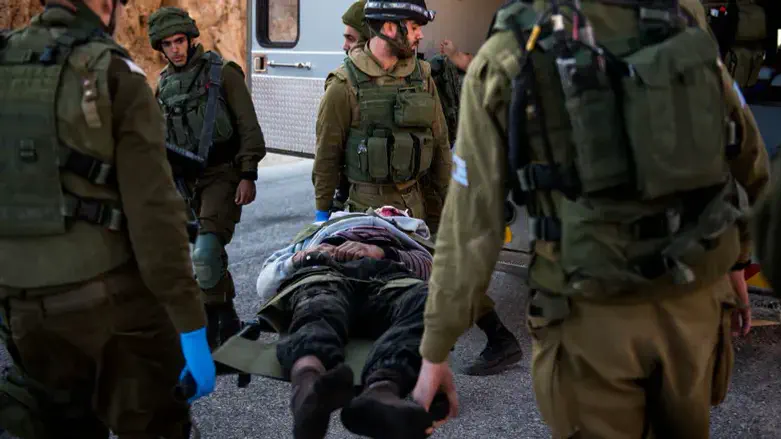
My talks begin with “Operation Good Neighbor," the humanitarian mission I commanded along Israel’s border with Syria during the Syrian civil war. Israel treated thousands of Syrian civilians, including children, and delivered food, medicine and other essential supplies across a border long associated with hostility. Israeli soldiers helped people whose country had been at war with ours for decades.
For security reasons-particularly the need to protect our forces and Syrian partners-much of the operation remained undisclosed while it was underway. Even after it ended, the full story was rarely told. After leaving active service, I made it part of my mission to tell that story. I wrote a book published in Hebrew and English, with a German translation now underway.
A book can reach readers around the world. But a face-to-face conversation can do something different. Students can question the person who was there, challenge what they hear and discover details that do not fit the familiar slogans about Israel.
“Operation Good Neighbor" doesn’t settle every argument about Israel. It does, however, complicate a one-dimensional picture. A country often discussed on campus only through war and conflict also risked lives and devoted resources to helping Muslim civilians across an enemy border. That fact deserves a place in any serious understanding of Israel.
The resistance to being heard
Some would rather these conversations never take place. At the University of Michigan, roughly 70 protesters gathered against my appearance within hours. Some called me a “war criminal" before hearing what I had come to discuss. In Canada, a student council canceled a planned university event. Whatever reasons were given for that decision, students who wanted to attend lost the opportunity to hear a firsthand account and ask questions.
There is an important distinction here. Criticizing Israel, including its government or military decisions, is legitimate. Antisemitic abuse, intimidation and efforts to prevent an invited speaker from being heard are something else entirely. Universities should be places where difficult claims are examined, not where disagreement is settled by shutting down a conversation. What I witnessed was telling: Energy was mobilized to oppose a talk about Israelis saving Syrian lives. That alone is reason enough to keep showing up.
The students in these rooms may someday lead Jewish communities or hold influential positions in American civic life. They are young people making sense of Israel now, often amid intense pressure and conflicting claims.
A Jewish student confronted with the assertion that Israel is nothing but a murderous state needs more than an instinctive defense. That student needs history, context, verifiable facts and the confidence to distinguish legitimate criticism from distortion. The same is true for non-Jewish students who may never have met an Israeli willing to discuss the country’s achievements, failures and dilemmas openly.
That is why I prefer the language of education to the Hebrew word hasbara, usually translated as “public diplomacy" or “explaining." To my ear, hasbara can sound as though Israel is perpetually on trial, and its representatives must plead their case. Education asks more of us. It requires knowledge, honest answers and the willingness to face difficult questions without slogans.
In Israel, we often speak of the many security fronts our country faces. I believe there is another front that deserves sustained attention: the struggle for knowledge and understanding. Not every student will leave agreeing with me, and agreement is not the only measure of success.
The real test comes after I leave. Can students challenge a false claim with evidence, explain complexity without apologizing for Israel’s existence and continue a conversation with someone who disagrees?
After almost every talk, someone asks: “Why doesn’t Israel tell these stories?" I admit that I find it hard to answer. But that question is part of the reason I keep coming. I hope Israel will learn to do better on this front, and I know that tours like this one contribute their share.
After the travel and the protests comes the reason I make the journey: the encounter itself. The questions are often about far more than Syria. Students ask about military service, life near Israel’s borders, the choices leaders face and what it means to live with people who see the same events differently.
Their gratitude for someone simply coming to speak with them brings back what I felt while commanding “Operation Good Neighbor": that I am simply doing the right thing. A student’s new willingness to speak about Israel may not make headlines. It can still change what happens in a dormitory conversation, a classroom discussion or a friendship.
After almost every talk, someone asks: “Why doesn’t Israel tell these stories?"
These encounters are also about building bridges between Israelis and young American Jews, and between Israelis and their non-Jewish friends. Many Jewish students feel isolated on campus today. Meeting an Israeli who listens as well as speaks can remind them that the relationship is personal, not merely political.
A bridge of trust is not built by a campaign alone. It is built when people sit in the same room and look each other in the eye.
A task bigger than any organization
I have one request for our communities and organizations, and I include myself in it: cooperate more and compete less. All of us-speakers, campus groups and national organizations alike-sometimes invest energy in who hosts an event or who receives the credit. Those questions should never matter more than reaching another student.
Student groups, federations, campus organizations and donors can coordinate schedules, share resources and welcome audiences beyond those already committed to Israel. Success should be measured not only by attendance, but also by how many new people we reach, what they learn and whether a relationship continues after the event.
I have seen how quickly opponents can mobilize against an Israeli speaker. Imagine what we could achieve with the same determination and coordination among those who believe these conversations matter-not to silence critics, but to ensure that students have the chance to hear, question and decide for themselves.
The speeches at major conferences matter. So do the small rooms where a student hears an unfamiliar story and leaves ready to talk about Israel with greater knowledge and confidence.
This work is slow and exhausting, and its effects are rarely visible right away. But the relationship between Israel and the next generation will be built, in no small part, one encounter at a time.
Lt. Col. (res.) Eyal Dror lives with his family in Kibbutz Dafna, a northern Israeli border community near Lebanon. He has served in the Israel Defense Forces for more than 30 years and is an active reserve officer in the Golan Division. He previously founded and commanded “Operation Good Neighbor" on the Israeli-Syrian border. Author of Embracing the Enemy: The Inside Story of Israel’s Secret Humanitarian Mission to Rescue Syrian Civilians From Civil War, he lectures in Israel and abroad on security, the Middle East, humanitarian aid, leadership and communal resilience.