
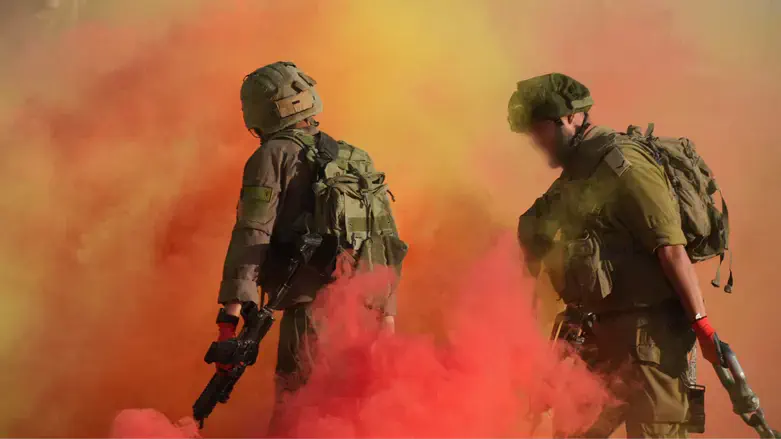
An overturned tank, a combat vehicle thrown into a ditch by an explosive device, soldiers trapped inside an armored vehicle, and a drone strike requiring rapid recovery under combat conditions were among the scenarios faced by the 401st Brigade's technology and maintenance personnel during a three-day exercise aimed at improving their readiness for future missions.
For Maj. A., the brigade's technology and maintenance officer, these were not hypothetical scenarios designed to push soldiers to their limits, but situations drawn from real incidents during the war.
"These are not extreme scenarios, but things we actually went through during the war," he told Arutz Sheva. "In some cases, we performed excellently, while others need to be practiced with the personnel so we can improve. The goal is to come out of the training much better prepared."
The exercise followed the 401st Brigade's completion of a mission in northern Israel and its transition to a defensive mission under the Southern Command in the Gaza Strip area. The move provided an opportunity to resume joint training for technology and maintenance personnel from the brigade's armored and combat engineering battalions after a prolonged period focused primarily on operational activity.
According to A., before October 7, the brigade held an annual joint exercise for the technology and maintenance units of its various battalions, combining professional drills with a competition between units. Now, as part of a gradual return to routine training after three years of war, the brigade has revived the format, incorporating lessons learned from combat operations.
"We had just finished a mission in the north, moved down to a defensive mission under the Southern Command in the Gaza Strip area, and started training within the brigade," he explained. "Each battalion conducts its own exercise, and then we also train together, so we can be ready for any scenario and return to the fundamentals and reinforce them, so that when the moment of truth comes, we will be the best we can be."
The three-day exercise focused on different aspects of technology and maintenance operations.
The first day was dedicated to routine professional responsibilities and preparing battalions and personnel for the transition from routine operations to wartime conditions.
A. emphasized the importance of reinforcing basic procedures after an extended period of operational activity and ensuring that experience gained during the war was incorporated into established working methods.
"We brought together the inspectors in each field and spoke with them about the daily routine. How to prepare the battalion and its personnel for war, to bring us back to the fundamentals that enabled us to operate as effectively as possible during the war," he said.
The second day focused on some of the most demanding responsibilities of technology and maintenance teams: responding to major mechanical failures, recovering damaged vehicles, and rescuing trapped soldiers under combat conditions.
Teams rotated between training stations simulating the rescue of trapped personnel, the recovery of overturned armored vehicles, vehicles damaged by explosive devices, and incidents involving drone strikes.
To encourage motivation and teamwork, the brigade incorporated a competition between battalions, with teams evaluated on their performance at each station.
The objective was not simply to complete tasks as quickly as possible, but also to improve coordination among specialists and their ability to work accurately under pressure.
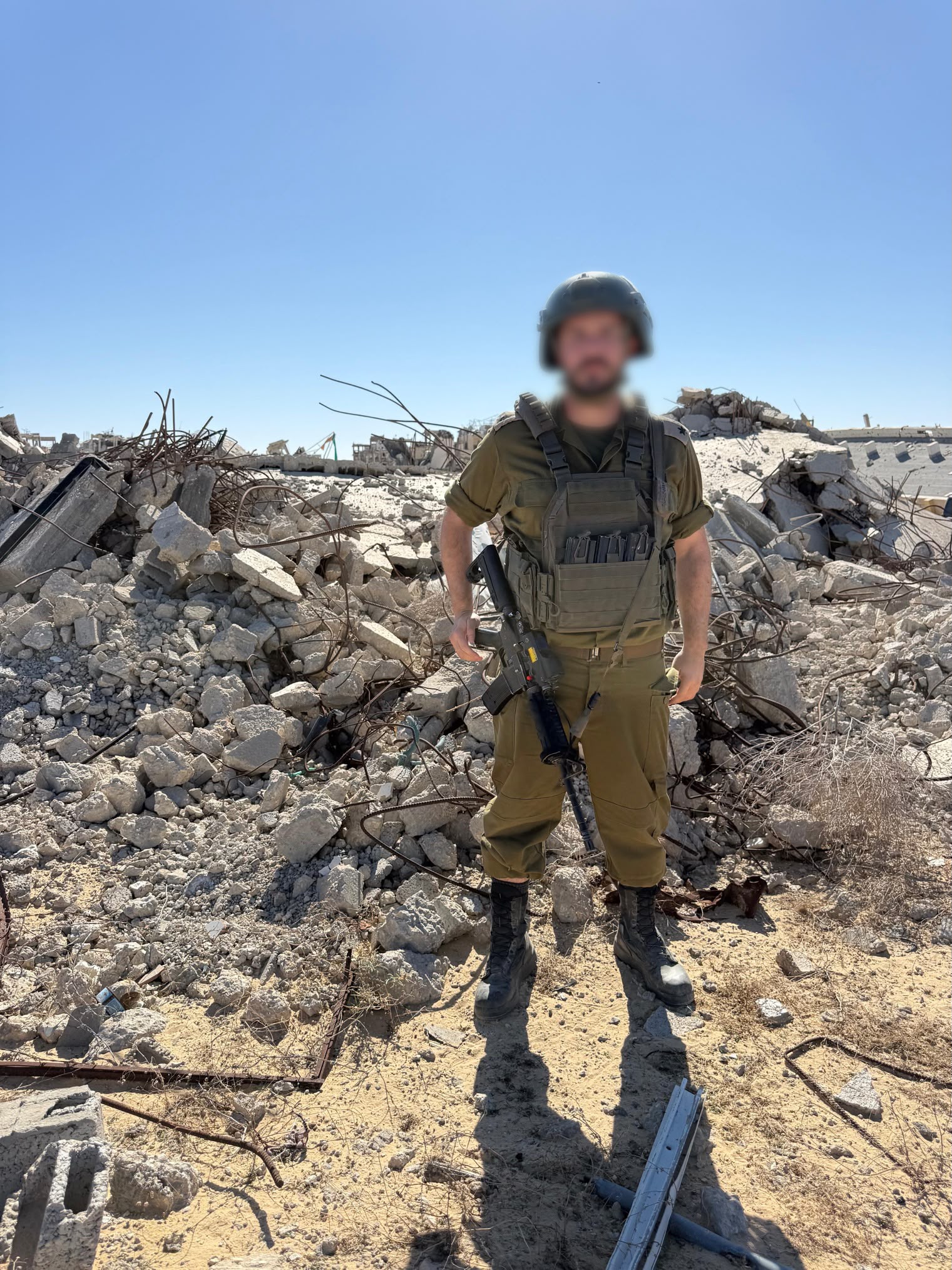
According to A., the physical and mental demands of the drills were intended to closely simulate real operational incidents, when personnel must respond immediately and their decisions can determine whether combat forces are able to continue their missions.
Beyond maintenance and recovery training, the exercise also included individual combat drills.
A. explained that although technology and maintenance personnel are not fully trained combat soldiers, operational circumstances sometimes require them to enter combat zones and work alongside maneuvering forces.
The brigade therefore placed additional emphasis on self-defense and first-aid skills.
"We raised their rifleman qualification level so they would have basic combat training. Of course, not as someone who leads the charge, but as someone who knows how to defend himself and provide medical care for himself and his comrades if necessary," he said.
The final day focused on battle preparation procedures and the role of technology and maintenance teams in providing combat service support to the battalions.
A. explained that a central challenge is restoring damaged or disabled combat vehicles to operational readiness as quickly as possible, allowing forces to continue their missions.
Achieving this requires close coordination with battalion and company commanders, a clear understanding of operational priorities, and advance preparation to provide technical support under changing battlefield conditions.
"We discussed battle preparation procedures, how they work, and how we, as combat service support personnel, help the soldier, the battalion commander, and the company commander, so they can keep fighting while we make the vehicles ready from a logistical and technological standpoint," he explained.