

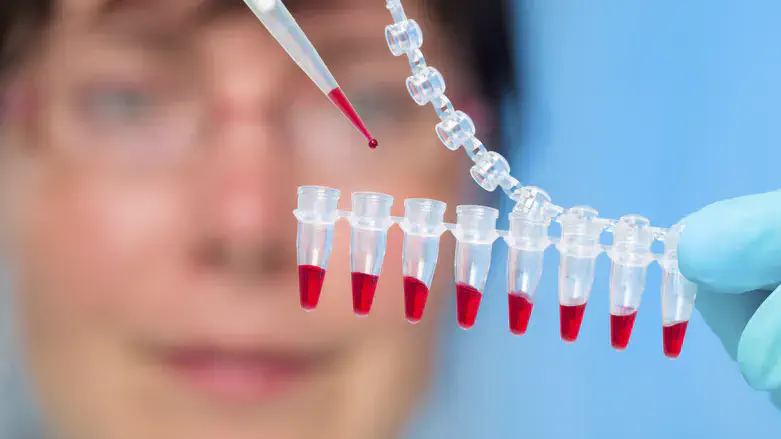
Israeli researchers have developed an experimental blood test capable of detecting early-stage breast cancer with 95% accuracy, potentially improving diagnosis for women whose tumors are difficult to identify through mammograms, *Jewish News* reported Thursday.
The study, published in *Nature*, was led by Dr. Efrat Shema and Professor Guy Ron of the Weizmann Institute of Science and Hebrew University of Jerusalem, in collaboration with Kaplan Medical Center and international researchers.
The test detects chemical markers released into the bloodstream when cancer cells break down. Using advanced microscopy and artificial intelligence, scientists distinguished between healthy women and breast cancer patients, including those with tumors smaller than two centimeters that had not spread beyond the breast.
Researchers initially examined blood samples from 77 breast cancer patients and 30 healthy women. Additional testing involving 188 patients confirmed the technique's effectiveness across different breast cancer types.
"Breast cancer screening saves lives," Shema said, explaining that dense breast tissue can make tumors harder to detect through mammography. Researchers found that breast density did not affect the blood test's performance.
The study also identified aggressive cancer cells concealed among less aggressive cells within tumors, potentially explaining why breast cancer sometimes returns years after treatment.
By detecting these cells' signatures in blood samples, researchers predicted cancer recurrence with 81% accuracy, including among patients previously classified as low risk.
"The differences appear to be mainly epigenetic," Shema explained, describing how aggressive cells emerged in laboratory models initially containing nonaggressive cancer cells.
Researchers are now investigating whether treatments could prevent cancer cells from becoming more aggressive.
"In the future, they could help us not only predict recurrence but also search for ways to prevent it," Shema said.
The blood test remains experimental and is not yet available for routine screening.