

The United States, France, Germany, and the United Kingdom on Thursday called on Iran to immediately restore cooperation with the International Atomic Energy Agency (IAEA), warning that Tehran's refusal to allow nuclear inspections has raised serious concerns about the whereabouts of its enriched uranium.
In a joint statement delivered by France at the IAEA Board of Governors meeting in Vienna, the four countries accused Iran of continuing to violate its nuclear safeguards obligations and withholding essential information about its nuclear facilities and materials.
"Since this Board last met, little if any progress has been made," the statement said, citing the latest reports from IAEA Director General Rafael Grossi.
According to the four governments, the IAEA has received no information from Iran about the status of its declared nuclear facilities or nuclear material and has been denied access to requested inspection sites.
The statement noted that since February 2026, the agency's only on-site verification activities have taken place at the Bushehr Nuclear Power Plant, while inspectors have been prevented from conducting inspections at other declared facilities.
The countries also expressed particular concern about Iran's fourth declared enrichment facility in Isfahan, where the IAEA has been unable to obtain the information and access necessary for verification.
As a result, the agency has determined that it "is not able to conclude that there has been no diversion of declared nuclear material from peaceful nuclear activities in Iran."
The statement warned that inspectors have lost continuity of knowledge regarding Iran's previously verified stockpile of highly enriched uranium for approximately 18 months.
Quoting Grossi's report, the four governments said the inability to verify the material "is a matter of serious proliferation concern and compliance with Iran's NPT Safeguards Agreement, and needs to be rectified with the utmost urgency".
The countries also accused Iran of failing to clarify outstanding safeguards issues, implement modified Code 3.1, and comply with resolutions requiring the implementation and ratification of the Additional Protocol.
They recalled that in September, the IAEA Board of Governors adopted a resolution reporting Iran's non-compliance to the UN Security Council and General Assembly, following an earlier finding in June 2025.
"The implementation of an NPT safeguards agreement cannot be unilaterally suspended," the statement said, warning that allowing countries to selectively fulfill their obligations would undermine the international nuclear monitoring system.
The four governments reiterated their support for a negotiated agreement addressing the proliferation risks associated with Iran's nuclear program but stressed that progress depends on Tehran restoring transparency and allowing inspectors to return.
They urged Iran to provide information about its nuclear facilities and materials and facilitate verification activities without further delay.
Iran, Russia, and China delivered a joint statement of their own at the meeting on Wednesday, declaring that the full resumption of nuclear inspections would depend on an end to military attacks and threats against Iran.
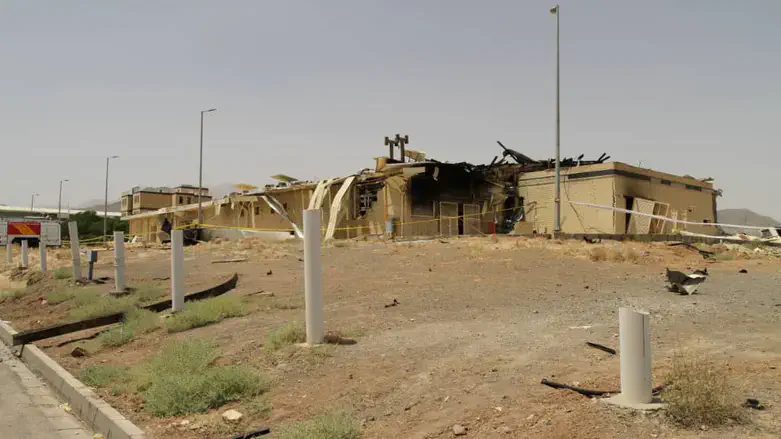
The three countries argued that attacks on Iranian nuclear facilities and continuing threats of additional military action had created conditions preventing normal verification activities.
They maintained that inspections could fully resume only after hostilities ended, threats of renewed attacks were removed, and credible guarantees were provided against further military action.
The three governments also pointed to Iran's authorization of scheduled inspections at Bushehr during 2026 as evidence of what they described as Tehran's continued willingness to cooperate with the IAEA.
In a separate memorandum reported by Iran International on Wednesday, Iran's mission in Vienna accused Grossi of failing to condemn attacks on Iranian nuclear facilities and argued that Tehran had received no assurances that information shared with inspectors would not be used in future military operations.
Iran also rejected efforts to reinstate previously terminated UN Security Council resolutions, maintaining that the measures lacked a legal basis.
The four Western governments, however, insisted that Grossi had repeatedly confirmed there was no technical reason preventing inspectors from returning to the affected facilities.
They concluded by calling on Tehran to take the necessary steps to restore international verification.
"It is up to Iran to seize this opportunity, change course, and address the international community's long-standing concerns regarding its nuclear program."