

Iran's Islamic Revolutionary Guard Corps (IRGC) has become directly involved in efforts to resolve a confrontation between the Iraqi government and the Iran-backed Kataib Hezbollah militia over control of Jurf al-Sakhar in Babylon province.
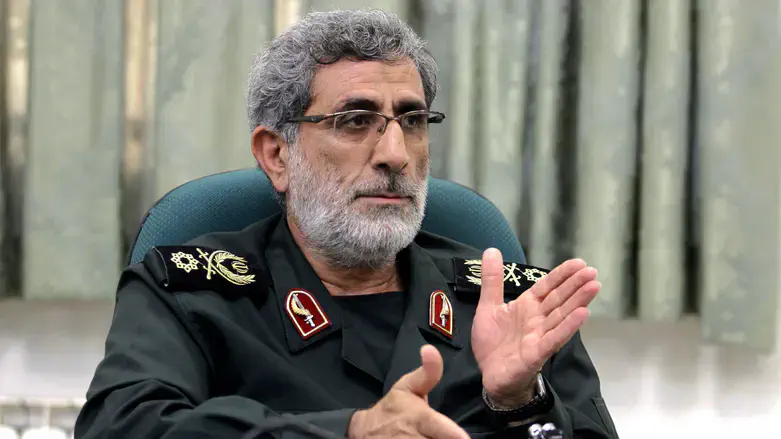
According to Al Arabiya/Al Hadath, Kataib Hezbollah confirmed on Thursday that its secretary-general, Abu Hussein al-Hamidawi, met with IRGC Quds Force commander Esmail Qaani, Badr Organization leader Hadi al-Amiri, and Popular Mobilization Forces chairman Faleh al-Fayyadh to discuss the crisis.
The militia described the outcome of the meeting as positive, confirming the Iranian commander's involvement in negotiations over the disputed district.
The announcement comes as Iraqi Prime Minister Ali al-Zaidi has given Kataib Hezbollah until Friday to withdraw from Jurf al-Sakhar, also known as Jurf al-Nasr, and transfer control of the area to federal security forces.
An Iraqi security source told Al Arabiya/Al Hadath that joint forces are scheduled to begin redeploying in the district on Friday.
According to the source, the authorities have completed the selection of security commanders responsible for overseeing the area and finalized preparations for establishing a command center to coordinate operations.
The confrontation follows a government investigation into allegations that armed groups operating in Jurf al-Sakhar have been involved in illegal oil smuggling for several years.
Earlier in the week, Zaidi ordered security forces to prepare to surround the district and warned that the Counter-Terrorism Service could intervene if the militia refused to surrender control.
The investigation reportedly uncovered unauthorized oil refining facilities, breaches in pipelines, and evidence of suspected smuggling operations. Government sources also alleged that armed personnel had prevented federal investigators from entering certain locations.
Following the investigation, Zaidi dismissed nine officials and security commanders in Babylon province, including personnel affiliated with security agencies, the Popular Mobilization Forces, the Energy Police, and the Oil Pipelines Company.
Kataib Hezbollah has denied involvement in oil smuggling and rejected the government's findings. The militia claimed that the facilities identified by investigators were used to supply fuel for military vehicles, generators, and other equipment.
In a statement issued earlier this week, the organization accused the government of conducting what it described as a campaign to force it to surrender its weapons.
The group also declared that it would not relinquish its control of Jurf al-Sakhar or its weapons.
Kataib Hezbollah is formally incorporated into Iraq's Popular Mobilization Forces, which operate under the authority of the prime minister. However, the militia has frequently acted independently of the government's command structure, including by defying instructions to halt attacks against US forces.
The organization also maintains a political presence through the Hoquq Movement, which holds five seats in the Iraqi parliament.
An Iraqi government report has additionally identified commercial activities associated with the militia, including construction, housing, trade, tourism, and currency exchange, as sources of revenue.
The dispute comes amid the Iraqi government's broader efforts to bring armed factions under state authority. Zaidi has set June 30, 2027, as the deadline for placing all weapons under government control, while negotiations with several militias remain ongoing.