

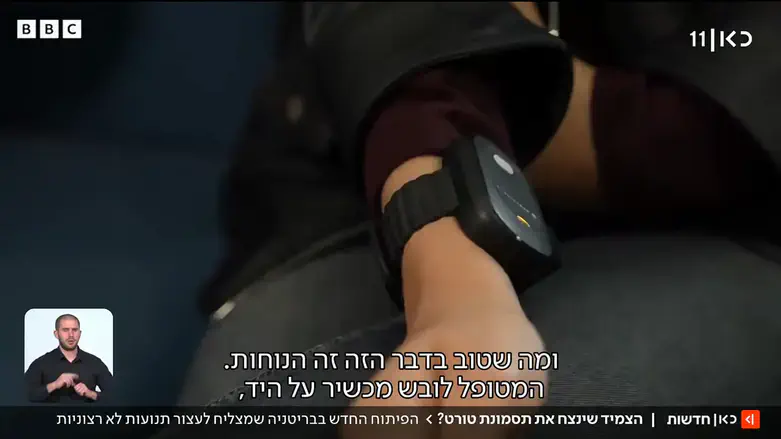
Kan reports that a new wrist-worn device developed in Britain offers a potential way to ease the involuntary tics associated with Tourette syndrome. Resembling an ordinary smartwatch, it is intended to help users manage symptoms that can make everyday activities, such as sitting quietly in class, eating a family meal or hugging their parents, a persistent challenge.
The wristband was developed following more than a decade of research. It does not offer a cure for the syndrome, but according to data presented by its developer, its use reduced tic severity in a substantial proportion of users.
Tourette syndrome, which primarily emerges in children and adolescents, is characterized by tics, involuntary movements or sounds that can interfere with daily activities. Although treatments are available to ease symptoms, there is currently no cure, and existing options are limited.
The new wristband offers a different treatment approach. Rather than taking medication or participating in extended behavioral therapy, users put the device on their wrist and switch it on.
The technology uses electrodes embedded in the wristband to deliver mild electrical stimulation through the nerves, with the aim of influencing the neural activity associated with tics. The idea is to allow users to continue their daily routines while the device operates, without requiring them to take any additional action whenever a tic occurs.
The report featured accounts from users describing the changes they experienced after using the wristband. One described an almost immediate shift from constant movement to physical stillness after switching it on.
For another family, the change had particular personal significance. The parents of a young person with the syndrome said one of the things that brought him the greatest relief was being able to hug them, a seemingly simple act that became a meaningful moment as his tics eased.
Alongside the personal accounts, the developer presented data from its studies. According to the findings presented, 60% of users reported a reduction of at least 25% in tic severity. A further reduction in symptom severity was also reported with prolonged use.
The results indicate symptom relief rather than a cure. The wristband does not eliminate Tourette syndrome, and the data presented do not show that tics disappeared entirely in all users. For people who experience tics throughout the day, however, even a reduction in severity may make a substantial difference.
One of the main advantages highlighted by professionals in the report is convenience. Unlike treatments that require taking medication or attending lengthy behavioral therapy sessions, the wristband is designed to fit into everyday life.
The device is still undergoing the medical regulatory approval process. According to the report, it is already on sale in Britain for slightly more than NIS 2,000, but the company is seeking the regulatory approvals needed for it to be formally recognized as a medical device for treating Tourette syndrome.
Research into the technology extends beyond Tourette syndrome. Researchers are already exploring whether the electrical stimulation could also help ease tremors in people with Parkinson's disease.