
Daniel Winston is an American-Israeli therapist, lecturer and author. He volunteers in the IDF reserves, as an MDA medic, in ZAKA, and in the Israel Police Search and Rescue Team.
(JNS) Most Israelis hear about the “Hilltop Youth" only when something goes wrong, like a clash or an arrest. But behind the headlines stands a small group of young Jews doing something earlier generations of Zionists would have understood immediately: settling, holding and defending the Land of Israel.
These young pioneers are not stealing vast tracts of Arab farmland, descending on thriving Arab towns or seizing built-up population centers. Despite occasional excesses, they are establishing a presence on empty, neglected and strategically significant patches of land that would otherwise be left to whoever arrives first.
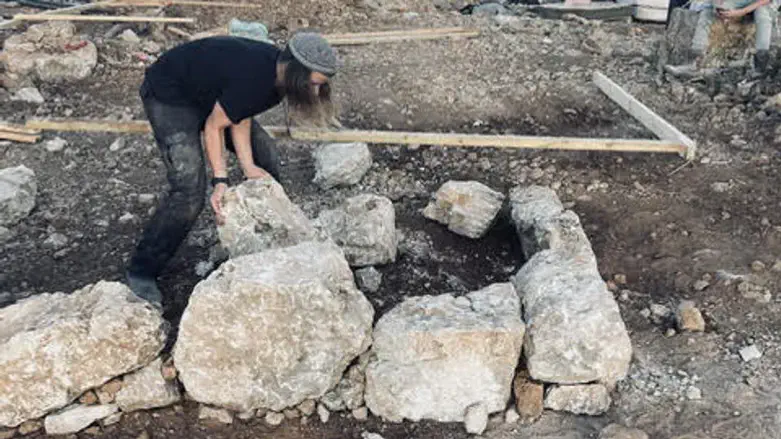
These youth are not bureaucrats, analysts or conference-room patriots. They are young men and women on remote ridges hauling water jugs, erecting tents or even just lean-tos, planting orchards, grazing sheep and establishing a Jewish presence in places where Israel’s future is being decided in real time.
They understand that borders are secured by facts on the ground.
For years, the Palestinian Arab national movement has pursued a strategy based on precisely that. The Palestinian Arabs seek to build a de facto state through steady territorial consolidation rather than waiting for negotiations.
Their roads, housing, agriculture, public buildings and infrastructure have spread across strategic areas, often with heavy European funding and NGO backing. What looks like scattered development is actually a patient but aggressive campaign to reshape the map before final-status talks resume, if they ever do.
Against this, the Hilltop Youth are at least employing an effective counterstrategy.
Many Israelis in the coastal plain barely think about the hills of Judea and Samaria. They should. Those ridges dominate the narrow waist of the country. They overlook Highway 6, Ben-Gurion International Airport, the approaches to Jerusalem and the greater Tel Aviv metropolitan area. This is not some distant frontier. It is the high ground above Israel’s demographic and economic heartland.
The space between parts of the Samarian ridge and Israel’s core is barely six miles. A hostile state in those mountains would not be a diplomatic inconvenience but a strategic nightmare.
This is not alarmism; it is topography. High ground above a nation’s population center is operational terrain. Mortars, sniper fire, anti-tank missiles, drones, rockets and infiltration squads launched from those ridges would place millions of Israelis in immediate danger. Major traffic arteries could be disrupted, the airport threatened routinely, and towns and cities overrun in short order.
Before the Hamas massacre on Oct. 7, 2023, many Israelis believed the Gaza barrier, intelligence coverage and surveillance systems would prevent a major cross-border assault. Gaza showed what terrorists can do across a heavily fortified, highly monitored 40-mile border. The Green Line border with Judea and Samaria runs about 200 miles and has long been far more porous.
That is why the oft-repeated promise of a “demilitarized Palestinian state" remains so unrealistic.
Even with the Israel Defense Forces operating deep inside Judea and Samaria, terror networks still move weapons, money, ammunition and trained operatives. Does anyone seriously believe the territory would stay demilitarized after an Israeli withdrawal due to signatures and foreign guarantees?
A Palestinian Arab state on those heights would become another armed Islamist bastion, this time overlooking the runways, highways and population centers of central Israel. If Israel ever stakes its survival on that illusion, Oct. 7 may be remembered as a mild warning that went unheeded.
Yet despite everything Israel has learned, its stubborn “peace camp" clings to the same failed formula. Before Oct. 7, it promised that withdrawals and territorial concessions would reduce violence. Since then, many of its adherents have strangely insisted on doubling down.
With calm but bewildering certainty, they still cluck their tongues at the young pioneers on the hilltops. They complain about a supposedly widespread epidemic of “settler violence."
Yes, such violence exists, and the police address it as they should. But as the group Regavim has proven in its lengthy rebuttal to the prevailing narrative, exceptional incidents are routinely inflated and manipulated until they eclipse the larger reality.
These youth understand the issue clearly. They see the geography, the quiet territorial creep, how little distance there is to the heart of central Israel and know that if Jews do not hold the land, others will. So, they go up and build.
The prophet Ezekiel described a moment of danger in which God seeks someone willing to “build up the wall and stand in the breach before Me for the land."
In our time, that role is filled by some of the least polished and least appreciated young Jews in the country. Young men and women with dusty boots, battered pickup trucks and tents on lonely ridges have climbed the hills and stayed.
They see the breach. They refuse to leave it. And in doing so, they have become quiet guardians of Israel’s narrow heartland.