
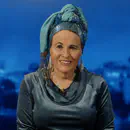
Naomi Weiser, mother of fallen IDF Staff Sgt. Roey Weiser, who was killed fighting Hamas terrorists on October 7, 2023, spoke with Dr. Chana Katan in an interview with Arutz Sheva-Israel National News about her son's life, his final battle, and the initiatives established to preserve his legacy.
Weiser described her 21-year-old son as an energetic, intelligent, and natural leader who cared deeply about others from an early age.
"He could be like a clown and be funny when they needed it. But he can also be serious and take care of others when they needed it," she recalled, describing his close friendships.
Growing up in Efrat, Roey excelled academically and was passionate about sports, particularly soccer and American football. His strong sense of justice led him to study law through a Hebrew University high school program, alongside Arabic and civics.
Following a year at the Atzmona pre-military academy, Roey chose combat service over opportunities to combine his legal studies with military service.
"There's a million geeks in this world. Not so many combat soldiers. I'm going to go to combat. I'll be a lawyer after," his mother recalled him saying.
He enlisted in the Golani Brigade, following in his father's footsteps, and excelled in his training and commanders' course. Although initially disappointed at being assigned to train other soldiers rather than return to his unit, he eventually became a staff sergeant responsible for a new group of soldiers.
According to his mother, the role suited his natural instinct to look after others.
"He felt like he was their father," she explained, describing how Roey regularly checked on his soldiers, helped them with personal difficulties, and ensured they had food and essential supplies.
"He would come home and say, Abba (Dad), I need more food," she recalled. When his father questioned the request, Roey replied, "I don't eat alone. I take care of my soldiers."
When offered the opportunity to leave his soldiers for another assignment, Roey refused.
"They're my children. I want to stay with them," he told his commanders.
The unit was subsequently stationed at the Erez Crossing on the Gaza border. It was there that Roey and his soldiers were awakened by rockets and sirens on the morning of October 7.
Weiser recounted how Roey and another commander divided responsibility for defending the base as Hamas terrorists began infiltrating the area.
After helping soldiers reach protected rooms and organizing positions to defend the entrance, Roey received a request for reinforcements from the other commander, whose force had suffered casualties.
Rather than sending his soldiers alone, Roey entered the protected room and asked, "Who's coming with me?"
Three soldiers volunteered to accompany him.
According to Weiser, Roey continued directing his soldiers, communicating with other commanders, and attempting to assess the situation as the fighting intensified.
She said the soldiers fought for more than an hour, killing dozens of terrorists before running low on ammunition.
As they attempted to withdraw toward the protected room, they were ambushed, and Roey was killed.
Weiser believes that the soldiers' resistance saved numerous lives by allowing others to reach safety and giving security forces time to establish roadblocks.
"Their act saved hundreds of soldiers," she said.
Since his death, Weiser has devoted much of her life to sharing her son's story and continuing his commitment to helping others.
One of the family's central memorial projects is the establishment of a home for lone soldiers in Efrat, intended to accommodate approximately a dozen soldiers.
The initiative will involve the local community, with residents providing meals, hospitality, and a supportive environment for soldiers serving without their families in Israel.
"We're starting basically a home that will house about a dozen soldiers. And the community will take care of them and give them meals and invite them to their house and be part of the community," she explained.
The family has also developed smaller initiatives to keep Roey's memory alive, including a Hanukkah campaign encouraging people to photograph themselves eating donuts or sufganiyot and share the images on social media in his memory.
Weiser explained that the campaign reflects a message her nieces emphasized after his death: Every moment counts, and life should be lived to the fullest.
"By doing that, you're sharing these moments. You're saving them. And you're spreading Roey's bravery across the world," she said.
Concluding the interview, Dr. Katan compared the young soldiers who fought on October 7 to the Maccabees.
Weiser responded with the message that guides her family's efforts to preserve Roey's legacy.
"It's our job to keep their light shining."