
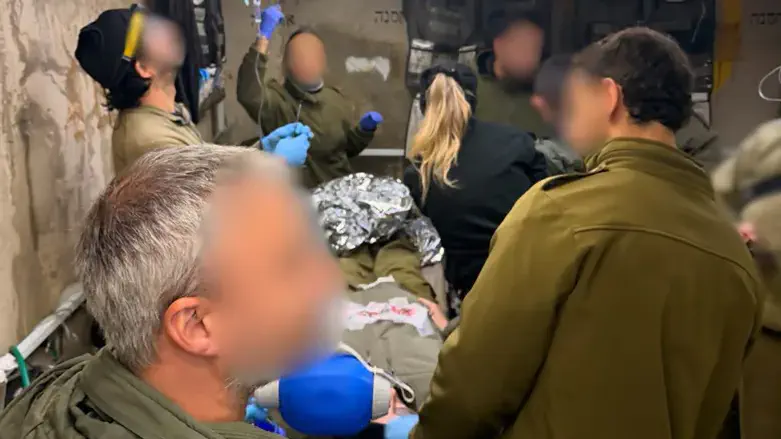
Imagine the following scenario: In the middle of the night, a combat team operating dozens of kilometers inside enemy territory is ambushed. One soldier is seriously wounded. A combat medic provides initial treatment, but the soldier urgently needs surgery, and every minute counts.
The nearest hospital could be more than an hour away. Difficult terrain and weather conditions may complicate evacuation, while the wounded soldier's condition could deteriorate before he reaches an operating room.
Israeli forces have faced similar challenges over the past three years in Gaza, Lebanon, Judea and Samaria, and the Syrian sector, where soldiers from the Carmeli Brigade have been operating for the first time since last September.
To address this challenge, the reserve brigade launched an unprecedented exercise on Monday, lasting more than 24 consecutive hours, to practice deploying a mobile field hospital capable of performing lifesaving surgery without first evacuating wounded soldiers to Israeli territory.
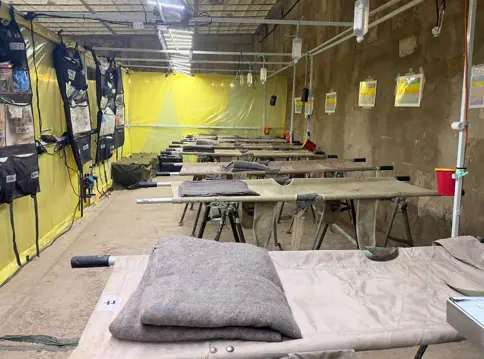
"There are areas of operation deep inside the territory where evacuating a wounded soldier to the nearest hospital would take at least an hour, and sometimes an hour and a half," explains Sgt. 1st Class (res.) Z., a combat medic in the brigade who participated in the exercise.
"In a situation like that, God forbid, the patient could die before then. That is why we would want to get him into surgery quickly first, and only then transfer him in a more stable condition."
Until now, the brigade has operated a forward resuscitation company responsible for receiving casualties, providing medical care, and stabilizing patients for evacuation. It is now transitioning to a surgical company capable of performing emergency operations in the field.
The new hospital can be dismantled, transported, and reassembled according to operational needs. Initially, it is intended to operate near the border, with the possibility of deployment inside enemy territory.
"When we need to set it up and operate it in a real emergency, we will be able to reach any location, without restrictions," Z. says.
When we arrived, the hospital, housed in a large, covered tent, was already assembled. Medical equipment was in place, treatment areas had been prepared, and staff were awaiting the first simulated casualties.
The facility includes a triage station where patients are assessed and treatment priorities established, an intermediate care area for lightly wounded soldiers, an intensive care unit for serious casualties, an operating room, and a designated area for treating acute stress reactions.
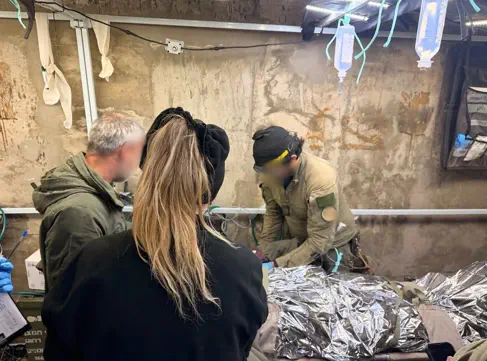
On Monday evening, approximately 15 soldiers playing casualties with injuries of varying severity began arriving, sometimes only moments apart. The teams had to assess, prioritize, and treat multiple patients simultaneously, without knowing what injuries to expect.
"We do not know in advance what scenarios will unfold," Z. said before the exercise. "We were told there would be quite a few casualties, but from there, it is our test. They are supposed to surprise us so that we are not prepared in advance."
The exercise also tested coordination between medical teams, the transfer of patient information, and the logistical support needed to operate a field hospital under combat conditions.
Its centerpiece was the operating room, a capability previously unavailable within the brigade's forward resuscitation company.
"This is a space specially adapted for surgical procedures, with dedicated equipment, instruments, and medical staff," Z. explains. "Here, it will also be possible to perform emergency surgery, primarily for abdominal injuries, where waiting for evacuation could be life-threatening."
The medical team was reinforced with specialists, including an experienced operating room nurse and a nephrology specialist assigned to intensive care.
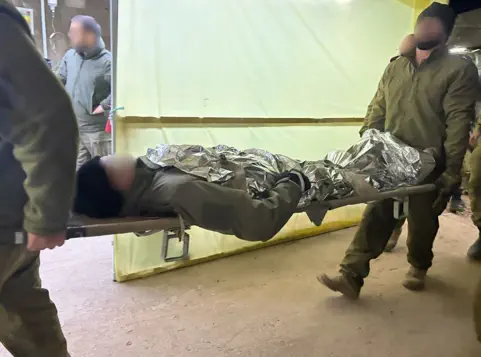
For the first time, the brigade tested the complete chain of care, from initial triage through emergency surgery. The hospital is not intended to replace conventional medical facilities, but to provide lifesaving treatment before evacuation, giving critically wounded soldiers a better chance of survival.
After more than 24 hours of continuous training, the new operating room completed its first exercise. For Carmeli's medical personnel, it marked the beginning of a capability that could eventually be deployed wherever operational needs require.
"The capability tested this week near the border," Z. says, "is intended to enable the same hospital to be set up and operated in other locations in the future, according to operational requirements and what the forces need, and that means a great deal. It changes the reality on the ground."