

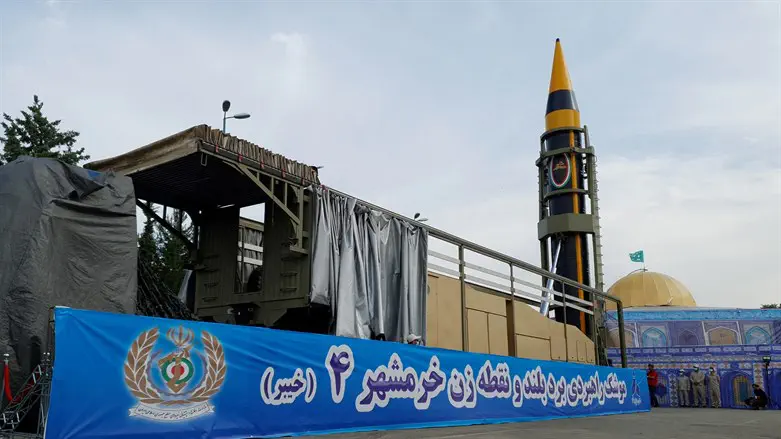
Iran retains an estimated 1,500 to 2,500 missiles despite months of American and Israeli military operations, leaving the Islamic Republic capable of launching significant attacks against US forces and regional allies, The Wall Street Journal reported, citing American officials.
The estimate, which US intelligence agencies consider to have a low degree of confidence, reflects the difficulty of determining how many missiles Tehran has stored or prepared for launch. Nevertheless, officials believe Iran maintains substantial military capabilities.
According to The Wall Street Journal, Iranian authorities have continued replenishing their missile inventory using components accumulated before the war, although production remains slower than it was before the conflict began in February.
Iran also possesses large numbers of drones and shorter-range missiles, providing additional options for attacks throughout the Middle East.
Israeli military officials have reached similar conclusions, estimating that Tehran retains more than 1,500 ballistic missiles.
The findings have become an important consideration in discussions within the Trump administration about whether to resume major military operations against Iran.
The Wall Street Journal reported that Iranian forces have continued damaging American military facilities, radar installations and early-warning systems through missile and drone attacks.
As a precaution, US and Israeli officials said, numerous American military assets have been relocated to Israel, which is considered a safer location.
Iran has also improved its ability to strike regional targets by refining its intelligence gathering and targeting procedures, receiving assistance from partners including Russia, and coordinating missile and drone attacks more effectively.
For now, Trump has chosen to maintain economic sanctions and a naval blockade rather than authorize another extensive bombing campaign.
US allies in the Gulf have urged Washington not to resume military operations, fearing Iranian missile and drone attacks in retaliation.
Vice President JD Vance had attempted to establish diplomatic contact with a senior Iranian hard-liner during the pause in fighting, but Trump subsequently instructed him to discontinue those efforts and concentrate on domestic matters.
The White House has maintained that Operation Epic Fury, the American military campaign against Iran, severely weakened the country's armed forces and that continuing economic pressure has further undermined the regime.
Destroying Iran's ballistic missile capabilities was among the principal objectives of the joint American-Israeli military campaign.
An Israeli military official acknowledged that Iranian forces were recovering from the damage and preparing for the possibility of renewed hostilities.
Despite the extensive strikes, “they are rebuilding, rearming," the official said.