
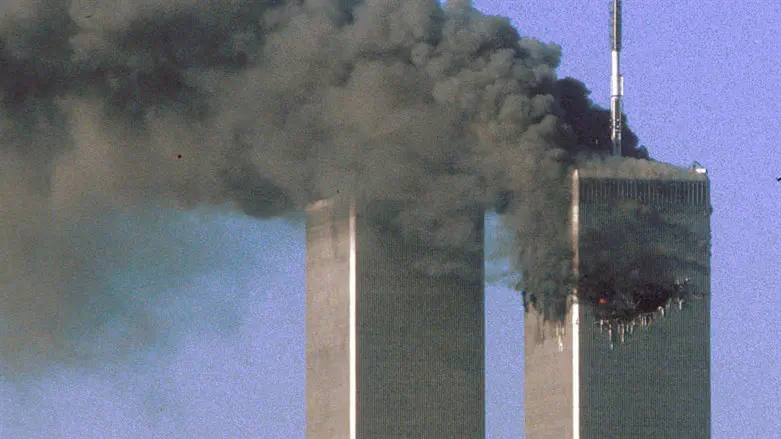
25 years have passed since the Twin Towers collapsed in the deadliest terrorist attack in history, but when it comes to US foreign policy in the Middle East, 9/11 never truly ended. Presidents have come and gone, enemies have changed, yet for a quarter of a century the United States has continued to struggle to translate its immense power into a stable regional order. That failure continues to shape many of the Middle East's conflicts today.
After 9/11, the United States went to war in the Middle East to fight terrorism and to preempt future terrorist attacks. From Afghanistan and Iraq to present-day Iran, the world's most powerful nation has repeatedly sought to reshape the region - only to discover time and again that starting a war is easier than controlling what comes the day after. Twenty-five years is long enough to examine not only the results of these policies, but also the assumptions behind them, the mistakes that kept recurring and whether Washington has actually learned from them.
To understand the American response, we must return to the worldview that drove al-Qaeda leader Osama bin Laden. Bin Laden believed the United States was largely responsible for preserving the political status quo in the Middle East by propping up pro-American regimes and helping them remain in power. In his view, U.S. support for monarchies that opened their economies to the West and encouraged consumerist culture and Americanization had dragged many Muslims away from what he regarded as the "right path."
The United States did indeed supported pro-American authoritarian regimes and opposed democratization that in its view would inexorably bring Islamist parties to power. Bin Laden believed that a spectacular, mega-terrorist attack that would shook America to its core would demonstrate that its presence in the Middle East carries a heavy price. He sought to bring the battlefield to U.S. soil, and succeeded in shattering the sense of security of the American public - and, above all, of policymakers in the George W. Bush administration. A new foreign-policy doctrine took shape in Washington: threats originating in the Middle East had to be eliminated before they could reach America again.
The United States embarked on two wars whose stated objectives were far from clear. In Afghanistan, it sought to destroy al-Qaeda and later expanded its mission into nation-building. It invaded Iraq in 2003 with the declared goal of eliminating Saddam Hussein's nuclear arsenal, while also harboring ambitions to build a democratic republic on the ruins of the Ba'athist regime. Bush believed there was a connection between the absence of democracy in the Middle East and 9/11, and that the war on terror therefore had to include a long-term effort to spread democracy across the region.
But plans are one thing and reality is another. Al-Qaeda expanded into Iraq, eventually giving rise to ISIS, which terrorized the Middle East and preoccupied the West for years. In both cases, Washington believed it was embarking on a lightning war that would last only a few months and that Iraqis and Afghans would welcome American tanks with rice and flowers. In Afghanistan, the puppet regime it installed ultimately collapsed, and after 20 years NATO forces withdrew, leaving the country once again in the hands of the Taliban. In Iraq, attempts to establish democracy came to naught, leaving behind a weak and deeply divided country, scarred by bloody conflict between Sunnis and Shiites and governed by a fragile political system under growing Iranian influence. The US was unable to understand that secularism never penetrated Middle Eastern societies, where people are more attached to their sect than to their nation state. These people, more than they wanted democracy, they wanted a figure of their own sect to rule the state.
That was when the snowball began to roll. The trauma of 9/11 fundamentally changed America's approach to the Middle East. The determination to prevent another mega-terror attack increased Washington's willingness to use force and topple regimes; yet the failures that followed also produced a deep reluctance to become entangled in prolonged wars. Ever since, the United States has swung between these two extremes without resolving the fundamental question: What happens the day after military force is used? And what do Middle Eastern societies want?
Although President Donald Trump declared that in his current term he would bring wars to an end, when it comes to the Middle East he appears to have been drawn into the same pattern: using military incursions to pursue far-reaching objectives without a clear plan for what follows. Alongside Israel, the United States launched two rapid military operations in Iran aimed at destroying its nuclear program and bringing down the regime of the ayatollahs. Similar to the US operation in Venezuela that toppled Maduro and allowed the US to take control over Venezuela's oil resources with the blessing of a puppet ruler, Trump thought that he could repeat the same scenario in Iran. Yet the Iranian regime has demonstrated its resilience and even hardened its positions.
The same inconsistency is evident across the Middle East of the past three years. The US has underestimated the power of non-state actors, their perseverance and resilience. In Gaza, there is still no viable framework for dismantling Hamas; in Lebanon, the United States has struggled to secure a lasting settlement without knowing what to do with Hizbullah; in Yemen, the Houthis have evolved from a marginal actor into a strategic threat to international shipping routes; Time and again, grandiose declarations are made, plans are unveiled and mediators are dispatched, yet the gap between Washington's rhetoric and its ability to shape realities on the ground remains wide.
This may be the most important lesson the past 25 years should have taught Washington: military power is no substitute for political strategy. The United States is not omnipotent, and even the world's most powerful country cannot impose a political order on societies it does not fully understand. It also bears at least some responsibility for the failure of democratization in the Middle East: at times it tried to impose democracy by force, while at others it prioritized stability and cooperation with undemocratic regimes over the very values it sought to promote. After a quarter of a century, it is time for America to recognize the limits of its power.
Dr. Yakub Halabi is an expert on US foreign policy in the Middle East and a lecturer in international relations at the Western Galilee Academic College.