

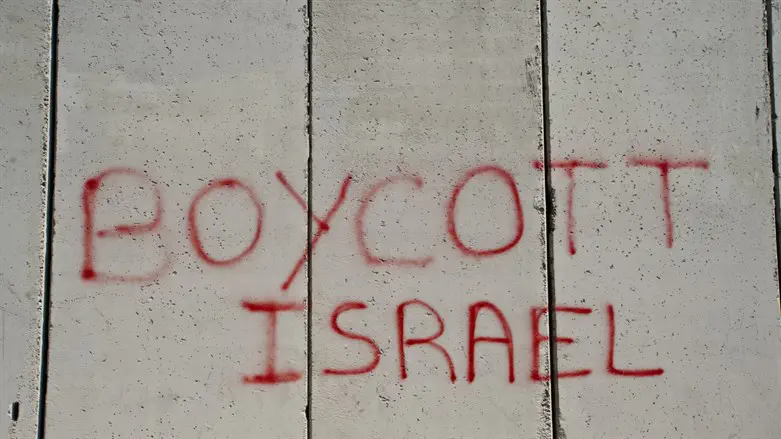
Thirteen Republican state attorneys general have called on the United Kingdom and the Netherlands to abandon trade sanctions targeting economic activity involving Israeli communities, warning that the measures violate national sovereignty, threaten American businesses and could undermine efforts to combat terrorism.
In a joint letter addressed to British Ambassador to the United States Christian Turner and Dutch Ambassador André Haspels' successor, the attorneys general argued that the sanctions amount to an attempt to interfere in Israel's domestic affairs and regulate activities taking place entirely within another sovereign country.
The letter was signed by the attorneys general of Iowa, Alabama, Arkansas, Florida, Georgia, Kansas, Louisiana, Mississippi, Missouri, Montana, Ohio, Oklahoma and South Carolina.
"Those sanctions reflect a misguided attempt to control the domestic policy of another sovereign nation," the officials wrote. They added that the measures could cause serious economic harm to individuals and businesses in the United States while advancing the objectives of terrorist organizations opposed to Western political systems.
The attorneys general argued that the sanctions contradict principles of sovereignty and even conflict with legislation adopted by the European Union and the United Kingdom to protect against extraterritorial regulation by foreign governments.
They also criticized broader European regulatory initiatives, including the EU's Corporate Sustainability Reporting Directive and Corporate Sustainability Due Diligence Directive, accusing Brussels of attempting to impose regulatory requirements on business activities conducted outside the bloc.
The letter warned that the sanctions could create significant legal and economic complications for American companies. Under US law, businesses may face restrictions for participating in certain foreign-led boycotts of Israel, potentially putting them in conflict with the requirements imposed by European governments.
"As a result, your anti-Israel sanctions may deprive your own citizens of goods, services, and technology that are essential to their everyday lives and their economic well-being," the attorneys general wrote.
They further warned that excluding American companies from European markets could harm businesses headquartered in their states and threaten jobs and commercial opportunities.
The officials said the economic consequences could warrant retaliatory measures under US trade law, explicitly reserving their right to pursue such remedies if Britain and the Netherlands continue their policies.
The letter also highlighted the potential impact on state-level government contracts and investments. Several of the signatory states have laws prohibiting government agencies from contracting with companies that boycott Israel or requiring public funds to be divested from such businesses.
Consequently, the European sanctions could lead to companies from Britain and the Netherlands being excluded from government contracts in those states or trigger divestment from their businesses.
Beyond the economic and legal arguments, the attorneys general accused the two European governments of advancing the objectives of Hamas and Hezbollah through their sanctions policies.
"Your nations have also aligned themselves with the policy objectives of terrorist organizations like Hamas and Hezbollah," they wrote, arguing that the measures advance goals those groups have sought to achieve through violence against civilians.
They warned that the sanctions could lend legitimacy to the objectives of terrorist organizations by suggesting that prominent European governments share their positions.
The letter concluded with a call for both countries to rescind their sanctions or halt their implementation, urging them to join the American states in opposing terrorism and antisemitism.