
David Rubin is a former mayor of Shiloh, Israel, the author of Trump and the Jews (updated edition) and founding president of the Shiloh Israel Children's Fund.
Every presidency is remembered for one or two things. For Donald Trump's second term, the history is already being written, and it will come down to two questions:
Did he defeat the Islamic Republic of Iran decisively?
And did he bring the price of gasoline back down to earth?
Both are within reach. Neither will be achieved by a White House that is divided against itself.
That is why Vice President JD Vance's conduct since last week's midterm elections is so troubling.
Consider where things stand. When this year began, the national average for a gallon of regular gasoline was $2.81, the lowest in years. Then, on February 28, American and Israeli forces struck the regime, and Tehran reached for the one weapon it had left that truly mattered: its chokehold on the Strait of Hormuz. Crude oil has hovered around $100 a barrel. In September the national average for a gallon hit $4.48, the highest ever recorded for that time of year, and it is still above $4 today.
Every American who fills up a tank is paying a tax levied by the ayatollahs. Let's be clear about who is responsible. It is not the president who finally said no to a regime that has chanted "Death to America" for 47 years, armed Hezbollah, Hamas and the Houthis, and plotted to assassinate American officials, Donald Trump among them. It is the regime that chose to hold the world's energy supply hostage.
The answer to blackmail is not to pay it. I repeat: the answer to blackmail is not to pay it. Proposals have been floated for an interim arrangement, brokered through Oman, that would hand Iran a say over the strait it never had before the war. That would be defeat dressed up as diplomacy. Secretary of State Marco Rubio has rightly insisted that the Strait of Hormuz must remain an open international waterway, free of Iranian control and Iranian tolls.
The way to bring gas prices down is not to make peace with the man holding the hose. It is to take the hose away entirely.
A strait reopened by American strength, with Iran's mine-layers, fast boats and coastal batteries neutralized, means oil flowing, prices falling and a regime humiliated before its own people.
The United States Navy is the most powerful fleet in history. What victory requires now is resolve at the top and unity behind it. Plus, we need coordination with our strongest ally in the Middle East. I'm not referring to Saudi Arabia. I'm referring to Israel. We need joint, decisive kinetic action by the United States and Israel. Oh, and with American backing, Israel could put boots on the ground and secure Iran's oil fields, just as Trump took control of Venezuela's oil.
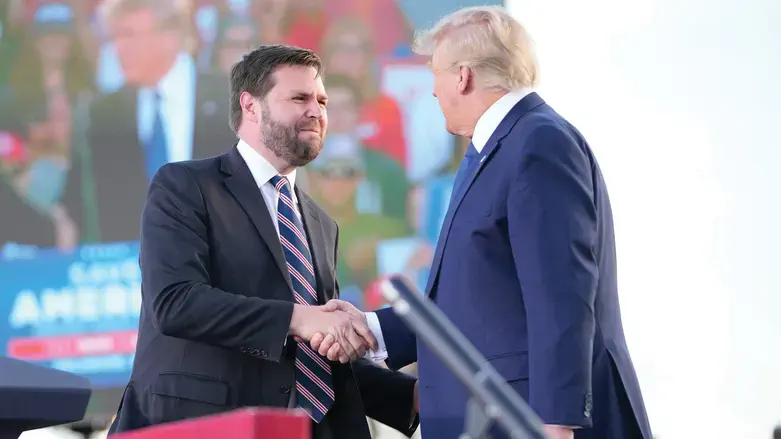
Which brings me to the vice president. On November 4, the day after Republicans lost both the House and the Senate, Vance published a lengthy post that effectively blamed the president's war for the defeat. "If you'd like to argue it was worth it, that losing the Senate for the next 6 years was worth it, then do so," he wrote. Among the reasons he listed for why Republican voters drifted to the Democrats was America's relationship with Israel. Lest we forget, Vance has said that Israel's interests and America's do not always align, and has hinted that the relationship could change.
Never mind that it was Vance himself who pushed Trump for the memorandum of understanding with Iran, which was an abysmal failure that kept gas prices high for months. All of this was caused not by Trump's or Netanyahu's determination to bring down the regime in Iran. The high pump prices were caused by Vance's ongoing attempts to dissuade Trump from taking the decisive action needed to truly defeat Iran.
None of this surprises me. In the updated edition of Trump and the Jews, I raised my concerns about Vance plainly:
At the time, some readers thought I was being unfair to a loyal running mate. The past week has answered that question. Loyalty that lasts only until the first electoral setback is not loyalty. It is positioning.
Before the war, Vance reportedly warned the president privately about regional chaos and depleted munitions. Trump himself acknowledged that the two were "philosophically a little bit different" on Iran. For months afterward, Vance toured the country with a smile, defending a war that, it is now plain, he never believed in. What kind of salesman tells the customer the morning after the sale that the product was defective?
I understand where the vice president's instincts come from. He came of age politically in the shadow of Iraq, and he built his brand as a skeptic of foreign wars. But Iran is not Iraq. This is not nation-building in the desert. It is the neutralizing of a nuclear-threshold state whose leaders openly promise to wipe Israel off the map. To treat the two as the same is to misread the map entirely.
Geopolitics does not reward the side that blinks. It rewards the side that finishes. Tehran understands this better than Washington's restrainers do. That is why the regime has dragged out talks, seized ships and waited for American domestic politics to accomplish what its missiles could not. A vice president publicly second-guessing the war after an election loss is exactly the gift the ayatollahs were waiting for.
Yes, the midterms were a rebuke. But read the numbers carefully. The AP's survey of voters found that only about a third called the war crucial to their vote, while about half pointed to the cost of living or government corruption. The lesson is not that Americans want retreat. It is that they will not tolerate a war that drags on while gas stays above $4. A war that is won, with the strait open and prices falling, is a different story. Voters punish indecision, not victory, and indecision is exactly what the vice president has been selling. And the surest cure for the cost of living is breaking Iran's grip on Hormuz.
In both editions of my book, I argued that Donald Trump understands something too many politicians do not: the world is a dangerous place, and strength, not apology, is what keeps it safe. That instinct gave us the embassy in Jerusalem, the Abraham Accords and the destruction of Iran's nuclear sites. It can give us a decisive end to this war, too, fought shoulder to shoulder with Israel, if the people around the president let him finish.
The vice president has said he will decide after the election whether to run for president in 2028. He might consider that the surest path to inheriting Trump's movement is to help Trump win, not to position himself as the man who saw it coming.
Right now he is becoming a lead weight wearing a smile. The president, the country and America's allies, Israel first among them, need him to be something more.