
Ronald J. Edelstein is the son of Holocaust survivors and a lifelong Jewish activist, writer and speaker. He is the chairman of Ron Properties, a real estate company in New York
The Republican Party's devastating defeat in the 2026 midterm elections has exposed more than the political vulnerabilities of President Donald Trump's administration. It has revealed an increasingly disturbing tendency within segments of the American right to portray Israel as a convenient explanation for America's economic frustrations, military difficulties and electoral failures.
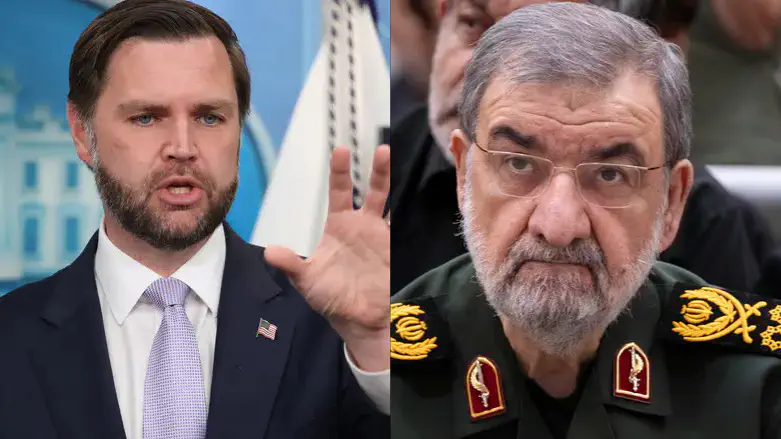
At the center of this troubling development stands Vice President JD Vance, whose public statements about Israel, the prolonged war against Iran and America's foreign-policy priorities demand serious scrutiny.
Antisemitism does not always announce itself through explicit declarations of hatred toward Jews. Frequently, its most insidious manifestations emerge through insinuation, selective accusations and the deliberate cultivation of suspicion. It flourishes when influential figures revive familiar narratives suggesting that Jewish interests exercise disproportionate influence over national decisions or that the Jewish state bears responsibility for problems created elsewhere.
And antisemitism has never respected partisan boundaries.
It can emerge from the political left under the banner of revolutionary activism or from the political right disguised as nationalism, isolationism and patriotic resistance to foreign influence. The ideological packaging changes; the underlying danger does not.
Jew-hatred does not become less reprehensible because it emanates from a politician whose party we otherwise support.
That is precisely why Vance's increasingly antagonistic rhetoric toward Israel should alarm Americans who recognize the historical consequences of normalizing suspicion toward Jews and the Jewish state.
From Iran to Israel: The Vice President's Convenient Explanation
Following the Republican electoral collapse, Vance published a lengthy assessment blaming the administration's war against Iran for the party's defeat. "The reason we lost is the war," he declared. He cited an unnamed pollster who reportedly asked disaffected Trump voters what Republicans must do to regain their support.
Among the four leading responses were ending the war, addressing inflation, putting America first and, most disturbingly, changing America's relationship with Israel.
That final point deserves particular attention. Vance did not merely acknowledge disagreement over military strategy. He chose to publicize a political assessment that identified America's relationship with the Jewish state as a distinct source of voter dissatisfaction.
The underlying polling has not been made publicly available for independent examination. Nevertheless, the vice president elevated that conclusion into his explanation of a national electoral disaster.
Israel did not impose American tariffs. Israel did not determine domestic energy policy. Israel did not create America's housing crisis, rising insurance premiums or congressional campaign strategies.
And Israel did not force American voters to reject Republican candidates.
The responsibility for American governance belongs to American officials. The responsibility for Republican electoral defeat belongs to Republican leadership.
Yet Vance's post-election assessment places Israel within the constellation of grievances supposedly responsible for the administration's political predicament. That is not an insignificant rhetorical choice. It risks encouraging Americans to regard their country's relationship with the Jewish state as an obstacle to national prosperity rather than examining the decisions made by their own elected representatives.
Iran Is America's Enemy, Not Israel's Invention
The war against Iran, launched on February 28th of this year has imposed substantial military, economic and political costs.
But those costs cannot erase the threat posed by the Iranian regime.
For decades, Tehran has supported terrorist organizations, threatened American interests, developed increasingly sophisticated missile capabilities and pursued nuclear activities that have generated profound international concern.
Iranian-backed forces have attacked American personnel, threatened regional stability and endangered international commerce.
Israel did not invent these dangers. President Trump has defended the military campaign despite acknowledging its political consequences. "If I had to do it again, I'd have to do it again," he declared after the midterm elections.
The president's reasoning was unmistakable: preventing Iran from acquiring nuclear weapons was, in his judgment, more important than avoiding temporary economic hardship.
Whether the administration executed that strategy effectively remains a legitimate question. But the strategic danger posed by Iran cannot be dismissed simply because confronting it became politically costly.
Vance, meanwhile, has consistently favored diplomatic engagement. Two days before the February offensive, he told The Washington Post that he preferred diplomacy and suggested there was "no chance" contemplated strikes would produce another prolonged Middle Eastern war.
Months later, the conflict remains unresolved. The vice president cannot escape scrutiny of that miscalculation. Nor can he participate in an administration's foreign-policy deliberations and subsequently portray himself as an innocent bystander when the consequences become politically inconvenient.
Diplomacy is not inherently successful merely because it avoids immediate confrontation. Its value depends upon whether agreements are enforceable, whether adversaries honor their obligations and whether the underlying threat is genuinely diminished.
An agreement that leaves Iran capable of rebuilding dangerous military capabilities would not constitute a lasting strategic achievement.
The Troubling Language of Israeli Influence
Vance's rhetoric concerning Israel has become increasingly provocative. During a September appearance at the All-In Summit, he warned that American foreign policy must not become "subservient to the State of Israel." Subservient?
The United States possesses the world's most powerful military, an enormous intelligence establishment and unparalleled international influence. What evidence establishes that America has surrendered its sovereignty to Israel?
The implication is particularly troubling because accusations of concealed Jewish influence over powerful governments have circulated for centuries as a central component of antisemitic conspiracy theories. Vance has not established that American policy is controlled by Israel. Yet his choice of language risks lending credibility to precisely that suspicion.
In July, he also accused individuals within the Israeli government of attempting to influence American public opinion to prolong the Iran war. He alleged that certain officials were "manipulating and trying to change American public opinion to keep the war going on indefinitely."
Foreign governments routinely advocate for their strategic interests. Israel is entitled to express its concerns about Iranian nuclear capabilities, just as Washington is entitled to disagree. But accusations of manipulation carry implications far beyond ordinary diplomatic disagreement.
If Vance possesses evidence of improper interference, he should disclose the relevant facts. Otherwise, sweeping allegations risk transforming a legitimate debate over foreign policy into a narrative of hidden Israeli control. That is dangerous territory for any American politician, particularly one occupying the vice presidency.
Antisemitism Is Not Exclusively a Left-Wing Disease
For years, conservatives have appropriately condemned antisemitism emerging from radical political movements, university campuses and organizations that demonize Israel.
But the same moral standards must apply when comparable prejudices emerge from the right. Antisemitism does not become respectable when dressed in the language of national sovereignty. It does not become harmless when presented as opposition to foreign entanglements. And it certainly does not become acceptable when promoted by individuals claiming to defend American interests.
The Jewish people have endured centuries of accusations that they manipulate governments, engineer wars, control financial institutions and undermine national prosperity. Those allegations have repeatedly provided ideological justification for discrimination, persecution and violence.
Today, similar suspicions can be repackaged as warnings about foreign influence or demands to reclaim national independence. The danger lies not only in openly antisemitic declarations, but also in political language that makes historically poisonous assumptions appear reasonable.
Vance's statements must be evaluated against that history. He may insist that his concerns are exclusively strategic. But a senior official has an obligation to consider how his language can reinforce prejudices already circulating among extremist audiences.
The question is not simply what Vance intends. It is what his rhetoric legitimizes.
Political Ambition Is No Excuse
With the 2028 presidential election approaching, Vance has obvious political incentives to distinguish himself from an administration damaged by war, inflation and electoral defeat. His skepticism toward foreign military intervention may appeal to influential elements of the America First movement, including commentators who have become increasingly hostile toward Israel.
But political ambition cannot excuse irresponsible rhetoric. Vance is not an independent broadcaster offering speculative commentary. He is the vice president of the United States. His statements carry the authority of one of the nation's highest offices. He cannot help shape American policy and then distance himself from its consequences whenever public opinion turns unfavorable. He cannot participate in the administration's diplomatic approach toward Iran and subsequently imply that Israel's relationship with Washington is a principal explanation for Republican defeat.
Above all, he cannot expect his words to be treated as politically inconsequential. The responsibility for those words belongs to JD Vance. Not Israel. Not the Jewish people.
The Warning America Cannot Afford to Ignore
The growing normalization of anti-Jewish hostility in American political discourse should concern every citizen, regardless of political affiliation. Sometimes that hostility is unmistakable. Sometimes it is concealed behind sophisticated political vocabulary. And sometimes it gains legitimacy because influential figures repeat insinuations that would have been recognized immediately as dangerous in another historical context.
Vance's public record provides ample reason to challenge his repeated emphasis on Israeli influence, his accusations of manipulation and his willingness to present the American-Israeli relationship as a political liability.
That pattern deserves condemnation, not indulgence. The vice president may believe that positioning himself against aspects of America's alliance with Israel will strengthen his prospects for 2028. What he risks accomplishing instead is making suspicion of the Jewish state increasingly fashionable within a political movement that once prided itself on defending Israel against its detractors. That is not political courage. It is not principled statesmanship. And it is certainly not responsible leadership.
The central lesson of history is that antisemitism becomes especially dangerous when prejudice no longer appears extreme, when insinuation replaces evidence and when people entrusted with public authority make suspicion seem intellectually respectable.
Americans must recognize those warning signs regardless of whether they emerge from political adversaries or supposed allies. "Never Again" cannot remain merely a solemn declaration about atrocities committed generations ago. It must represent a continuing obligation to recognize the mechanisms through which anti-Jewish prejudice gains acceptance, to confront dangerous rhetoric before it becomes normalized and to hold powerful political figures accountable for the consequences of their words.
JD Vance should not be exempt from that obligation because he is a Republican, because he is vice president or because he may aspire to the presidency. Israel must not become the scapegoat for America's political failures. And Jewish Americans should never be expected to remain silent when a national leader's rhetoric risks reviving the very suspicions that have fueled centuries of antisemitism.
.