

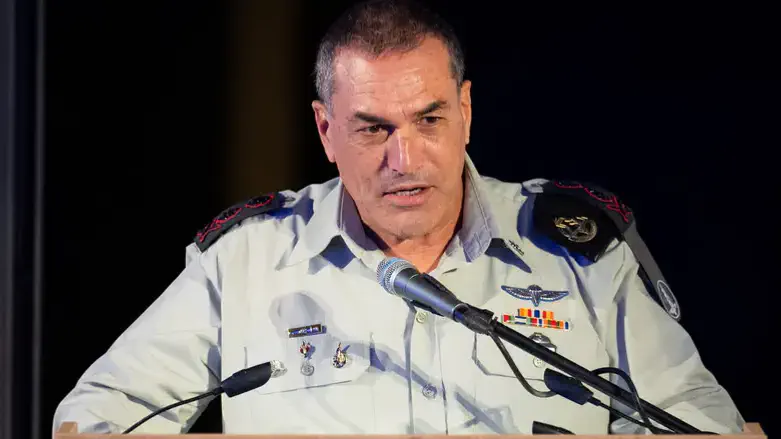
IDF Chief of Staff LTG Eyal Zamir said on Monday that the flawed culture of assuming "It will be fine" was one of the factors that contributed to the events of October 7, urging military commanders to embrace personal responsibility for their decisions and actions.
Zamir made the remarks during a ceremony at the Rabin Center marking 31 years since the assassination of former Prime Minister and Defense Minister Yitzhak Rabin.
The ceremony was attended by Yonatan Ben-Artzi, members of the IDF General Staff Forum, and participants in the Alon Command and Staff College course.
"One of the reasons for the events of October 7th was the flawed culture of 'It will be fine,' against which Rabin warned," Zamir stated. "As an IDF officer, do not say 'It will be fine.' Say 'I am responsible.' Commanders must feel the weight of the absolute responsibility placed upon them and act constantly to fulfill it."
Reflecting on Rabin's military and political career, Zamir emphasized the importance of responsible leadership and the need for commanders to question their assumptions.
"From his days in the Palmach to his command of the IDF, Rabin bore responsibility for defending the state. His path reminds us that military leadership requires professionalism and sound judgment, alongside boldness and determination," he said.
"Commanders must know their soldiers and the enemy thoroughly, listen, examine their assumptions, and make decisions."
Zamir also addressed the IDF's conduct during the war, praising the soldiers who have fought on multiple fronts since October 7.
"Since October 7th, throughout three years of fighting on fronts both near and far, Israeli soldiers have demonstrated their courage and determination to achieve victory," he stated.
He stressed the importance of unity and mutual responsibility among soldiers, regardless of their backgrounds.
"Soldiers serving together in a tank crew, aircraft, or submarine must act out of a sense of mission and mutual comradeship, regardless of social or ethnic background."
Addressing Rabin's assassination, Zamir described it as a lasting wound in Israel's history and called for the rejection of political violence.
"Rabin's assassination remains a deep wound in the history of the state. His memory obligates us to categorically reject violence in Israeli society as a means of resolving our disagreements," he said.
During the event, members of the General Staff Forum held discussions with participants in the Alon Command and Staff College course, drawing on Rabin's 1992 address to graduates of the college. The discussions focused on command responsibility, safeguarding soldiers' lives, mission accomplishment, professionalism, initiative, and personal example.
Concluding his remarks, Zamir called on commanders to apply the lessons of the discussions to their daily responsibilities.
"We must carry the lessons of today's discussions into our daily command responsibilities and the decisions that still lie ahead, guided by our responsibility for the security of the state, our personnel, and Israeli society as a whole."