

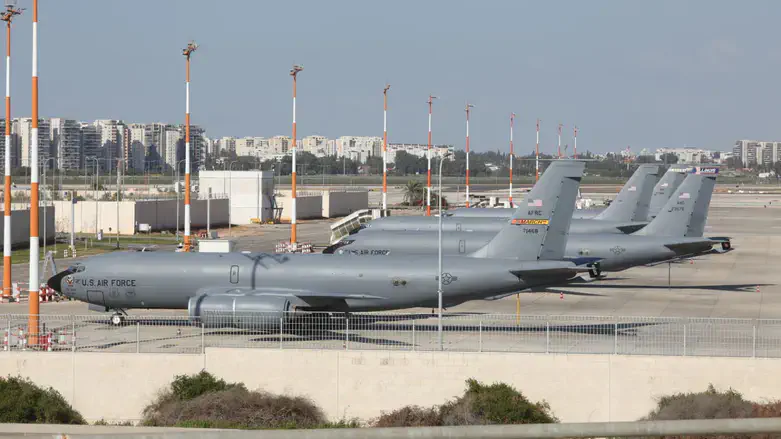
The United States relocated military aircraft from a Royal Air Force base in England on Monday following intelligence concerning a possible Iranian threat, The Wall Street Journal reported, citing people familiar with the matter.
According to the report, US officials are still assessing the nature of the threat against RAF Mildenhall, including whether it represents an immediate danger or a broader security concern.
According to flight-tracking information and a US official, two American aerial refueling tankers departed Mildenhall for Germany earlier on Monday, while additional tankers were transferred to Germany and other destinations later in the day.
A US Air Force spokesperson declined to discuss the specific aircraft movements, saying only that American military planes are routinely repositioned between bases for operational reasons. The White House directed questions about the matter to the Pentagon.
The latest relocation follows the withdrawal of US B-1 bombers from RAF Fairford in October. That decision came amid concerns about an Iranian-backed operation allegedly intended to assassinate American pilots and attack US military aircraft using drones and other methods.
The US military has also raised the security alert level at RAF Mildenhall and RAF Lakenheath to Force Protection Condition Charlie (FPCON Charlie), a heightened readiness status implemented when intelligence suggests a terrorist attack is likely.
The security measures come amid warnings from Tehran that any Iranian response to renewed American military strikes would not necessarily be confined to the Middle East.
On Monday, senior congressional leaders belonging to the bipartisan "Gang of Eight" received a classified briefing concerning Iranian threats, according to a person familiar with the meeting.
In October, Director of National Intelligence Jay Clayton warned that Iran had reached an advanced stage in preparations to attack American personnel stationed in the Middle East. Those concerns prompted the evacuation of US diplomatic personnel from several regional locations.
Asked about the threat on Monday, Secretary of State Marco Rubio said the administration had responded by relocating personnel away from areas where they could be targeted.
The developments come as President Donald Trump considers whether to authorize further military action against Iran, while Defense Secretary Pete Hegseth faces an impeachment initiative related to the war. Hegseth has defended the military campaign and said he intends to oppose efforts to remove him from office.
Despite the heightened security measures, Trump indicated Monday that renewed hostilities with Iran were unlikely, citing progress in diplomatic negotiations.
Speaking to reporters at the White House, the President suggested that additional military strikes were not currently necessary.
Trump also pointed to the preference of US allies in the Middle East for maintaining economic pressure on Iran through the existing trade blockade rather than escalating the military confrontation.
Nevertheless, he emphasized that American forces remain prepared to respond should circumstances change, declaring that the United States was "locked and loaded" for potential military action.