Shani Jaffe is head of Impact Communications at Number 10 Strategies and leads March of the Living’s international PR.
I’m still trying to process the past week and find the words to describe it. I had the privilege of accompanying George Shefi, a Holocaust and Kristallnacht survivor, in Berlin, on a journey that also brought my own family’s story full circle.
Throughout the week with George, I kept thinking about my grandfather, Sigi, of blessed memory. Both were young children growing up in Berlin when their lives as they knew them were shattered.
George survived thanks to his mother’s love and her unimaginably difficult decision to send him to England alone on the Kindertransport. After many twists and turns, he eventually reached Israel, where he built a beautiful family.
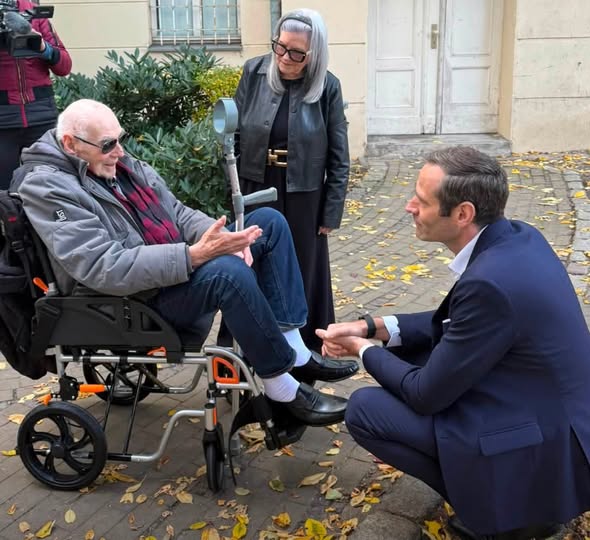
(The man kneeling to honor George is Jochen Kopelke, Chairman of Germany’s Federal Police Union and a leading figure in European law enforcement, representing tens of thousands of police officers, if not more. And there he is, kneeling in deep respect before George - the seven-year-old boy whose entire world was shattered on Kristallnacht - outside his childhood home.)
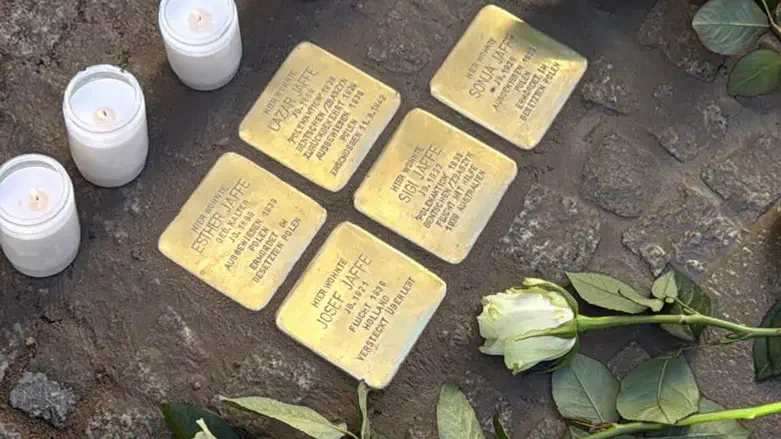
My grandfather Sigi was deported with his father, Lazar, to the Polish border town of Zbąszyń. There, his name was drawn in a lottery, and he was saved and sent to Australia on the Kindertransport with 20 other children.
I thought about everything they both lost, the strength it took to carry on, build families, and pass their stories and the importance of remembrance down to us. I also thought about Sonja, my grandfather’s sister, who could have been saved but gave up her place on the Kindertransport to England because she could not leave her mother.
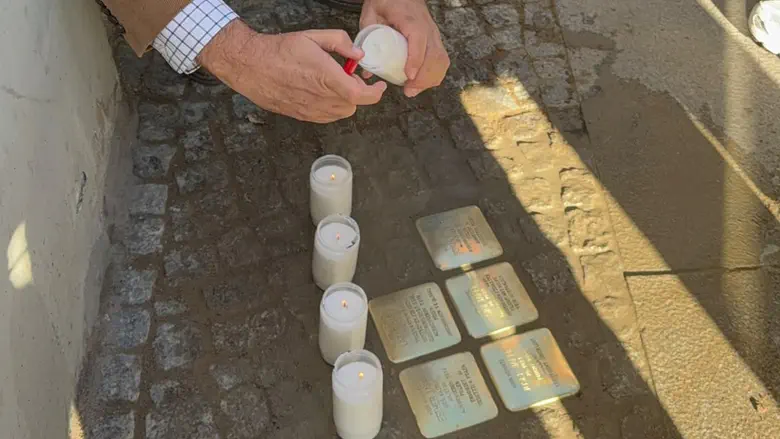
For years, my family has been trying to arrange the installation of Stolpersteine, small golden remembrance stones, for our relatives outside my grandfather’s childhood home, which still stands in Berlin. These small golden stumbling stones are placed outside the homes of Jews who lived across Germany before the Holocaust. Engraved with names, they symbolize Jewish lives that once flourished - and were cut short.
The lengthy process and the war repeatedly delayed the ceremony. Following reports in recent months about places in Germany halting the installation of these stones, we felt an even greater urgency to move it forward.
In a chilling coincidence, the International March of the Living, an organization I have the privilege of working with, was organizing an event in Berlin marking 88 years since Kristallnacht under the banner “Not On Our Watch." The event brought together police officers and leaders from Germany, Europe, and the United States as part of the organization’s work in Holocaust education and the fight against antisemitism and hatred toward minority communities.
Ahead of my work trip, I contacted the organizers of the Stolpersteine installations, and we managed to arrange our family’s ceremony for the same day. We then discovered that the March of the Living event would take place in one of the few synagogues in Berlin that had not burned down during Kristallnacht and had survived the war, just around the corner from my grandfather’s childhood home.
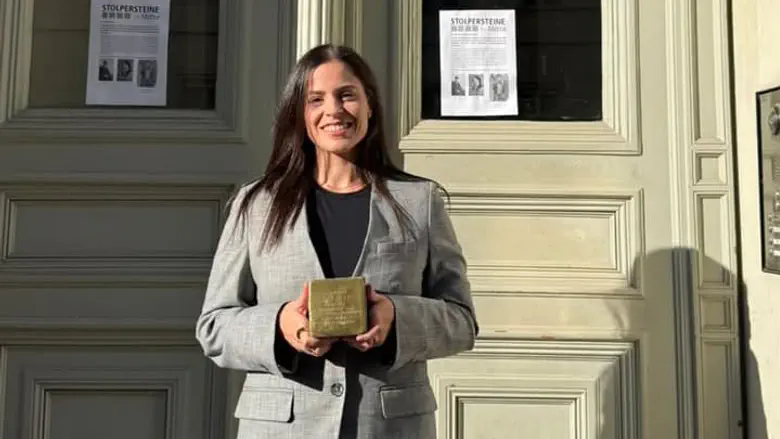
At the last minute, my family decided to join me on the trip. Together, we stood outside the home where my grandfather grew up, in the same week that we marked 18 years since his passing. We sang “Vehi She’amda" and “Hatikvah" beside the stones that now bear our relatives’ names.
Revital, the driving force behind March of the Living, writes here about “presence, not retreat." Those words capture so much of what I felt this week. Being there with my family, in the place from which my grandfather was deported, and making visible the names, the lives once lived, and the family that continued to grow.
Thank you to Revital, Phyllis, and the March of the Living team for being with us at this deeply personal moment. The privilege of working with you took on an even deeper meaning for me this week.
In the face of rising antisemitism and voices seeking to deny and erase the past, we have a responsibility to keep our memory and identity visible. To tell the stories of those who are no longer here to tell them themselves, and to make sure they reach future generations.